New Delhi: The Union Cabinet on Friday, July 24, approved a draft Bill to ensure stricter punishments for paper leaks, hours after Prime Minister Narendra Modi made an announcement in this effect.
However, according to a Times of India report quoting sources, the Cabinet has only amended the existing anti-paper leak law and introduced tougher penalties. The new law reportedly calls for a maximum jail term of 10 years and a fine of up to Rs 10 crore.
It also seeks to increase the minimum imprisonment from the current three years to five years.

In a video message around midnight on Thursday, July 23, Modi announced that a Bill containing provisions for strong action against paper leaks will be introduced in Parliament next week.
“On Monday, when the second week of the Monsoon Session of Parliament will begin, a Bill will be brought with provisions for strong action against paper leaks and we will try to pass it as early as possible,” he had said.
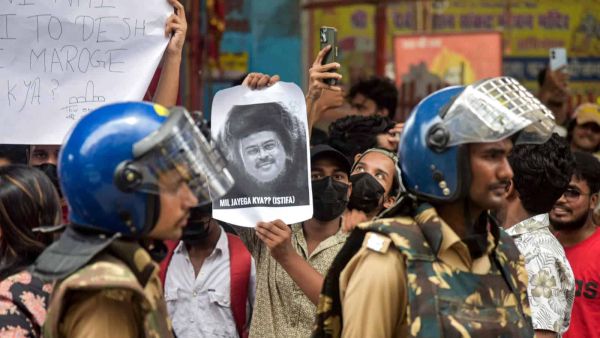
The announcement came in the wake of the ongoing protests by the Cockroach Janta Party (CJP) demanding the resignation of Education Minister Dharmendra Pradhan, accountability for exam irregularities, reforms in the education system, and Rs 1 crore compensation to families of those students who committed suicide after the NEET-UG paper leak in May.
Earlier on Thursday, Modi had said that government has decided to set up fast-track courts to ensure swift and stringent punishment for those involved in paper leaks.
In a post on X, PM Modi said: “Nothing is more important than the welfare and future of our youth! We have decided to set up fast-track courts to ensure swift and stringent punishment for those involved in paper leaks. Have directed the concerned authorities and officials to take all necessary steps in this regard.”
The Centre had brought out a new law in 2024 as well when it was faced with raging paper leak controversies.
Nearly four months after President Droupadi Murmu gave assent to The Public Examinations (Prevention of Unfair Means) Act, 2024, the Bill was notified in June 2024 when tempers were high due to alleged NEET and NET paper leaks.
Before this legislation, there was no specific substantive law to deal with unfair means adopted or offences committed by various entities involved in the conduct of public examinations by the central government and its agencies.
The Act aims to prevent unfair means in the public examinations conducted by the Union Public Service Commission (UPSC), the Staff Selection Commission (SSC), the railways, banking recruitment examinations and the National Testing Agency (NTA) among others.
The earlier Bill had provisions for a minimum of three to five years of imprisonment to curb cheating and those involved in organised crimes of cheating will face five to 10 years of imprisonment and a minimum fine of Rs 1 crore.
The Bill had provisions for “engagement of services of other government agencies by public examination authority”, “preparation of norms, standards and guidelines” and “reporting of incidents of unfair means or offences” among others.
Pre-examination activities such as pre-audit for the examination readiness of the public examination centres, candidate check-in, biometric registration, security and screening, seat allocation, question paper setting and loading, invigilation in the examination, post-examination activities and guidelines for providing scribes were also part of norms.
The Bill outlines 15 illegal acts including leaking question papers, tampering with OMR sheets, creating fake websites and issuing fake admit cards.
(With inputs from PTI.)