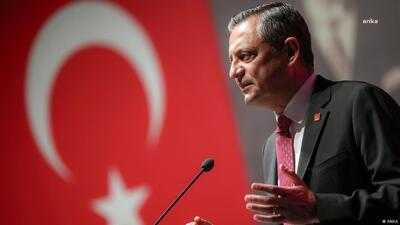
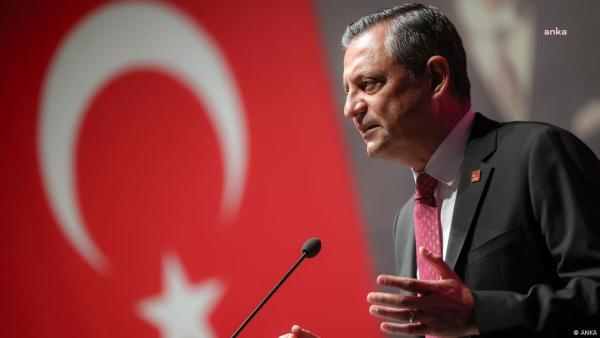
After being removed as head of Turkey's main opposition CHP in May, Ozgur Ozel has announced the formation of a new party. Dozens of lawmakers have followed him, but will he be able to challenge President Erdogan?In the early morning of May 24, shocking images of Ankara were broadcast around the world. After a court ordered that Ozel be ousted as head of the center-left Republican People's Party (CHP), the country's largest opposition party, its headquarters in the Turkish capital were surrounded by special forces. The party leader and his allies had barricaded the doors with tables and chairs, but hours later they stopped resisting. "We want to avoid an escalation and are leaving of our own free will," a visibly shaken Ozel said. "Our only crime is to have defeated the ruling party." Indeed, under his leadership, the CHP had managed something it had not succeeded in doing in 22 years. It had defeated the ruling Justice and Development Party (AKP) in a nationwide election. In the local elections of March 2024, the party emerged as the strongest and took over control of city councils in 14 major cities. That included Istanbul, whose mayor, Ekrem Imamoglu, quickly became so popular that he established himself as a serious challenger to Turkish President Recep Tayyip Erdogan in the next presidential election, which is scheduled for 2028. But soon Imamoglu was arrested, alongside several other mayors and their staff. They are accused of corruption and fraud. And then in May, Ozel was removed from his position. Two months later, he announced the formation of the Yeni Parti, or "New Party," submitting formal registration to the interior ministry. With 91 lawmakers, it is set to become the second largest party behind the AKP in Turkey's 600-seat parliament. CHP, a divided opposition party Founded in 1923 by the founder of the Republic of Turkey, Mustafa Kemal Atatürk, the CHP is Turkey's oldest political party, standing for the separation of church and state, patriotism and republicanism. Ozel, who came from the pro-reform faction and became head in 2023, was able to open up the party to voters beyond its core base, placing more emphasis on the values of social democracy. He met with success, as the election results showed. But after Ozel was ousted, Kemal Kilicdaroglu, the old party leader under whose watch the CHP had lost every election for two decades, returned. Kilicdaroglu was considered to be Erdogan's preferred opponent. Why did the CHP split? There has been much speculation as to why the party accepted the court ruling and agreed to the party being divided. Experts believe that behind the scenes, political calculations that benefit Erdogan are at play. The split will allow him to eliminate dangerous opponents ahead of the next presidential election. The conflict within the CHP dates back to 2023: After the defeat of Kilicdaroglu, who was party leader at the time, by Erdogan in the presidential election, the reformist faction led by Ozel and Imamoglu pressed the 75-year-old to step down. They prevailed at the party convention in the autumn of 2023. But in May 2026, a court declared the party convention null and void due to alleged irregularities. As a result, Ozel and other leaders were removed from their posts, and Kilicdaroglu and his allies returned. What Ozel said upon leaving CHP Ozel was less willing to accept the ruling; he and his faction fought to the very end to remain, but they were forced out because the country's judiciary has become increasingly less independent under Erdogan. In his farewell speech on Tuesday, Ozel called on his supporters to follow him: "We will walk together on a new path," he said. "We will march to power. Let's walk friends, let's walk friends!" And follow him they did. The mass exodus to Ozel's Yeni Parti will leave the CHP with 44 seats in parliament, making the CHP the fourth largest in Turkey. Can Ozel be a serious challenge to Erdogan? Seren Selvin Korkmaz, the director of the Istanbul-based think tank IstanPol, said that Ozel's Yeni Parti had good chances of succeeding, considering it had so much support from former CHP supporters. However, she warned against taking voters for granted. She said that a recent poll the think tank had conducted showed voters did not just want the CHP with a different name but a party that built upon its legacy while also moving beyond it. According to the IstanPol poll, around 30% of respondents would vote for the new party or at least consider it. Another 19% said their decision would depend on the party's program, candidates and leaders. She concluded that there was a "broad but conditional potential" for support of almost 49%, explaining that this was fueled both by sympathy for Ozel as well as hostility toward the judiciary interfering in party politics. She said that generally opposition voters were open to a new party. Korkmaz suggested that the new party could make inroads among supporters of the nationalist conservative IYI party and the pro-Kurdish DEM, as well as certain voters of the ruling AKP party and some of the supporters of its coalition allies from the ultranationalist MHP. She added that the biggest challenge would be to unite the at times conflicting expectations of these different segments under a common umbrella. She predicted that the party could be successful if it was able to avoid being too ideologically limited or bland and centrist. He said that it was clear from Ozel's rhetoric that he wanted to establish an inclusive center, with a republican and socio-democratic backbone. It remains to be seen whether Ozel will be able to establish party structures in at least 41 of Turkey's 81 provinces by the time of the next presidential election in 2028. This is a prerequisite for being eligible to run. Ozel's Yeni Parti does not have access to the same funds as the CHP, which will make the process even more difficult. This article was originally published in German.