Chasing Umling La! First-timer's account of RE Himalayan Odyssey
TOIauto July 25, 2026 06:39 PM
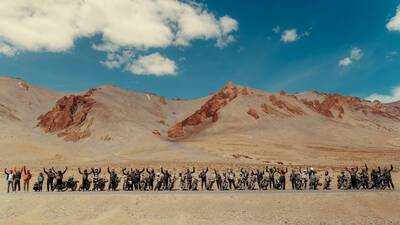 Do the mountains really change a person, or is that just something we say to make a hard trip sound meaningful afterward? I asked myself this question before I left Chandigarh on a Royal Enfield Himalayan 450, and I am asking it again now that I am back home. The answer, I have realised, is yes. They do. But not in the way I expected.
I was part of the 2026 edition of the Royal Enfield Himalayan Odyssey , the 22nd edition of a ride that has been running since 1997. This year carried extra weight because it fell in Royal Enfield's 125th anniversary year, and for the first time the Odyssey was split into multiple formats so riders could pick a route that matched their appetite. I signed up for the Original, the flagship 16-day expedition that begins and ends in Chandigarh and takes you through Himachal Pradesh, into Zanskar , across Ladakh, and all the way to Umling La , the highest motorable points on the planet.
The heat before the cold
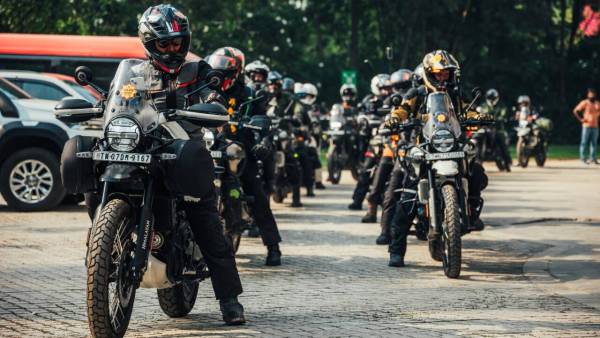
Before the ride began, we had a full day of briefing. Next morning, we rolled out of Chandigarh toward Manali and within an hour I was nearly convinced the heat alone would break me before any mountain did.
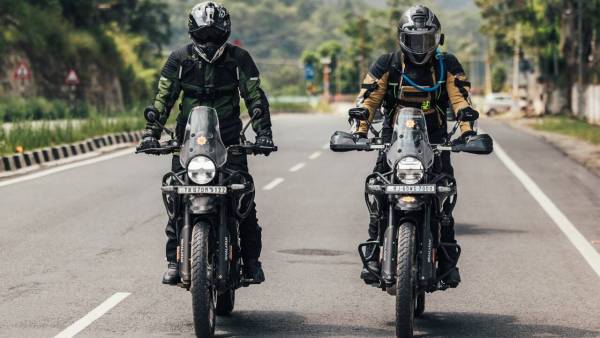
While sipping as much water as I could and simultaneously losing it through sweating, I remember constantly talking to myself. “If this is the hardest part of the trip, I can manage the rest.” I was wrong, and I would find that out soon enough.
Manali arrived like a reward. The temperature dropped, the air changed, and for the first time since leaving Chandigarh I could breathe without feeling like I was breathing through a straw. The next morning we set off for Keylong, and this is where the Himalayas properly introduced themselves. The road wound through the valleys, past thick pine forests, terraced fields, and small villages clinging to the hillsides. The greenery felt almost unreal after the plains we had left behind. It was the kind of stretch where you stop thinking about the ride and just start looking around.
Sarchu , where the real test began
From Keylong we pushed on to Sarchu, and this is the day the trip actually turned into an expedition rather than a scenic ride. In these two days, we went past through the Atal Tunnel corridor, and eventually up and over Baralacha La, a pass that sits at roughly 16,040 feet. It is generally recommended to gain altitude gradually, climbing only a few thousand feet each day so your body has time to adjust. We covered far more than that in one push, because that is simply what the itinerary demanded, and Sarchu itself sits at close to 14,000 feet, which is higher than Leh .
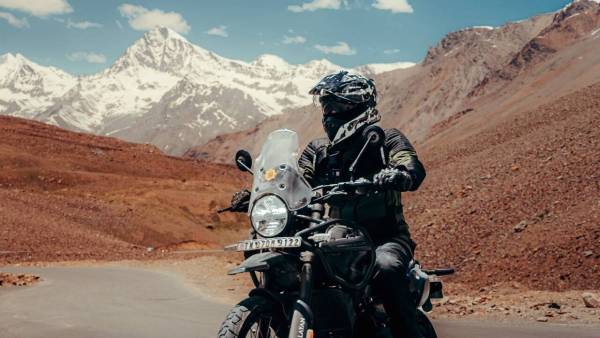
That night is one I will not forget in a hurry. My roommate could not stop throwing up. I had a headache that felt like someone was slowly tightening a band around my skull. By 11 PM I was shivering under two blankets, genuinely wondering if signing up for this ride had been a mistake. The Royal Enfield medical team was doing rounds through the camp, checking on riders one by one, and when the doctor got to us he checked our oxygen levels, gave us something for the nausea and the headache, and told us plainly that this was normal, that the body needed a night to catch up with the altitude, and that tomorrow would be better. He was right. It was.
Sarchu to Leh, through Tanglang La
The next stretch toward Leh takes you through a sequence of high passes, one after another. We passed through a stretch of high-altitude plateau that looks like nothing else on earth, and then the long climb up to Tanglang La, which is at around 17,480 feet. The air up there is thin enough that even small movements leave you a little breathless. By the time we descended and moved towards Leh, something in my body had shifted. The headache was gone. Breathing felt normal again. I understood, physically, what acclimatisation actually means.
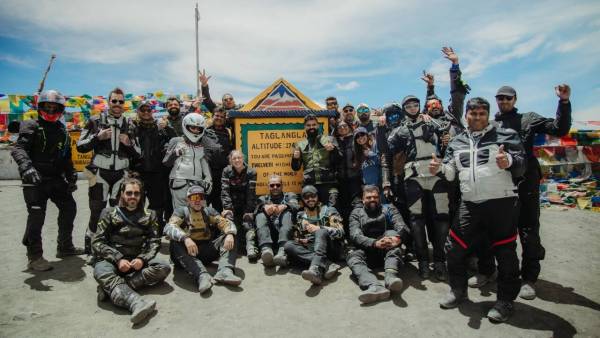
Leh gave us our first rest day, and I have never appreciated a day of doing nothing quite as much as I did that one. We walked around the market, ate slowly, drank more water than I thought was possible, and let our bodies settle before the next big push. Not to mention, of course, we went for plane spotting near the Leh airport. It is slowly becoming a ritual for me.
Leh to Hanle , and then the real wilderness
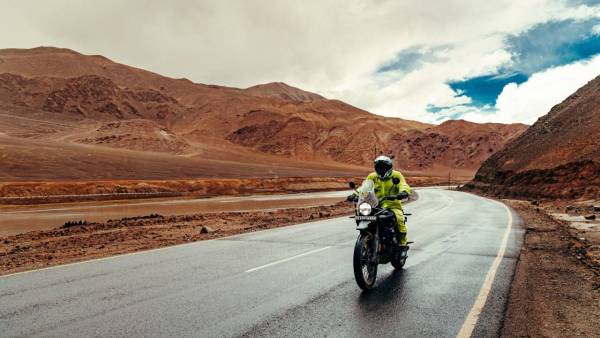
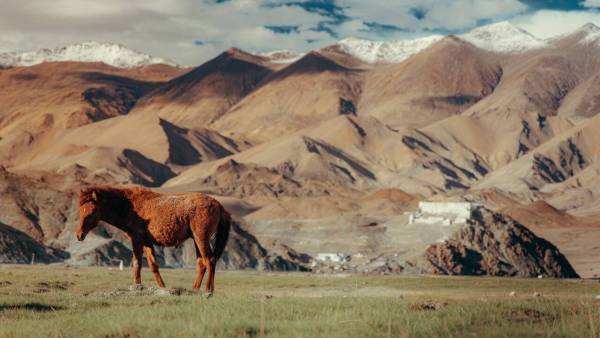
From Leh we rode to Hanle, a long day that takes you deep into the Nyoma region, close to the border and far from anything resembling a city. This is where the landscape stops looking like anything you have seen before. Wide open plains, distant snow peaks, and a silence that is hard to describe unless you have ridden through it yourself.
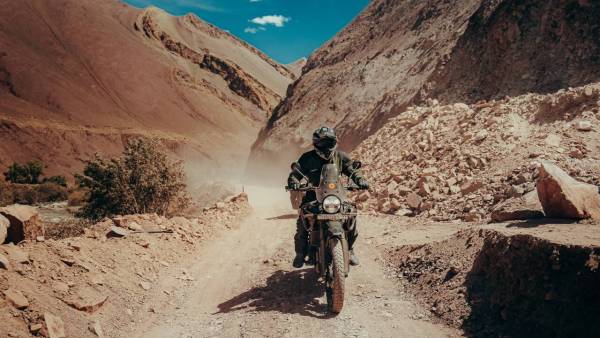
The stretch from Hanle toward Umling La is where the trip stopped being a road trip in the conventional sense. Only a small portion of that route is actual tarmac. The rest is a mix of twists and turns cut into the mountainside, loose gravel, patches of sand that grab at your front wheel, and long stretches where there is nothing around you but rock, sky, and distance. It is beautiful in a way that is almost uncomfortable, because there is nothing to hold on to visually. No trees, no buildings, no other vehicles for long minutes at a stretch. Just you, the bike, and the mountains.
Standing at 19,024 feet
Umling La sits at approximately 19,024 feet. It is built by the Border Roads Organisation under Project Himank near the villages of Chisumle and Demchok, right up against the Line of Actual Control.
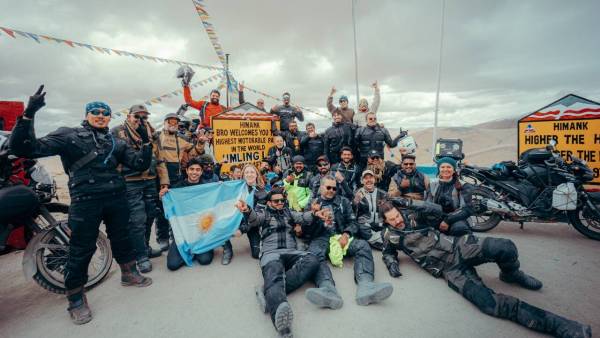
Oxygen levels there are close to half of what they are at sea level. Standing at the top, with the bike parked beside the sign board and the wind cutting through every layer I was wearing, I understood why people chase this particular milestone. It is not really about the number. It is about what it took to get there. Every headache in Sarchu, every cold morning, every hour spent on the saddle suddenly made sense standing at that spot. No wonder a few of us cried. I did too during the descent. I still don’t know how it happened and why it happened but I suddenly found myself sobbing inside the helmet.
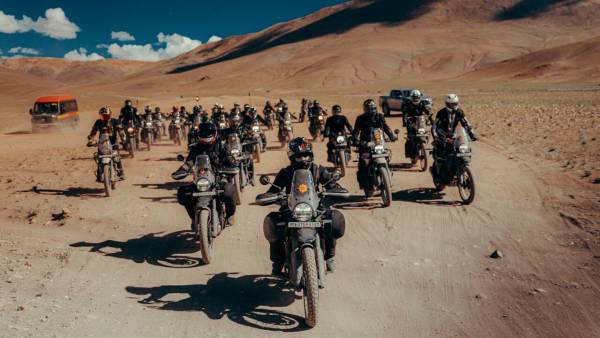
We rode back to Hanle and then to Leh, and that is where my personal ride wrapped up, on the second rest day in Leh on July 5. The rest of the group continued on toward Padum, Jispa, and eventually back to Chandigarh, but for me the Odyssey had already delivered what I came looking for.
The bike that carried us through all of it
A lot of what made this trip possible was the Himalayan 450 itself, and riding it at nearly 17,500 feet taught me things about the bike I would never have learned on the plains. You do lose a bit of the punch you feel at lower altitude, but the power delivery stays predictable and linear throughout. The Sherpa 450 engine copes with thin air far better than I expected, and the throttle response stays predictable even when the lungs, both yours and the engine's, are working harder than usual. On long, slow climbs in low gear the engine never once felt like it was struggling, just a touch less eager than usual.
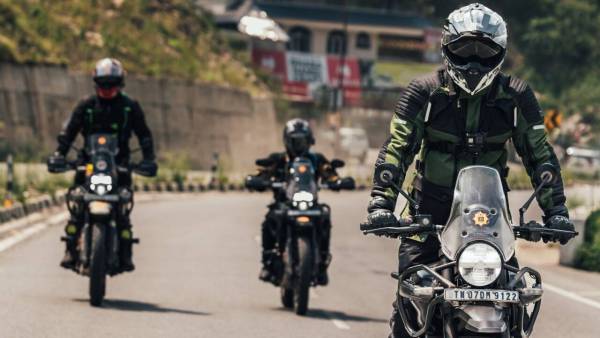
Overtaking needed more planning because of the thinner air, but the bike never felt strained even then. The ground clearance turned out to be one of its biggest strengths. Past Sarchu, there are patches full of rocks, ruts, and potholes, and the bike cleared most of them without scraping underneath, which saved us more than a few anxious moments.
What surprised me most was how comfortable the riding position stayed, whether seated or standing on the pegs, which made the rough sections far more manageable and honestly, enjoyable.
The team behind the ride
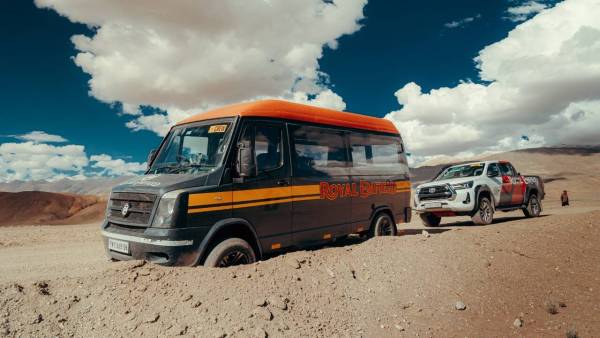
None of this would have been possible without the Royal Enfield support crew. They were present at every stop, running quick mechanical checks, carrying spares, and keeping an eye on riders who looked a little too quiet or a little too pale. The medical team's visit to our tent in Sarchu that first rough night is something I will remember for a long time. There was always someone tracking the weather, someone managing logistics at the next camp, and someone making sure that even in the middle of nowhere, there was hot food waiting when we arrived. That backbone of support is what let us focus purely on the road and the mountains.
A big thanks goes to our ride lead and sweep rider, who kept us together as a pack through every pass and every bad patch of road, always leading from the front and making the toughest stretches feel manageable.
What The Ride Actually Taught Me
Somewhere between Sarchu and Hanle, I stopped checking my phone, mostly because there was no signal to check. For long stretches there is genuinely no network coverage at all, and after the initial discomfort of that wore off, it became one of the most peaceful parts of the entire trip. Waking up early started feeling necessary, because the weather in the mountains only cooperates for a few hours each morning. Sitting on the saddle for an entire day, riding through cold, dust, and altitude, taught me a kind of physical discipline I did not think I had. Meals became simple and clean, mostly because that is what is available and that is what the body actually wants at that altitude, and I never once missed the variety I am used to at home.
What stayed with me most is how little all of it actually requires to feel content. A hot cup of tea at a roadside dhaba, a working bike, a group of people who have your back, and a clear road ahead. That is genuinely enough. Life outside these mountains suddenly looks a little more complicated than it needs to be.
Coming Back Different
I made friends on this ride that I will stay in touch with for years, people I had never met before Chandigarh and now cannot imagine the trip without. We pushed each other up passes and stood together at Umling La taking photos we will look at for the rest of our lives.
So, do the mountains really change you? I went in wondering if that was just a line people use to justify a hard trip. I came back convinced it was true. Part of me is still there, somewhere on the road between Hanle and Umling La, and I already know I will go back. It really is a once in a lifetime experience.