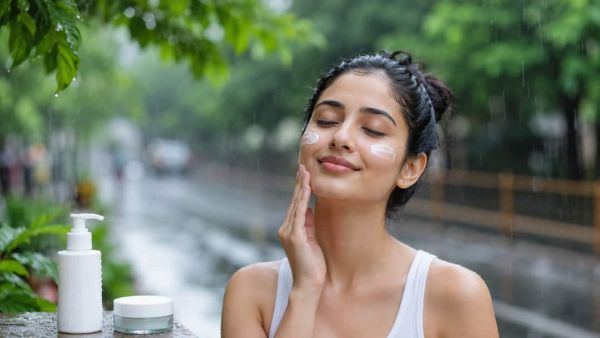
Rainy Weather Isn't A Free Pass: Why Your Skin Still Needs Sunscreen Every Day
Vijaya Mishra July 25, 2026 09:41 PM
Many people stop using sunscreen once the monsoon arrives, believing cloudy skies offer enough protection from the sun. Dermatologists say that assumption can leave your skin vulnerable to invisible ultraviolet (UV) rays, which continue to penetrate clouds throughout the rainy season. These rays can trigger tanning, pigmentation, premature ageing and increase the risk of long-term skin damage. Humid weather may feel cooler, but it does not reduce UV exposure. Experts recommend treating sunscreen as an everyday skincare essential rather than a seasonal product. Choosing the right formula and applying it correctly can make a noticeable difference to your skin's health.
Cloudy Weather Doesn't Stop UV Rays
A common myth is that overcast skies block harmful sunlight. According to the American Academy of Dermatology (AAD), up to 80 per cent of UV rays can still pass through clouds. While UVB rays are associated with sunburn, UVA rays remain active throughout the year and penetrate deeper into the skin, contributing to pigmentation, fine lines and collagen breakdown.
Rainy conditions can also create reflective surfaces such as wet roads and puddles, increasing cumulative UV exposure. This is particularly important for people dealing with melasma, acne marks or uneven skin tone, as regular UVA exposure may worsen pigmentation over time.
Choosing The Right Sunscreen
Not all sunscreens are equally effective during the monsoon. Dermatologists advise opting for a broad-spectrum sunscreen that protects against both UVA and UVB rays, with SPF 30 or higher and PA+++ or PA++++ protection.
In humid weather, lightweight gel, fluid, or matte-finish formulas are generally more comfortable, especially for oily or acne-prone skin. Water-resistant or sweat-resistant products are also recommended, although they still need reapplication after heavy sweating or prolonged outdoor exposure.
How To Apply It Properly
Applying sunscreen correctly is just as important as choosing the right one. Begin with a clean face and use a lightweight moisturiser if your skin needs extra hydration. For the face and neck, dermatologists recommend applying roughly one teaspoon, often explained using the two-finger rule, to ensure adequate coverage.
Remember to cover commonly missed areas such as the ears, hairline, neck, hands and feet if they are exposed. If you're using a chemical sunscreen, apply it around 15 minutes before stepping outdoors. Allow sunscreen to settle before putting on makeup to reduce pilling and help it stay in place despite the humidity.
The monsoon may bring relief from the heat, but it does not reduce your skin's exposure to UV rays. Experts say using sunscreen every day, regardless of the weather, remains one of the simplest and most effective ways to protect your skin from preventable damage.