For nearly 20 years, she worked as an executive at a bank in Quy Nhon, never truly being off the clock. Her days only wound down early the following morning once transaction points opened safely and the ATM system showed no errors.
Initially, retirement seemed blissful. “I felt great relief,” the 65-year-old former director says.
However, that feeling lasted barely two months. As she traveled less frequently, she struggled to adapt to her new rhythm. Used to relying on subordinates, she had to learn to press keys and print documents herself. With a pension that was just a 10th of her executive salary, she also had to relearn how to manage her spending. The deepest blow, however, was the abrupt sense of uselessness.
“When I was working, a car picked me up and dropped me off, and everyone waited for my direction,” she says. Now at home, my husband and children give me orders.”
|
Thu Huong and her husband on a trip to Da Lat in 2024. Photo courtesy of Huong |
Vietnam counts more than 14 million people aged 60 and older, a demographic projected to reach nearly 18 million by 2030. Every year, hundreds of thousands step through the same door Huong did.
Former managers often prove more vulnerable to post-career crises. Huong speaks about an acquaintance, a former provincial department head who once wielded immense authority and suffered a mental breakdown after retiring severe enough to require medical treatment. Some executives return to their old offices daily, pleading to work without pay, others have wiped out their life savings through flawed investments, driven by a deep-seated need to prove they still hold value.
Dr. Katrina Phillips, a lecturer in psychology at RMIT University Vietnam, identifies this as a post-retirement identity crisis. For decades, individuals tie their self-worth directly to their profession, title, or social standing, and many lose the anchor that defined them upon retirement, she explains. The question “If I am no longer a director, doctor, or teacher, who am I?” haunts many, she says.
“This pattern is particularly pronounced in Vietnam, where people often stay with a single organization for decades and view work as the primary measure of personal worth.”
Assoc. Prof. Cu Chi Loi, former head of a research institute in Hanoi, signed retirement decisions to numerous subordinates over the years. “Some would find it exceptionally painful, refusing even to look at the retirement decision or listen as it was read to them,” he says.
He chose to pave his own exit route in advance. On reaching the mandatory retirement age five years ago, his institution invited him to stay on as a senior expert. This transitional period allowed him to taper his workload and gradually get used to a new routine.
He also relocated to the suburbs, where he tends a 300-square-meter garden, grows flowers, and learns the guitar, a passion he set aside in his youth.
 |
|
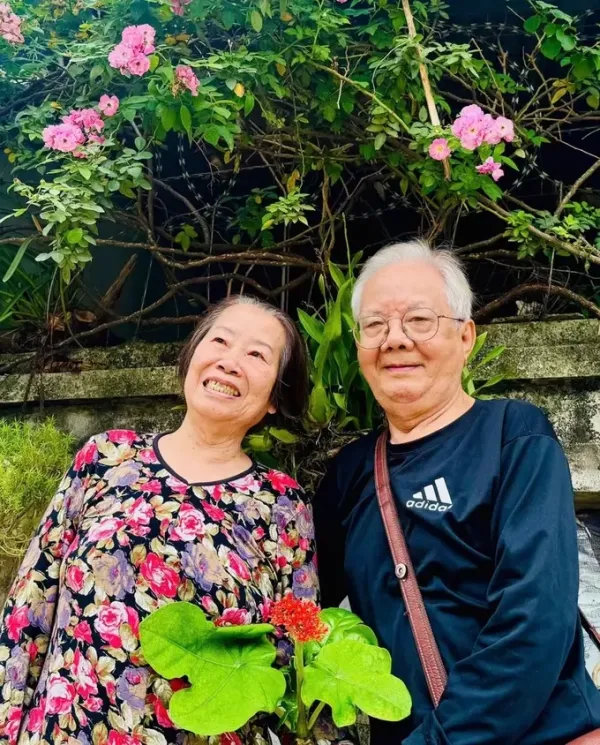
Ngoc Cam and Bach Che in Hanoi during a date in 2025. Photo courtesy of Cam |
Phillips says retirees struggle with losing not only their work but also social network, and so preserving daily routines and social connections serves as one of the vital antidotes during this transition.
Pham Thi Ngoc Cam of Lang Ward in Hanoi suffers from insomnia and loneliness despite keeping busy with teaching and swimming. So her daughter set up an online dating profile for her, and she managed to meet Luu Bach Che, a former official at the Ministry of Agriculture and Rural Development. Meeting several times a week for morning swims, breakfast, and conversation has significantly boosted her mental well-being.
Retirement is not the end of a career but the next stage in a lifelong journey of self-discovery and reinvention, according to Dr. Gian Tu Trung, president of PACE Institute of Management.
He believes the crisis many people face in their 60s bears striking similarities to the uncertainty experienced at 18. Many retirees find themselves confronting a void, unsure of what to do next or how they want to live after leaving the workforce.
In his view, this sense of crisis stems from a lack of direction for the decades ahead. “When people are preoccupied with making a living, many never have the time or mental space to ask themselves:What am I ultimately living for?” he said.
|
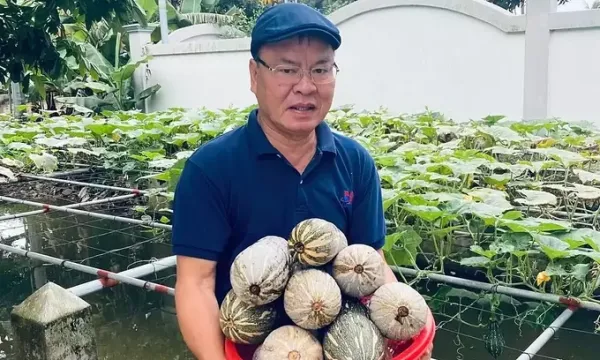
Pham Phu Phuc grows vegetables and raises fish since returning to his hometown in northen Hung Yen province after retirement. Photo courtesy of Phuc |
Pham Phu Phuc, now over 70, used to head Vietnam News Agency bureaus in several countries.
After retirement, he returned to Bac Dong Quan Commune in Hung Yen Province to farm. He built a house, tills the soil, and lives a simple life but remains connected, following global events, teaching, and offering commentary on international affairs for media outlets.
Like Phuc, Huong discovered her second career after an initial period of disorientation. The arrival of her third grandchild pulled her into a lively routine, while her rooftop garden keeps her busy around the clock.
Today, she actively participates in local communities centered on gardening, travel, photography, and philanthropy. Eight years into retirement, the former bank executive considers this the most fulfilling period of her life. “After a lifetime of carrying responsibilities, I can finally let go and live for myself.”