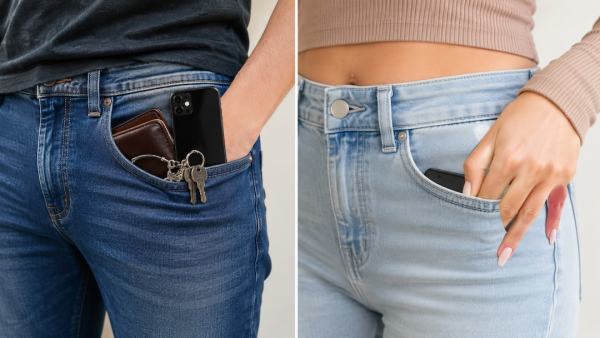
Almost everyone has noticed the difference. A pair of men's jeans can comfortably hold a phone, wallet and keys, while women's jeans often struggle to fit even a smartphone. The contrast has fuelled online debates, memes and questions about whether fashion brands deliberately design women's clothing this way. The answer, however, goes beyond handbags or marketing. Fashion historians and designers point to a mix of historical trends, changing clothing styles and modern design choices. The pocket gap has developed over centuries, reflecting how women's clothing evolved differently from men's. Here's why those tiny pockets are still common in many wardrobes around the world.
Women's Jeans Pockets
Women's clothing did not always lack storage space. Before stitched pockets became common, both men and women used separate fabric pouches tied around the waist beneath their clothes. During the late 18th and early 19th centuries, fashion shifted towards slimmer silhouettes for women, making bulky hidden pockets less practical. Small handbags known as reticules gradually replaced them. Meanwhile, men's garments continued adding built-in pockets, establishing a design difference that remained for generations.
According to an analysis by data journalism platform The Pudding, women's front jean pockets are, on average, 48 per cent shorter and around 6.5 per cent narrower than men's. The study also found that many women's jeans cannot fully hold a modern smartphone, highlighting how the size difference continues in contemporary clothing.
Why Designers Still Keep Pockets Small
Fashion designers often explain that the issue is linked to fit rather than storage alone. Most women's jeans are designed to follow the body's shape more closely. Larger pocket linings can become visible beneath fitted denim, changing the smooth appearance that many brands aim to achieve. As a result, skinny jeans and tailored trousers frequently feature shallow or decorative pockets, while relaxed-fit jeans and cargo trousers usually provide far more usable space.
Interestingly, jeans were originally created for practicality. When Levi Strauss & Co. and tailor Jacob Davis patented riveted denim trousers in 1873, they were intended for miners and labourers who needed durable clothing with functional pockets for everyday tools and essentials.
Why The Conversation Continues
Today, the debate is no longer just about carrying keys or a phone. Many consumers see pocket size as part of a wider discussion about balancing appearance with everyday convenience. As larger smartphones become essential items, shoppers increasingly expect clothing to offer practical storage without compromising comfort. In response, several fashion brands have started introducing deeper pockets across more women's collections, reflecting changing priorities in clothing design.
The pocket gap is rooted in history rather than a single design decision. While fashion trends created the difference, growing demand for comfort and practicality is encouraging brands to rethink women's clothing, proving that functionality is becoming just as important as style.