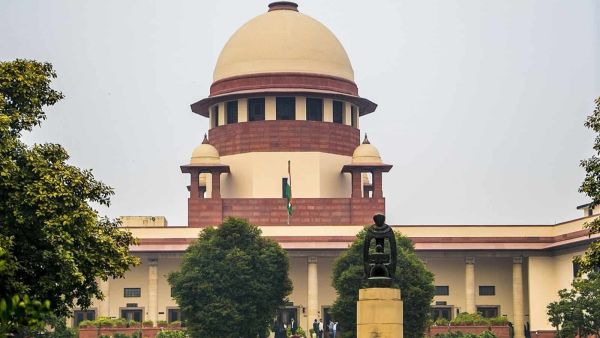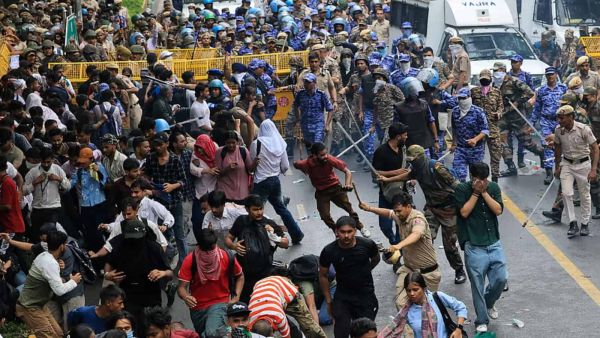
New Delhi: The Supreme Court on Monday, July 27, orally observed that the right to peaceful and lawful protest is protected under the Constitution and that agitation by itself cannot be used to justify a lathi charge by police.
The top court took up a batch of petitions alleging excessive use of force against students protesting across the country over the NEET paper leaks.
A bench of Chief Justice of India (CJI) Surya Kant, Justice Joymalya Bagchi and Justice V Mohana made the observations while the petitions were mentioned before it. The court said allegations of police excess should be independently examined and stressed the need for uniform protocols across states for handling protests.

“Right to peaceful, lawful protest absolutely guaranteed under Constitution. So long as it is peaceful agitation, merely because there is agitation, there can’t be (excess)… If there is excess committed, it should be independently examined. It’s not only a case of Delhi. Uniformity in protocol required. Merely because agitation is there, doesn’t mean lathi-charge. Discipline is integral to democratic process,” the CJI said.
Meanwhile, Justice Bagchi allowed a request from a counsel representing the families of policemen injured in the protests to join the proceedings, remarking that injury to any individual, whether a policeman or a student, was of equal concern to the court. He suggested the state be asked why police were not given adequate protective equipment such as helmets.
All the petitions are now scheduled to be heard together on Tuesday, July 28.
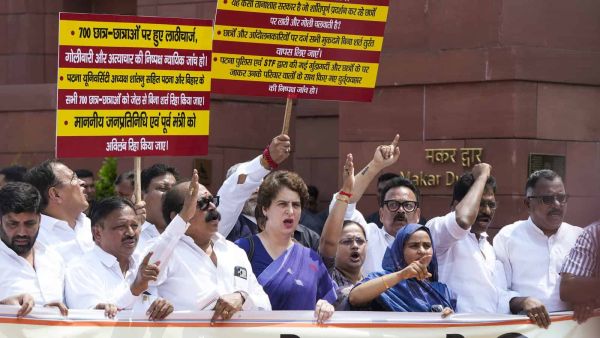
The petitions stem from events on July 20, when students and other citizens marched towards Parliament demanding the resignation of former Union education minister Dharmendra Pradhan over the education system and NEET paper leaks. The march was met with heavy police deployment, barricading, tear gas, lathi charges and large-scale detentions, according to the petitioners.
Two days later, on July 22, the CJI had declined to take up a letter written to him by advocate Narendra Mishra over the police action at the July 20 protest, later clarifying that this was because no formal petition had actually been filed before the court at that point and only an informal letter was sent.
That changed by July 24, when senior advocate Gopal Sankaranarayanan mentioned the matter again, citing the continuing protests and reports of excessive police force, and the CJI agreed the matter would be taken up.
One of the pleas seeks court directions to regulate police conduct during public protests, including a ban on plainclothes personnel being used for crowd control, clearer rules on the use of prohibitory orders under Section 163 of the Bharatiya Nagarik Suraksha Sanhita (BNSS) allowing authorities to restrict gatherings in urgent situations and an independent probe into the July 20 police action.
A separate petition against the Centre, the Delhi government, the Delhi Police Commissioner and all states and Union Territories alleges physical assaults on protesters, misconduct against female demonstrators and force used by unidentified or plainclothes personnel, claiming at least 60 protesters were injured.
It drew a sharp comparison in its language, stating that the events of July 20 amounted to “atrocities… no less than the atrocities of the Jallianwala Bagh.” The plea also contended that shutting down Metro services and the internet during the protests disrupted banking, telemedicine, remote work and emergency services for ordinary citizens.
Both petitions question the repeated use of prohibitory orders under Section 163 of the BNSS, arguing that authorities have turned the constitutional right to peaceful assembly into something requiring prior police permission, through what the pleas describe as “rolling prohibitory orders” imposed over long periods without any real or immediate threat to public order.
The petitions also flag concerns over Section 152 of the Bharatiya Nyaya Sanhita (BNS), which criminalises acts endangering India’s sovereignty, unity and integrity. They argued the provision is vague and broadly worded, risks being used against peaceful political dissent and criticism of the government and could have a chilling effect on free speech.
Separately, the pleas alleged that police personnel in plain clothes operating during the July 20 protest, without visible identification, violated Supreme Court guidelines in the DK Basu and Somnath judgments, which require officers making arrests or conducting interrogations to display identification.
The petitioners have sought national guidelines barring police from carrying out crowd-control operations or arrests in plain clothes or without visible identity badges, along with a standard operating procedure (SOP) to prevent blanket or repeated prohibitory orders under Section 163 of the BNSS without a documented threat to public order. They also sought guidelines ensuring Section 152 of the BNS is not invoked against political dissent, academic criticism or peaceful protest, except where there is direct incitement to armed rebellion or secession.
The petitions sought implementation of the police reforms directed by the Supreme Court in its 2006 ruling in Prakash Singh v Union of India, including the setting up of independent police complaints authorities, as well as an independent judicial commission or a special investigation team, headed by a retired Supreme Court judge, to probe the alleged police excesses, gender-based violence and arbitrary detentions during the July 20 protest, along with registration of a first information (FIR) against police personnel allegedly involved in assaults on female protesters.