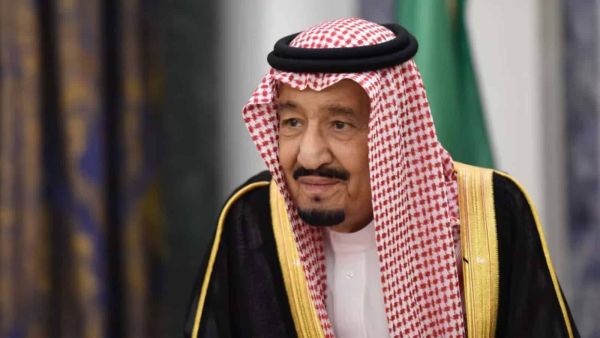
A trove of leaked Saudi Arabian government cables has revealed how Riyadh secretly tried to manufacture a sectarian split in northern Yemen more than a decade ago to weaken the Houthi movement, a plan personally directed by King Salman bin Abdulaziz.
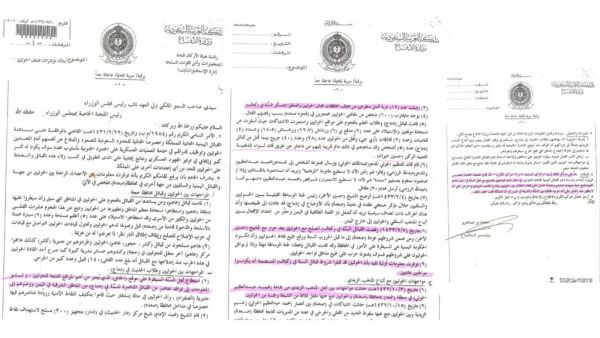
The documents, obtained by Drop Site News, are the work of a shadowy body called the Special Committee of the Council of Ministers, which has quietly run Saudi Arabia’s Yemen policy since 1962.
The committee reports directly to the Saudi Prime Minister’s office, keeps files on Yemen’s tribal chiefs, clerics, commanders and politicians, and has long paid monthly stipends to keep powerful Yemenis loyal to Riyadh. Its name appears in no official record in either country.

In January 2012, Saudi Arabia’s then-defence minister Salman bin Abdulaziz, now the kingdom’s ruler, signed a cable marked “Extremely Secret, Very Urgent” laying out a two-part plan, according to Drop Site.
The first was to arm ultra-conservative Salafi Sunni tribes already fighting the Houthis, known formally as Ansarallah. The second – and more calculated – was to drive a wedge between the Houthis and the wider Zaydi Shia community from which they emerged, engineering a sectarian divide where none had existed.
Crucially, King Salman wanted none of it to look sectarian or to be traced back to Riyadh. The cables suggest his reasoning, was strategic. If the fighting appeared to be a Sunni versus Shia war, Yemen’s Zaydi Shia majority would rally behind the Houthis out of religious solidarity, becoming a local nuisance into the defender of an entire sect.
In short, Saudi Arabia wanted to fund one side of a sectarian line while keeping its name off it.
The timing was no accident, as Yemen was in turmoil after the 2011 uprising that ended Ali Abdullah Saleh’s 33-year rule, the army had splintered and the Houthis, based in the northern highlands around Saada, were well placed to exploit the chaos.
The cables, dated between 2010 and 2012, record not just strategy but payments. A March 2010 cable signed by King Abdullah released SAR 50 million to arm and fund tribes fighting the Houthis along the border. A May 2012 Interior Ministry cable recorded a further SAR 5 million routed to front lines in the north, along with plans to open additional battlefronts.
The documents also claim that Saleh, even after stepping down, was secretly funding the Houthis as a counterweight to the Salafis.
The plan to quietly fracture the Houthis failed. Fighting around the Salafi seminary town of Dammaj raged from 2011 to 2014, killing scores of civilians. The Red Cross documented more than 100 dead in one early siege, while Yemeni health authorities counted 199 killed, including 29 children, in the final 100 days alone.
By early 2014, the Houthis had overrun Dammaj and expelled the Salafi students Riyadh had paid to protect. By September that year, they had seized the capital, Sana’a.
In March 2015, the covert effort exploded into open war when a Saudi-led coalition, backed by US military, intelligence and logistical support, launched a bombing campaign on northern Yemen. Despite King Salman’s earlier insistence on avoiding a sectarian frame, the kingdom ultimately leaned on sectarianism to rally Sunni fighters.
The campaign lasted eight years and more than 25,000 strikes, nearly a third of which hit civilian sites. The accompanying blockade helped trigger the largest cholera outbreak in recorded history and what the UN long called the world’s worst humanitarian crisis. By the end of 2021, the war’s toll stood at 377,000 dead, most from hunger and disease.
A decade on, the Houthis still control most of Yemen and the cables surfaced just as Saudi Arabia and Ansarallah appear to be sliding back toward open conflict.
A Saudi strike on Sana’a earlier in July this year drew Houthi retaliation and a declared naval blockade on Saudi vessels through the strategic Bab al-Mandab strait, threatening a four-year ceasefire and risking a wider flare-up tied to the US-Iran confrontation.