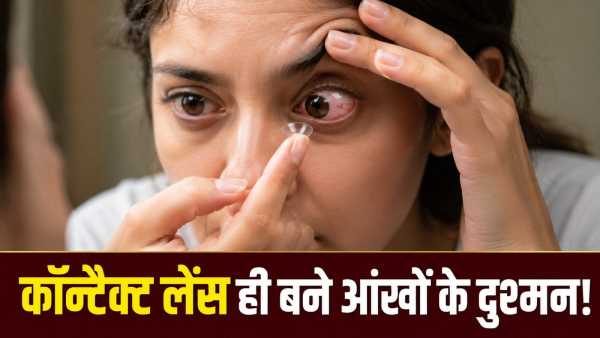
Eyes are a very delicate part of our body, hence even a little carelessness in taking care of them can become a big problem. Especially people wearing contact lenses should take more care of eye cleanliness. Many times, due to a small mistake, bacteria, viruses or other harmful germs reach the eyes, due to which the risk of infection increases. Such infections can also cause serious damage to the eyes if not treated on time.
Recently a similar case came to light with a woman from Britain. According to the report, the woman came in contact with dirty water and mud while cleaning the horse stable. He washed his face but did not remove his contact lenses. After a few days, he started having severe eye pain and blurred vision. Investigation revealed that a dangerous parasite named Acanthamoeba had entered his eye, which caused serious damage to the cornea of his eye. The infection increased so much that his eyesight got affected and now he may need a cornea transplant in the future. Let us know what this parasite is, how it harms the eyes and what things should be kept in mind to avoid it.
Acanthamoeba is a very small parasite, which can be found in soil, dust, lakes, rivers, tap water and other dirty water. If it somehow reaches the eye, it can infect the outermost transparent layer of the eye, i.e. the cornea. This infection is called Acanthamoeba Keratitis. This disease is mostly seen in people who wear contact lenses.
In the beginning, there may be problems like redness of eyes, pain or blurred vision. If timely treatment is not received, the infection can progress and cause serious damage to the cornea. In some cases, vision may become weak and there may be a risk of vision loss. Therefore, any kind of problem in the eyes should not be ignored.
US Centers for Disease Control and Prevention (CDC) According to, if you wear contact lenses, then take special care of cleanliness. Do not insert or remove lenses with dirty hands. Avoid bathing, swimming or coming in contact with dirty water while wearing lenses. If mud or dirty water accidentally gets into the eyes, remove the lenses immediately and get the eyes checked.
Always keep the lenses in cleaning solution and do not reuse the old solution. One should also avoid wearing lenses for longer than the prescribed time. By taking care of these small things, the risk of eye infection can be reduced significantly.
If there is severe pain in the eyes, persistent redness, blurred vision or light starts stinging, consult a doctor immediately. Apart from this, excessive watering from the eyes, feeling as if something is stuck in the eye or sudden difficulty in wearing contact lenses can also be a sign of infection.
Ignoring such symptoms can increase the infection and cause serious damage to the eyes. Getting tested and treated at the right time can help in protecting eyesight.