Gianni Infantino’s push to sell stakes in FIFA’s commercial rights is part of a troubling wider pattern that is draining the soul out of professional sport.
Earlier this week, Gianni Infantino appeared slightly irritated.
In a 15-slide Instagram post, the FIFA President addressed all the criticism surrounding the 2026 World Cup. It was essentially a catalogue of his achievements, pointedly paired with rebuttals to every major pre-tournament complaint. It came across like a victory lap from a FIFA President who knew he had more or less nailed the landing on a North American World Cup.
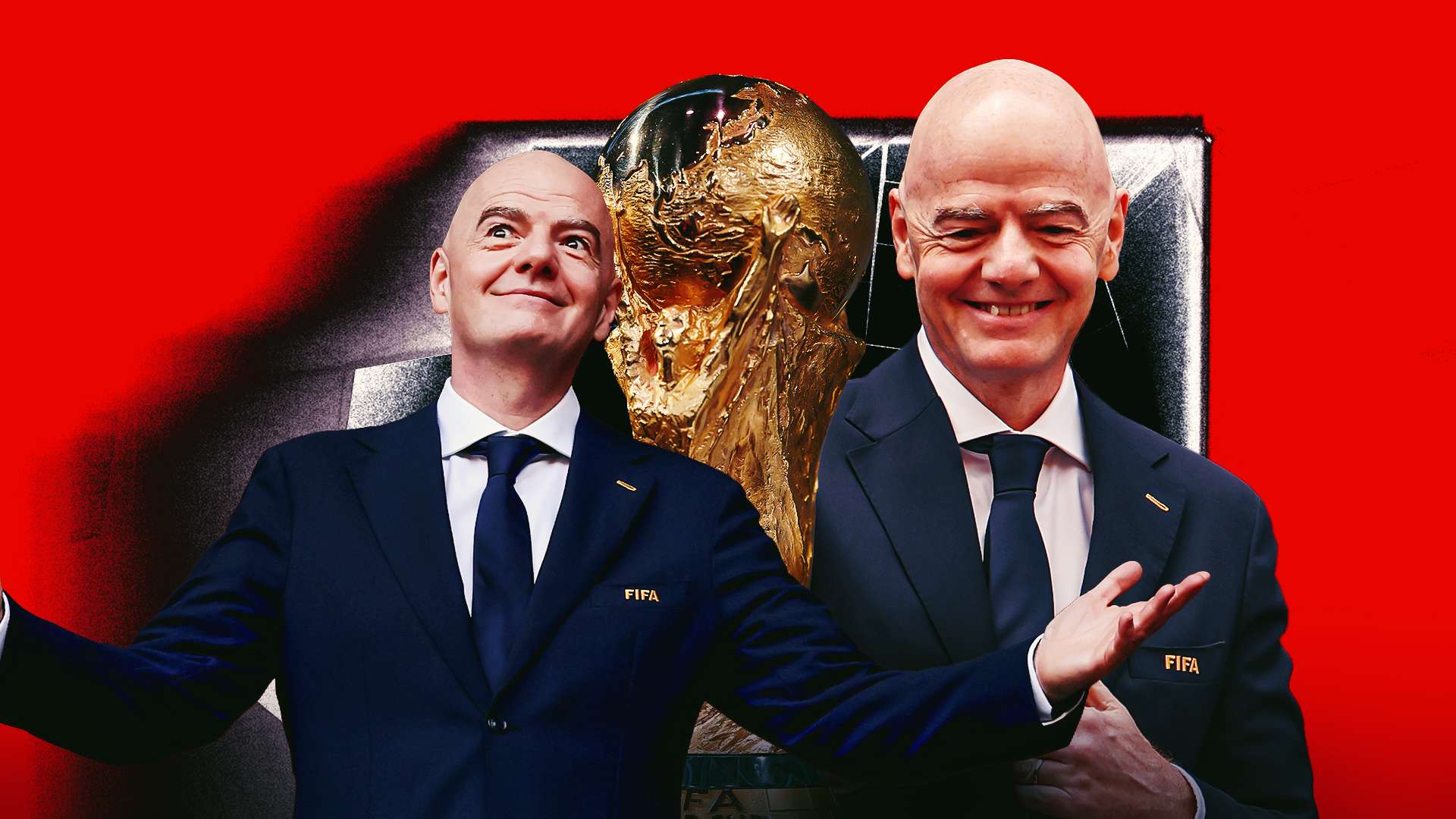
But it also felt a little unlike him. Infantino has usually projected himself as cool, calm and composed. He preaches rather than argues. He explains rather than defends. He stands on stages, bald head, slim suit, bright white trainers, and slips easily into TED Talk and LinkedIn-style jargon: "Here’s what sportswashing taught me about B2B sales" - or something along those lines.
That post, though, seemed to expose something else: an indignant, self-assured president keen to claim his share of the spotlight. Now Infantino has taken things a step further. His proposal to create a separate company for FIFA’s biggest competitions and then sell stakes in it to private investors has triggered anger among fans, clubs and football federations alike. To his critics, Infantino is now going after the soul of football.
Even so, Infantino’s plan should not come as any surprise at all, whether one is looking at the man himself or the organisation he leads.
Yes, this is an attack. Yes, it feels inauthentic. Yes, it is alarming. But Infantino’s proposal is also a reflection of a broader trend in sport that has been building for years. The soul of the game is, more or less, already slipping away. Infantino and FIFA are simply trying to deliver the final blow.
FIFA makes its move
First, the backdrop.
As with much of FIFA’s business these days, this begins with money. Football’s governing body made huge sums from the World Cup. FIFA is expected to bring in around $15 billion in revenue across its 2023-26 cycle, nearly double what it earned over the previous four-year period. In the lead-up to the tournament, almost everything seemed designed to maximise profit: ticket sales, advertisements around hydration breaks, high-end hospitality agreements, and the staging of the hugely controversial Club World Cup as a gruelling proof of concept. There is enormous profit potential in this sport. FIFA is not naive - it has always understood that. But now it is acting on it.
That same pattern has continued with Infantino’s latest proposal. It was first reported on Tuesday morning that Infantino, without informing any of football’s main federations, had devised a plan to cash in heavily on the sizeable revenues generated by FIFA’s flagship competitions. He wants to create a new company, called FIFA Forward Enterprise (FFE), which would combine FIFA’s commercial and event operations, including broadcast rights, sponsorship, ticketing, licensing and event delivery. FIFA reportedly believes FFE would be worth around $20 billion. FIFA would retain the majority stake, while also insisting it would keep sole control over football governance, competitions, the match calendar and all regulatory and sporting decisions.
The concerning part is what follows. FIFA intends to raise up to $4.2 billion by selling minority, non-controlling stakes amounting to as much as 20 percent of FFE. If the scheme is approved, each of FIFA’s 211 member associations could receive up to $20 million in immediate funding, along with another $20 million in FIFA Forward development funding during the 2027-30 cycle. That sits within a package worth more than $10 billion through 2038. Private investors, naturally, would have a direct interest in how FIFA’s major competitions perform commercially - and in when they are staged. FIFA, however, insists it will remain in control of all football decisions. And football federations reportedly have until Sept. 19 to sign off; otherwise, they would receive a smaller funding package, said to be worth around $10 million during the next cycle. FIFA needs the backing of at least 106 associations, plus approval from the FIFA Council, to alter the shape of global football.
Got all that? Good.
‘It is not FIFA’s to sell’
The backlash was immediate. UEFA released a sharply worded statement condemning the proposal before FIFA had even formally announced it.
“This crosses a line that football’s governing institutions should never cross. UEFA takes it extremely seriously. So should every national football association. So should every stakeholder: leagues, clubs, players, supporters, governments and everyone who cares about the future of the game. The soul and governance of football are not assets to trade - especially with zero transparency as to who gains financially. None of us are the owners of football. It is not FIFA’s to sell," it said.
After that, it became clear that FIFA was effectively trying to rush the move through. It offered a one-off payment of up to $20 million from Jan. 1, 2027, along with up to $20 million in FIFA Forward development funding during the 2027-30 cycle. UEFA answered with another angry statement.
"UEFA knows there is significant and growing opposition to FIFA's scheme. FIFA cannot continue to use our sport to enrich themselves and their friends. We can grow the game correctly."
It is worth acknowledging, at this stage, that there is some irony in UEFA now being cast as the good guys after repeatedly expanding and commercialising the Champions League. But the Super League was not their creation: UEFA opposed it from the beginning.
The English FA, German FA and several supporters’ groups have all either condemned the proposal or voiced serious concern. Former FIFA President Sepp Blatter, hardly an ideal symbol of moral clarity, said on social media that "No one has the right to sell our game." Blatter may be a deeply compromised messenger, but at least he loves football.
Still, perhaps unsurprisingly, reaction elsewhere has been more mixed. Czech FA president David Trunda publicly supported the idea, although the association is not expected to formally discuss its position until August. CONCACAF, of which U.S. Soccer is notably a member, raised concerns about the lack of transparency and urged FIFA to follow "good governance." It did not, however, outright condemn the proposal. The Asian Football Confederation adopted a similar line.
The coming storm
Even so, this has been building for some time.
The European Super League is a useful example, even if on a smaller scale. In 2021, 12 clubs from England, Spain and Italy announced plans to create a 20-team breakaway competition featuring 15 permanent members and allowing the biggest clubs to face each other more regularly. Their motives were largely commercial, with enormous broadcast rights revenues clearly in play if they could deliver elite fixtures week after week. JPMorgan - which is handling the money for FFE - acted as financier for that project too, committing €3.25 billion to launch it. The league collapsed after mass protests from fans, leagues and football federations. In hindsight, that should have been treated as a more serious warning shot.
Infantino has tried something similar before. In 2018, he backed a $25 billion offer supported by Japan’s SoftBank to finance new competitions, including an expanded men’s Club World Cup. UEFA resisted, but the groundwork had already been laid. Infantino eventually got his tournament, with the U.S. as sole host, although the broadcast agreement did not materialise as first intended. FIFA held talks over a reported $1 billion deal with Apple TV+, only for negotiations to fall apart, while Fox Sports and NBC reportedly declined to bid. DAZN eventually paid roughly the same amount. Then came another significant $1 billion deal: SURJ Sports Investment, a subsidiary of Saudi Arabia’s sovereign wealth fund, bought roughly 10 percent of DAZN. Saudi Arabia, of course, will host the 2034 World Cup.
Then there is Infantino’s notably close relationship with President Donald Trump. He attended Trump’s inauguration before presenting him with FIFA’s new Peace Prize at the 2026 World Cup draw for his supposed efforts to promote peace. Trump, in turn, has reportedly floated Infantino as a candidate for - yes, genuinely - Secretary-General of the United Nations. Against that background, it is notable that Thrive Eternal, led by Joshua Kushner, the brother of Trump’s son-in-law Jared Kushner, is fronting the proposed investor group for FFE.
Part of a larger trend
All of this is, to put it mildly, unpleasant. But the reality is that it is simply one part of a much bigger trend across sport.
The NBA announced in 2025 that it was exploring a European league, which it now intends to launch in the autumn of 2027. More than 20 groups submitted bids to join the league at the end of June. Some, in major markets, went beyond $1 billion - more than the valuation of half the English Premier League. Reports suggest that NBA Europe will directly compete with the EuroLeague, an already elite basketball structure that regularly sends some of its best players to the United States. The NBA is reportedly planning to distribute around $10 billion across the European basketball ecosystem during the league’s first decade. FIBA has supported the project.
The NFL’s International Series has expanded beyond London, with nine games scheduled across seven cities in seven countries in 2026. On the commercial side, the NFL’s Global Markets Program allows teams to negotiate marketing rights in individual countries in order to "build brand awareness." All 32 teams are involved, with rights spread across 22 international markets.
Even the college football landscape in the U.S. is changing. Private capital has now entered NCAA sport. The University of Utah partnered with Otro Capital last December, creating a for-profit company to manage commercial operations linked to its athletic programme. Utah keeps control, while Otro holds a minority stake. The Big 12 has agreed to a deal with RedBird Capital and Weatherford Capital that gives schools an optional credit line of up to $30 million each. RedBird, notably, also invests in Paramount, which could prove useful when the conference has to renegotiate broadcast rights in 2031.
Powerful men in suits have been pulling strings in the background for years. Infantino is simply another one of them.
Why resistance will be futile
And perhaps that is the most disheartening part, because football was always meant to be the sport that could push beyond corporate greed.
The fight against the Super League served as a strong proof of concept that collective organisation could repel outside investment. The expansion of the UEFA Champions League, the success of the Club World Cup, and the broad approval of a 48-team men’s World Cup were certainly setbacks for traditionalists, but something about the sport’s purity had always managed to survive. Even the suggestion of domestic matches being played on foreign soil offered a certain kind of hope.
But when moves like this happen at the very top, it becomes hard to see how there can be any meaningful resistance to the rising tide. UEFA are the main opponents here, and they certainly carry some power. They have successfully threatened boycotts before. There is also the simple fact that Europe remains the true centre of global football.
They are reportedly considering another boycott, with an emergency meeting also possible. But if you do the maths, the opposition may simply not be enough. Each of FIFA’s 211 member associations has one vote in Congress. How many of the 163 nations that did not take part in the 2026 World Cup would turn down the possibility of up to $40m in funding? Even first-time qualifiers such as Curaçao, Cape Verde and Uzbekistan may regard that money as vital in making sure 2026 was not just a one-off. The proposed funding would undoubtedly strengthen those ambitions.
So calling on UEFA to “show some backbone” only goes so far. The richest federations might refuse. They might even threaten a boycott. But too many others have too much to gain to do the same. That is the darkest part of all: the proposal may feel morally wrong, yet rejecting it could become financially impossible. Infantino does not need to win the debate. He only has to make saying no too expensive.