FIFA president Gianni Infantino has defended the controversial proposal to sell a minority stake in the World Cup after a sharp backlash from regional confederations. Infantino said the $20 billion commercial plan is only an “opportunity” and “not an obligation” as the consultation process gets under way.
Infantino defends controversial $20bn World Cup plan
Infantino has responded to strong criticism over the proposal to sell outside stakes in the World Cup. The governing body triggered outrage this week when it revealed plans to create a new $20 billion subsidiary to run its biggest international tournaments. Under the proposal, FIFA plans to offer as much as a 20 per cent stake in the commercial entity to external private investors. The decision was met with immediate criticism from regional confederations, who said they had been completely blindsided by the announcement.
FIFA chief says proposal is ‘not an obligation’
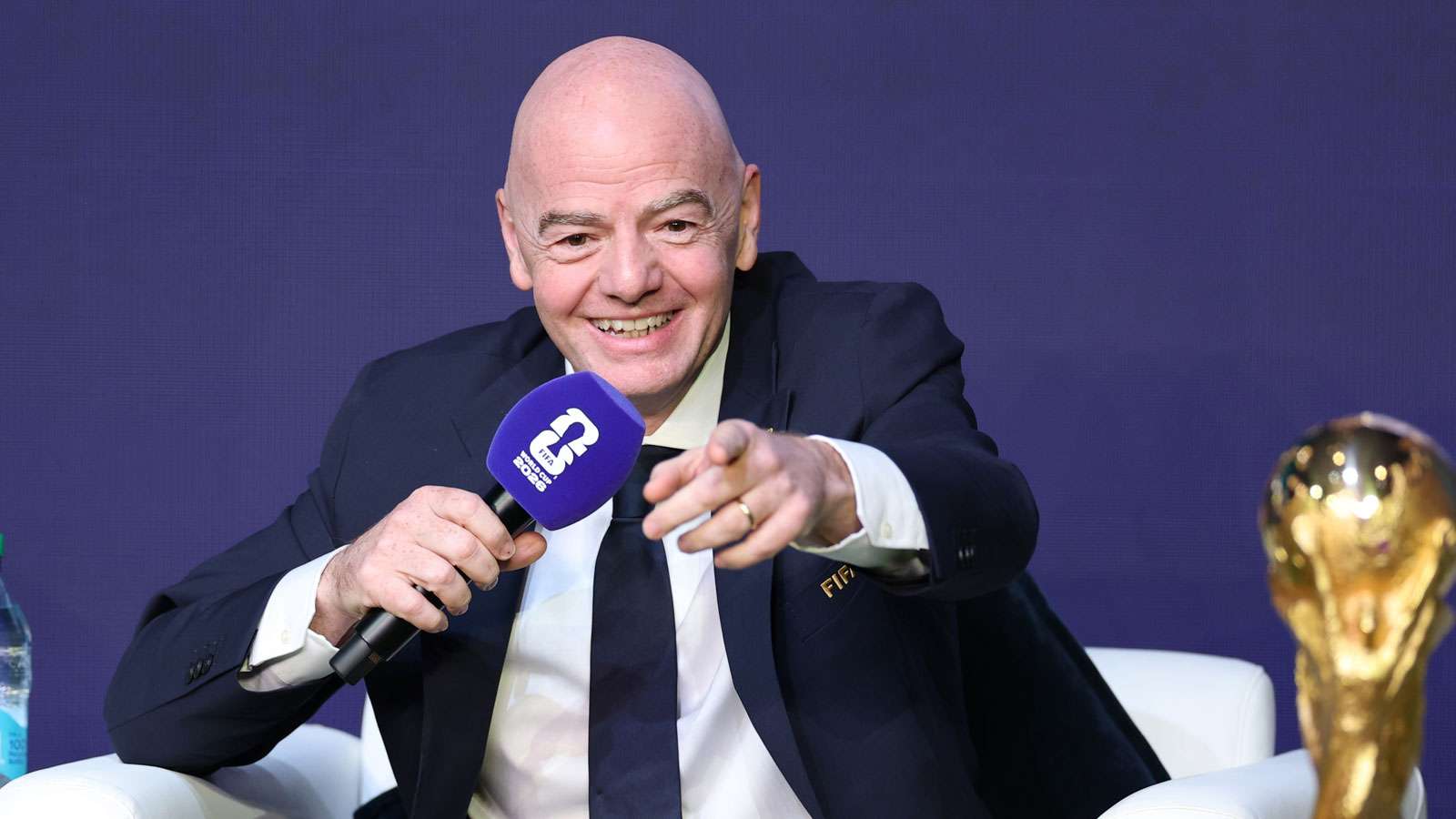
Speaking amid the growing backlash in a video released on Wednesday, Infantino tried to ease concerns by presenting the initiative as a discussion document. He said the proposal is the starting point of a wider conversation across football.
“Well, FIFA 4 Enterprise, or FFE, is actually a proposal, an offer, it’s part of a democratic process, a consultation process, and above all, it is an opportunity, but not an obligation, and as I said, it kicks off the consultation process, if and only if it is approved by the majority of our 211 member associations and the FIFA Council, it would be a FIFA-owned and controlled subsidiary, consolidating FIFA’s commercial and event operations,” Infantino explained.
Commercial expansion seen as a ‘natural evolution’
In spite of the strong resistance, Infantino argued that widening FIFA’s commercial model is a natural next step for world football. FIFA already earns billions of dollars in revenue, mainly through broadcasting rights, sponsorship agreements and the running of major tournaments. Although the idea of private investment has unsettled important stakeholders, the FIFA president assured supporters that the governing body would not surrender control of its most valuable assets.
“It would simply commercialize and organize all FIFA-owned competitions, along with sponsorship brokers, licensing a new venture for the benefit of FIFA’s 211 member associations, however, unlocking previously uncaptured commercial value. So, we believe that the FFE proposal would unlock the sport’s potential in every corner of the world, across men’s, women’s, and youth football,” he added.
“In the next forward cycle alone, distributions would rise from $8 million per MA to $20 million. Additionally, each MA would also have the option to access a further $20 million through the FIFA Fast Forward Program, taking the potential funding to $40 million per MA for this next cycle. It is a golden opportunity to turbo-charge the development of the game globally. But again, it is just an offer, not an obligation. It is simply a choice for our members.”
What happens next?
The future of the World Cup stake-sale proposal now lies with FIFA’s 211 member associations. With a deadline fixed for September 19, heavy lobbying and debate are expected in the coming weeks as federations consider the possible financial gains against the ideological objections raised by UEFA and others.
If the proposal is voted down, FIFA members will still receive their usual annual payments, but they will miss out on the substantial cash boost promised by the FFE initiative. The forthcoming vote is set to be a defining moment in Infantino’s presidency and in the future commercial shape of world football.