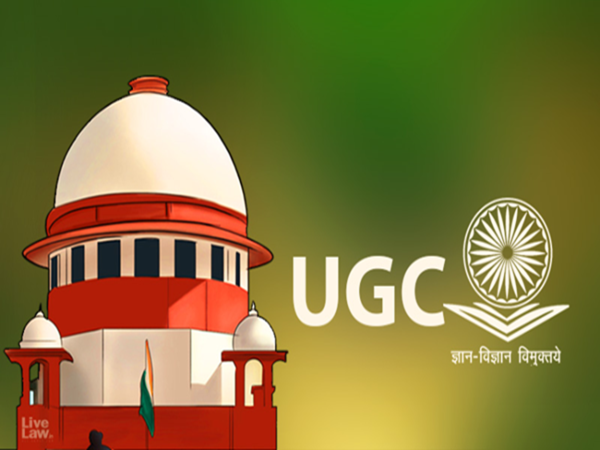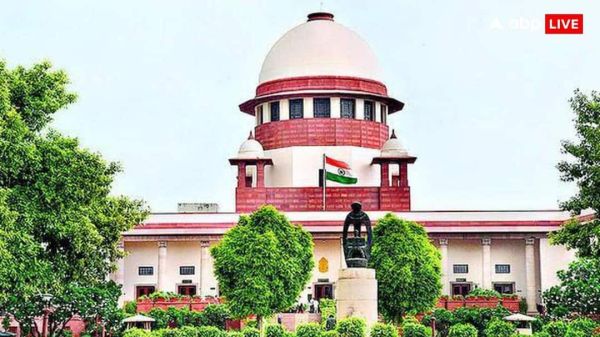
The Supreme Court on Thursday raised sharp questions over the Centre's decision to exclude the Chief Justice of India (CJI) from the committee that appoints the Chief Election Commissioner (CEC) and Election Commissioners (ECs). Hearing petitions challenging the constitutional validity of the Chief Election Commissioner and Other Election Commissioners (Appointment, Conditions of Service and Term of Office) Act, 2023, the court repeatedly emphasised the need for fairness and institutional independence in the appointment process.
The bench observed that the offices of the CEC and Election Commissioners are critical to the functioning of India's democracy and sought an explanation for why the CJI had been removed from the selection panel under the new law.
During the hearing, the judges questioned the rationale behind Parliament's decision to omit the CJI from the three-member committee responsible for selecting Election Commissioners. The bench noted that the Chief Justice continues to be part of appointment panels for key constitutional institutions such as the CBI director and the Lokpal.
The court asked, as per reports, "Should there be no show of fairness in the procedure?" while stressing that appointments to the Election Commission require robust institutional safeguards given the constitutional importance of the posts.
The judges clarified that their concern was not directed at any individual occupying public office but at ensuring a transparent and credible appointment mechanism capable of inspiring public confidence.
Appearing for the Centre, Solicitor General Tushar Mehta defended the 2023 law, arguing that it would be inappropriate to assume that the Prime Minister or other members of the selection committee would act in "bad faith" or undermine "democracy" merely because the executive enjoys a numerical majority on the panel.
He further submitted that the office of the Prime Minister carries a "sanctity attached" to it and argued that questioning the composition of the committee could weaken constitutional trust in elected institutions.
Mehta also urged the court to refer the matter to a larger Constitution Bench under Article 145(3), contending that the petitions raise substantial constitutional questions. According to him, questioning the adequacy of the selection mechanism effectively places Parliament's constitutional judgment and the doctrine of institutional trust "under the dock."
Attorney General R. Venkataramani supported the Centre's stand, maintaining that courts should not invalidate legislation simply because an alternative framework appears preferable. Stressing the principle of separation of powers, he remarked, "Parliament cannot be gagged."
Mehta also argued that the executive, legislature and judiciary are constitutionally independent institutions that must respect each other's domains.
The bench made it clear that it was not questioning the personal integrity of the Prime Minister. Instead, it said the issue before it concerned institutional safeguards necessary to preserve the independence of the Election Commission.
The judges also sought information on the number of ministers currently facing pending criminal cases, recalling earlier assurances by the government that individuals with criminal backgrounds would not be entrusted with positions of responsibility.
The legal challenge stems from a 2023 Constitution Bench judgment, which had directed that, until Parliament enacted a law, appointments to the Election Commission should be made by a committee comprising the Prime Minister, the Chief Justice of India and the Leader of the Opposition. Parliament subsequently enacted the 2023 law, replacing the CJI with a Union minister nominated by the Prime Minister.
After hearing detailed submissions from both sides, the Supreme Court reserved its order on whether the petitions should be referred to a larger five-judge Constitution Bench. Under the current law, the selection committee consists of the Prime Minister, a Union minister nominated by the Prime Minister, and the Leader of the Opposition in the Lok Sabha, or the leader of the largest opposition party if there is no recognised Leader of the Opposition.