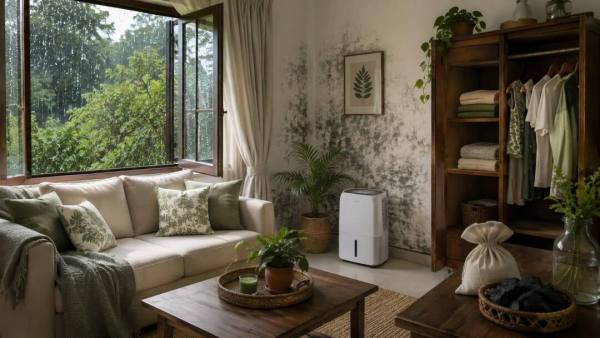
The monsoon may cool the weather, but it often leaves homes battling excess moisture, unpleasant smells and mould growth. High humidity, reduced ventilation and hidden leaks can quietly damage walls, furniture and fabrics while affecting indoor air quality. According to the World Health Organization (WHO), long-term exposure to damp indoor environments may increase the risk of allergies, asthma and respiratory problems. The good news is that preventing these issues does not always require major repairs. A few practical maintenance habits and timely action can help keep your home dry, comfortable and healthy throughout the rainy season without much effort.
Humidity levels rise sharply during the rainy season, allowing moisture to settle into walls, wooden furniture, upholstery, curtains and cupboards. With windows often kept closed to prevent rainwater from entering, airflow reduces, and trapped moisture creates ideal conditions for mould, mildew and stale odours.
The World Health Organization (WHO) says persistent indoor dampness and mould are associated with a higher risk of respiratory symptoms, allergies and asthma. Preventing moisture build-up remains the most effective way to reduce these health concerns.
Good ventilation is one of the simplest ways to control indoor humidity. Open windows whenever there is a dry spell and encourage cross-ventilation by opening doors or windows on opposite sides of the house. Keeping furniture slightly away from walls also improves air circulation.
At the same time, inspect your home for roof leaks, cracked walls, leaking pipes and damaged window seals. Small seepage problems can quickly develop into peeling paint, mould and structural damage if ignored. Bathrooms and kitchens also need extra care during the monsoon. Use exhaust fans after cooking or showering, wipe away excess water and avoid allowing moisture to collect around sinks and corners.
Wardrobes, cupboards and enclosed storage spaces often develop a musty smell first because they receive little ventilation. Leave cupboard doors open occasionally, use silica gel packets, activated charcoal or other moisture absorbers, and never store clothes or linen unless they are completely dry.
Household fabrics also absorb moisture easily during the rainy season. Dry towels, curtains, rugs, cushions and bedsheets thoroughly before putting them away. Whenever sunlight appears, air mattresses, pillows and blankets outdoors. If humidity remains consistently high, a dehumidifier can help reduce excess moisture and lower the chances of mould developing indoors.
Some dampness during the monsoon is expected, but recurring issues should never be ignored. Black or green mould patches, bubbling paint, crumbling plaster, repeated damp spots and a lingering musty smell often indicate an underlying moisture problem rather than a surface-level issue.
Clean mould as soon as it appears using suitable anti-fungal products, dry the affected area properly and, most importantly, identify the source of moisture instead of repeatedly treating the stains. Interior experts also recommend choosing breathable fabrics such as cotton, linen and khadi during the rainy season, as they dry faster and retain less moisture than heavier materials.
Keeping your home dry during the monsoon is about more than maintaining its appearance. Regular ventilation, prompt repairs and simple moisture-control measures can help protect your interiors while creating a healthier indoor environment for everyone at home.