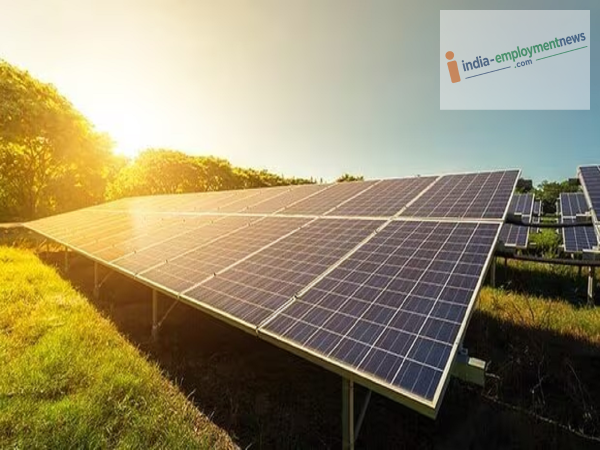
Solar Panels: The average lifespan of a solar panel is around 25 to 30 years.
Solar Panels: Today, solar energy is viewed as a clean and sustainable option. From residential rooftops to massive solar parks, solar panels are generating electricity everywhere. However, alongside their growing popularity, a question arises: what happens to these panels once they reach the end of their lifespan? Let’s uncover the full story.
Where do solar panels go after their service life ends?
For your information, the average lifespan of a solar panel is approximately 25 to 30 years. After this period, their electricity-generating capacity gradually declines, and they eventually need to be replaced. Experts estimate that by 2050, the world could accumulate over 80 million metric tons of waste from old and discarded solar panels.
If not disposed of or recycled correctly, they could end up in landfills, creating new environmental problems. Furthermore, the valuable metals contained within them would be lost forever.
How is recycling currently handled?
Most recycling centers extract easily separable components like aluminum frames, glass, and copper from solar panels. However, extracting the valuable metals located inside remains a difficult and expensive task. This is why a significant portion of the panel cannot be fully reused.
Solar panels contain many valuable materials.
Most people assume solar panels are made solely of glass and metal, but in reality, they contain several important materials. These include silver, indium, gallium, tellurium, lead, copper, aluminum, and glass.
Extracting these materials through mining consumes a vast amount of energy and resources. Therefore, reusing them can save natural resources and reduce costs.
What is the process?
Currently, pyrometallurgy technology is used for recycling in many places. This process involves melting various materials by generating temperatures of up to approximately 2,000 degrees Celsius. Although this method is highly effective, it consumes vast amounts of electricity. Additionally, separating different metals efficiently can often prove quite difficult.
New technology could offer a better solution.
Scientists at the New York University Tandon School of Engineering believe that hydrometallurgy could become a superior option in the future. Instead of relying on extreme heat, this technology utilizes special chemicals that dissolve only specific metals. These metals can subsequently be purified and reused to manufacture new products.
Since the process operates at lower temperatures, it consumes less electricity and allows for more efficient recovery of valuable metals.
Next-generation panels could simplify the task.
It is worth noting that scientists are currently focusing on perovskite solar cells. This technology is rapidly gaining popularity due to its low cost and superior efficiency. Research has shown that, in many instances, metals like lead found in these cells can be separated using nothing more than hot water. As the water cools, the lead precipitates into crystals, which can then be reused to manufacture new perovskite solar cells.