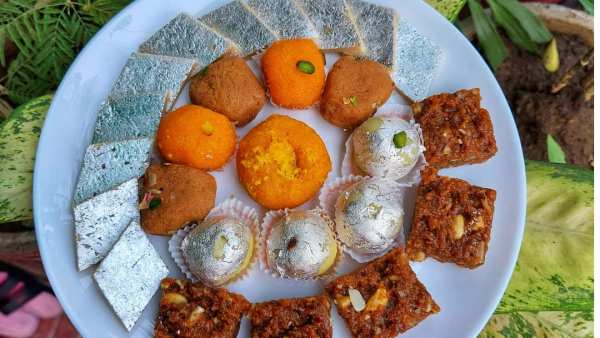
Whether it's a wedding, a festival, or any special celebration, sweets adorned with a thin layer of silver foil instantly look more appealing. Known as silver varak, this edible coating has been used in Indian sweets for generations. However, with adulteration becoming increasingly common, consumers are often left wondering whether the silver foil on their favourite mithai is genuine or fake. Using poor-quality or imitation silver foil can pose health risks. Before buying sweets, it is worth checking a few simple things to ensure the silver varak is authentic.
One of the easiest ways to identify genuine silver varak is by looking at its appearance. Real silver foil has a soft, natural shine and is paper-thin, blending smoothly with the surface of the sweet. It does not appear overly reflective or metallic. Fake or inferior-quality foil, on the other hand, often looks unusually bright, thick, or resembles aluminium. If the coating appears heavy or excessively glossy, it is better to avoid purchasing those sweets.
If you are buying packaged sweets, always check the label carefully. Look for the FSSAI licence number, manufacturer's details, packaging date, and expiry date. These details indicate that the product has been prepared and packed under food safety guidelines. When buying loose sweets, choose a reputed sweet shop or a trusted brand. If you have any doubts, ask the shopkeeper whether the silver foil used is food-grade edible silver varak.
Authentic silver varak adds to the production cost of sweets. If silver-coated sweets are being sold at unusually low prices, it may indicate the use of fake or low-quality foil. Instead of making your decision based only on price, pay attention to the overall quality of the sweets and the credibility of the seller. A little caution while purchasing can help ensure that the sweets you bring home are both delicious and safe to consume.