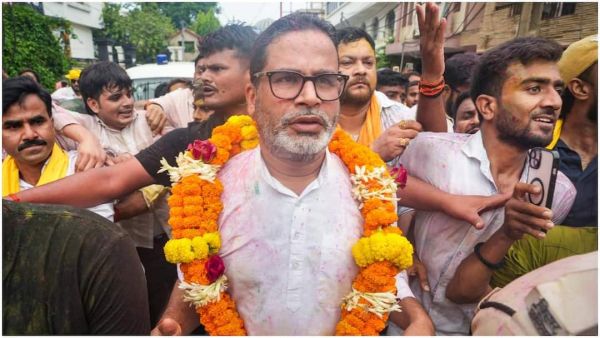
Jan Suraaj founder Prashant Kishor not only won his maiden election but also pulled off a major upset by defeating the BJP in its traditional stronghold of Bankipur, sending a significant political message across Bihar and beyond.
Vote counting continued for 31 rounds, with Kishor maintaining his lead throughout. He eventually defeated BJP candidate Neeraj Sinha by 18,953 votes. RJD candidate Rekha Gupta finished a distant third.
Bankipur Bypoll Result
Prashant Kishor (Jan Suraaj): 63,203 votes
Neeraj Sinha (BJP): 44,250 votes
Rekha Gupta (RJD): 14,085 votes
Five Reasons Behind Prashant Kishor's Victory
1. Early Ground Campaign After Seat Fell Vacant
Bankipur was represented by BJP leader Nitin Nabin before he resigned to enter the Rajya Sabha. Soon after the seat fell vacant, Prashant Kishor intensified his outreach in the constituency, engaging directly with residents, raising awareness about citizens' rights, and focusing on local issues. His sustained grassroots campaign, particularly among young voters, is considered one of the key reasons behind his victory.
2. Strong Support From Young Voters
Kishor is believed to have secured overwhelming support from younger voters, with the NEET-related protests also seen as boosting his appeal.
According to local assessments, voters above the age of 40 largely remained with the BJP, while younger voters backed Jan Suraaj. In many households, younger family members reportedly voted for Kishor, whereas older members preferred the BJP.
3. Discontent Over Samrat Chaudhary's Leadership
Another significant factor was the reported dissatisfaction with Bihar Chief Minister Samrat Chaudhary.
According to the report, many sections, particularly young voters, were unhappy with his leadership. It also claims that sections of Bhumihar, Kurmi and other communities had expressed dissatisfaction after Chaudhary became Chief Minister following Nitish Kumar. This sentiment is believed to have influenced the bypoll outcome, with reports suggesting that nearly 50 per cent of Kurmi votes went to Prashant Kishor.
4. Lower Overall Turnout Favoured Jan Suraaj
Compared to the 2025 Bihar Assembly election, voter turnout in the bypoll was around seven percentage points lower.
However, youth participation was reportedly higher, while turnout among middle-aged and elderly voters declined. The report suggests this voting pattern worked in Kishor's favour.
5. Cross-Community Support Helped Secure Victory
The report claims that Prashant Kishor received support across multiple communities and succeeded in making inroads into the NDA's traditional voter base.
It further alleges that the RJD's core Muslim vote also witnessed a split, with around 65-70 per cent of Muslim votes reportedly going to Kishor. The report also claims that he received support from Yadav voters, particularly younger members of the community, with around 30 per cent of young Yadav voters backing Jan Suraaj.