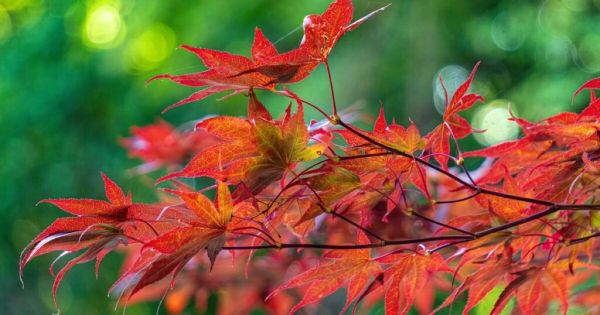
Japanese maples can struggle to grow or even lose their leaves in summer (Image: Getty)
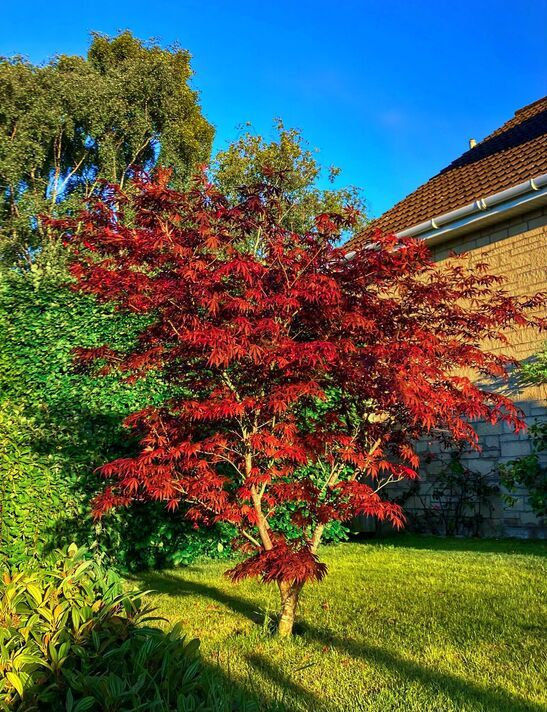
Japanese maples, also known as Acer, are prized for their bright, vivid leaves, which turn a beautiful deep red when properly cared for. This tree makes any garden look more striking in summer through autumn, but while many gardeners try to feed their trees during warm weather, doing so at the wrong time can leave Japanese maples stressed and badly damaged.
The problem is that Japanese maples are particularly sensitive to heat. Their roots sit close to the surface, making them more vulnerable to drying out and more likely to react badly if fertiliser is added during hot spells. Many general-purpose feeds contain salts and chemicals which can scorch roots and foliage when the soil is already warm and the plant is under pressure.
Experts at Mendocino Maples Nursery say the last safe window to fertilise a Japanese maple is early May, and after that it’s better to focus on keeping the root zone cool and moist rather than pushing new growth.
Instead, they recommend adding one simple natural item to the soil: mulch.
They explained: “Mulch is a good friend of your maple. Mulch protects the roots from the heat in summer, the cold in winter and reduces the frequency of watering.”
Japanese maples naturally thrive in woodland conditions where the ground is covered with leaf litter. That layer acts like a protective blanket, helping the soil retain moisture and shielding shallow roots from direct sunlight.
Mulching copies those conditions in UK gardens. A layer of organic material helps the soil retain water, reduces temperature swings around the root zone and lowers the risk of the tree becoming stressed in prolonged warm weather.
Over time, organic mulch breaks down, improving the soil and supporting healthier growth without requiring extra fertiliser.
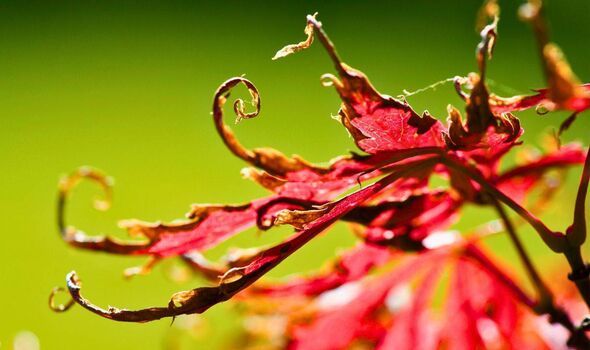
Japanese maples can really struggle in hot weather (Image: Getty)
To mulch effectively, focus on protecting the roots while avoiding damp building up against the trunk. Start by clearing away any weeds, grass or debris around the base so the mulch can sit directly on the soil.
Then apply the mulch in a broad ring over the root area, but leave a gap around the trunk so none of the material is touching the bark, as trapped moisture can lead to rot.
A layer around 5–8cm deep is usually enough to insulate the soil and help it hold onto water, and it should be watered thoroughly afterwards to help it settle and hydrate the ground underneath.
With the roots insulated and the soil staying cooler and damper, Japanese maples are far more likely to keep their leaves looking their best through late summer and into autumn — without the risks that can come with feeding in hot weather.
Watering the roots is key (Image: Getty)
Watering technique matters just as much as mulching. Japanese Maples and Conifers reports that when you water Japanese maples, it’s best to give them a deep watering, meaning several minutes with a hose or longer with a sprinkler for planted trees.
Deep watering encourages roots to grow further down into the soil, which can help make the tree more drought-resistant. For potted Japanese maples, water until it drains from the bottom of the container, ensuring the entire root system is properly hydrated.
The plant experts added: “The time of day you water can also be important. Watering your Japanese maples early in the morning is ideal.
“This allows the trees to absorb moisture before the heat of the day sets in, reducing the risk of evaporation. Early morning watering also helps prevent fungal diseases, which can thrive in moist conditions during the cooler evening hours.
“When watering Japanese Maples, avoid using overhead sprinklers that wet the leaves if you can help it. Wet foliage can lead to fungal diseases and leaf scorch in the hot sun.
“Instead, use a soaker hose or drip irrigation system that delivers water directly to the root zone, ensuring efficient water use. Japanese maples are only going to drink water from the roots, so there is no benefit from watering the leaves.”