Rapid improvements in AI video-generation technology are increasingly allowing ordinary users to turn their creative ideas into moving images, according to Sina.
Since the beginning of this year, the internet has been flooded with fan-made short films inspired by Jin Yong’s famous wuxia novels, with many attracting attention for their impressive visual effects.
On Aug. 3, the hashtag “AI creates my dream Return of the Condor Heroes” surged in popularity on Weibo.
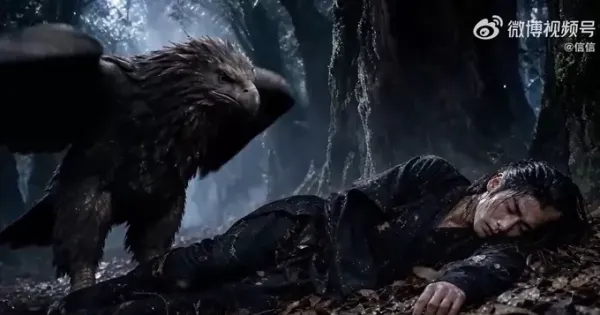
Thousands of viewers watched AI-generated interpretations featuring soaring mountain ranges, striking eagles and large-scale battle sequences. Many praised the technology for capturing the vastness and spectacle of the martial arts world depicted in Jin Yong’s writing.
A one-minute teaser produced by creator Faye Glide drew particular attention for its cinematic visuals and romantic atmosphere.
Although viewers acknowledged that the technology remains imperfect, some said they were eager to see what a complete AI-generated version of “The Return of the Condor Heroes” might look like, describing the rapid development of the technology as the beginning of a new era in filmmaking.
However, AI proved less convincing when it came to portraying the personalities and emotions of the story’s central characters.
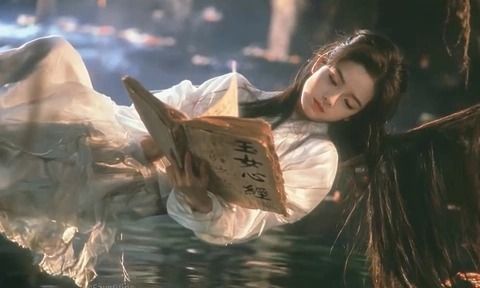
Some viewers found the facial expressions and demeanor of Yang Guo and Xiaolongnu lacking in depth. The AI-generated Xiaolongnu, in particular, was criticized for failing to reproduce the cold, ethereal elegance associated with actress Li Ruotong’s famous portrayal of the character.
Faye Glide’s AI interpretation of Xiaolongnu. Video from Weibo
Jin Yong’s classic “The Return of the Condor Heroes” has been adapted for the screen more than 10 times.
Television versions became hugely popular across Asia during the 1980s and 1990s, making the story and its characters cultural icons for a generation of viewers.
At the heart of the novel is the ill-fated romance between martial arts hero Yang Guo and Xiaolongnu. Jin Yong portrays Xiaolongnu as an extraordinarily beautiful and otherworldly woman whose distant personality was shaped by years of isolation in an ancient tomb.
Interest in AI adaptations is now spreading beyond Jin Yong’s wuxia stories, with audiences also looking forward to seeing classic Chinese myths and legends reimagined through generative technology.
In June, U.S.-based AI studio Utopai joined forces with Chinese media company Huace Media to develop an AI-animated feature film titled “Journey to the West: 500 Years of Loneliness.”
The trend has also begun moving beyond online platforms and onto traditional television.
In July, major Chinese broadcasters including Dongfang TV and Zhejiang TV aired their first AI-generated films, among them “Legend of the White Snake” and “Peach Blossom Pool Chronicles,” according to Xinhua.
Their broadcasts marked a significant step in the evolution of AI-generated filmmaking, as content that had largely circulated on smartphones and social media began reaching television audiences.
Li Xiao, an associate professor of film studies at Beijing Film Academy, described the broadcasts as an ambitious attempt by traditional media organizations to embrace digital innovation and broaden the reach of AI-generated content.
Ultimately, Li said, the goal is to use new visual technologies to retell traditional stories while continuing to preserve and promote China’s cultural heritage.
 |
|
The Condor and Yang Guo reimagined through AI. Photo from Weibo |