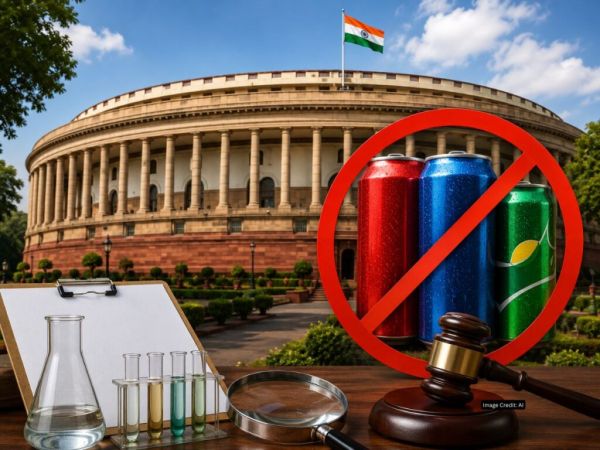
The presence of popular aerated drinks was formally banned from Parliament’s canteen in 2003, following alarming laboratory findings on pesticide contamination that triggered an uproar inside the House itself.
The controversy began in August 2003, when the Centre for Science and Environment (CSE) — a Delhi-based research and advocacy organisation — released the results of tests carried out at its Pollution Monitoring Laboratory. Samples of soft drinks collected from various parts of Delhi were examined, and the results were troubling: all twelve brands tested, including those made by Coca-Cola and Pepsi, showed traces of pesticide residues. Among the chemicals detected were lindane, DDT, malathion and chlorpyrifos — substances known for their harmful, long-term health effects.
The matter soon reached the floor of the Lok Sabha, where MP Ramji Lal Suman brought it up during zero hour, accusing multinational companies of playing with people’s lives. Several other members joined the discussion, including Pramod Panda, Anil Basu, Ramesh Chennithala, Raj Babbar, Kirit Somaiya and N. Krishna Das. Amid the debate, member V. Saroja called for security cover to be provided to CSE Director Sunita Narain, who had brought the report to light.
Responding to the debate, Mr E. Ahmed, Chairman of the House Food Committee, informed members that he had directed the Parliament canteen to enforce a ban on Coca-Cola, Pepsi and other aerated drinks. The announcement was welcomed by MPs present in the House.
Union Health Minister Sushma Swaraj described the matter as serious and told the House that she had sought a detailed report from the concerned departments, including the Food Processing Ministry.
Just days later, on 22 August 2003, the government set up a Joint Parliamentary Committee (JPC) to look into CSE’s claims and work out safety standards for soft drinks. Sharad Pawar was given charge of the panel, which met 17 times before finally presenting its report to Parliament on 4 February 2004 — a report that backed CSE’s findings on pesticide contamination.
The Parliament canteen ban, directed in the immediate aftermath of the CSE report, remains one of the earliest institutional responses to the controversy, predating the JPC’s formal findings by several months.
Khushi Patel is a Senior Sub Editor at NewsX, covering automotive, technology, Lifestyle, entertainment, and mainstream news. She previously worked as a Copy Editor at Times Network and has written automotive editorial content, including comparison pieces, for TimesDrive.
The post Why Are Cold Drinks Banned In Parliament? The 2003 Report That Sparked The Decision appeared first on NewsX.