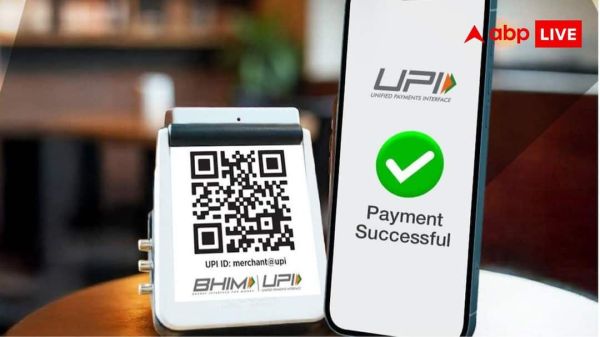
The Centre on Saturday clarified that users will not have to pay any transaction charges for making UPI payments, amid concerns over a recent amendment to the Payment and Settlement Systems Act (PSS Act).
The government said all Person-to-Person (P2P) UPI transactions will continue to be free, while any future Merchant Discount Rate (MDR) would apply only to a limited set of merchant transactions above a specified threshold.
The clarification came after the amendment to the PSS Act triggered debate over the possibility of charges being imposed on ordinary UPI users.
The government categorically stated that consumers making UPI payments will not face transaction charges.
"UPI will remain free for citizens," the government said, adding that there would be "No charges on everyday transactions on citizens."
It also reiterated that all P2P transactions will remain free of charge.
For merchants, the government said any MDR introduced in the future would be nominal and would apply only to a limited set of transactions above a certain threshold.
The government said the rate would be significantly lower than MDRs applicable to debit or credit card transactions.
The vast majority of merchant transactions on UPI will continue to remain free, it said.
The government said the proposed framework would become operational after Parliament passes the Taxation and Other Laws (Amendment) Bill, 2026.
The Bill proposes an amendment to Section 10A of the Payment and Settlement Systems Act, 2007.
Once Parliament passes the legislation, the "UPI and Services Steering Committee", headed by NPCI, will decide whether MDR should be introduced.
The government stressed that any MDR would be threshold-based rather than imposed across all UPI transactions.
According to the government, the amendment is an enabling provision aimed at supporting UPI's long-term sustainability, technological development and ability to withstand emerging risks.
UPI has witnessed exponential growth in transaction volumes, requiring continuous investment in cybersecurity, fraud prevention and supporting infrastructure.
The government also said a sustainable revenue model was necessary to encourage more companies to expand their operations and increase competition within the digital payments ecosystem.
It added that dependence on subsidies alone would not be viable for the next phase of UPI's growth.
The government also rejected media reports suggesting that external influences were behind the policy changes, calling such claims "unfounded, completely false and misleading".
It said that if external pressure had influenced the policy, the government would not have introduced UPI in 2016 or kept it free for merchants and citizens since January 2020.
The government said the amendment should instead be viewed as part of its broader objective of keeping India's digital payment infrastructure sustainable, competitive and capable of supporting the country's expanding digital economy.
"The truth is simple: UPI is India's own innovation, and the government remains committed to keeping it free for citizens while ensuring its sustainability for decades to come," it said.
The government said UPI has grown into the world's largest real-time payment system since its launch in 2016-17.
In July 2026 alone, UPI processed 2,366 crore transactions worth ₹29.9 lakh crore.
The platform is currently live in 11 foreign countries, while several other countries have expressed interest.
The government said expanding UPI into rural and semi-urban areas and maintaining its competitiveness would require the ecosystem to remain self-sustainable and affordable.
It described the PSS Act amendment as a forward-looking measure intended to ensure that UPI remains secure, affordable, inclusive and globally recognised.
The government also urged citizens to rely only on official information from the Ministry of Finance, the Reserve Bank of India and NPCI, and avoid forwarding unverified messages.