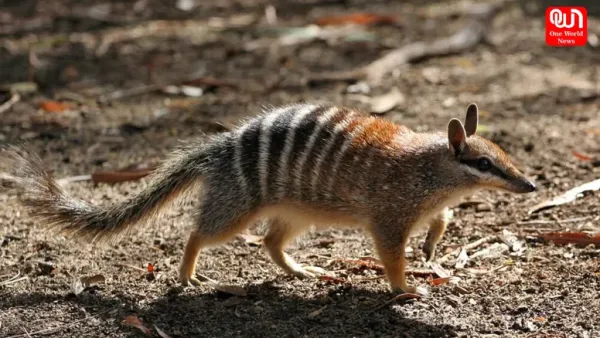
World Numbat Day 2026 is an important occasion dedicated to celebrating one of Australia’s most unusual and fascinating native mammals. The numbat, scientifically known as Myrmecobius fasciatus, is a small, striped marsupial that feeds almost entirely on termites. The day helps raise awareness about this distinctive animal and the conservation work needed to protect its populations.
Project Numbat celebrated World Numbat Day on November 1 in 2025, making November 1 the established date associated with the annual event. In 2026, the occasion falls on Sunday, November 1.
The celebration is particularly meaningful this year because the numbat has recently achieved a major conservation milestone. In July 2026, the International Union for Conservation of Nature (IUCN) moved the species from Endangered to Near Threatened following improvements in its population resulting from decades of conservation work.
A numbat is a small marsupial native to Australia and is sometimes described as a banded or striped anteater because of its unusual appearance and termite-based diet. It has reddish-brown fur, distinctive white and black stripes across its back and a long, bushy tail.
Unlike many other Australian marsupials, the numbat is primarily active during the day. It searches for termites using its keen sense of smell and long, narrow tongue. Australian government information describes the animal as a highly specialised termite eater, with adults capable of consuming large numbers of termites.
Numbats are also unusual because they do not have a conventional permanent pouch. Their young attach to the mother’s teats and are protected by surrounding fur and body hair.
read more: Guru Randhawa Fine Shyt Video Sparks Debate Over Objectification Of Women
World Numbat Day 2026 will be observed on November 1, 2026.
The annual event provides an opportunity for wildlife organisations, conservation groups, schools and animal lovers to learn more about numbats. Activities can include educational programmes, fundraising campaigns, wildlife talks, social media awareness campaigns and conservation initiatives.
Project Numbat has previously used the occasion to support practical conservation projects. For World Numbat Day 2025, the organisation announced funding for aerial surveys and radio-tracking collars for captive-bred numbats being prepared for release into the wild.
World Numbat Day is more than a celebration of a cute Australian animal. It draws attention to the challenges faced by native wildlife and demonstrates how long-term conservation programmes can make a difference.
Numbats experienced a dramatic population decline during the 20th century. By the late 1970s, only around 300 individuals remained in Western Australia, with introduced predators such as red foxes playing a major role in their decline. Habitat loss, feral cats and inappropriate fire regimes have also affected the species.
Conservation programmes have focused on predator control, habitat management, captive breeding, monitoring and carefully planned translocations. Predator-free fenced sanctuaries have also provided safer environments where numbat populations can establish and reproduce.
One of the biggest stories surrounding World Numbat Day 2026 is the numbat’s improved conservation outlook. The IUCN’s July 2026 assessment found that decades of conservation action had helped increase the overall population enough for the species to be reclassified from Endangered to Near Threatened on the Red List.
However, this does not mean numbats are completely safe. Their distribution remains much smaller than it was historically, and conservationists continue to emphasise predator management, habitat protection and population monitoring.
Australia’s federal environmental information still lists the numbat as Endangered under the EPBC framework, illustrating that different conservation classifications can apply under national and international systems.
There are several reasons why numbats deserve attention on World Numbat Day 2026:
People can mark World Numbat Day 2026 by learning about Australian wildlife and sharing reliable information about numbat conservation. Schools can organise classroom activities, wildlife quizzes or creative projects focused on Australian mammals. Wildlife enthusiasts can support legitimate conservation organisations and learn about habitat restoration and invasive-species management.
reasmore: Rotten Meat, Expired Milk: Food Safety Shocker As Taj, Radisson, Lalit Among Bengaluru’s 5-Star Hotels Raided
The most important message is that conservation success requires continued effort. The numbat’s recovery demonstrates that coordinated action can bring a species back from the edge, but protecting its future requires ongoing habitat protection, predator control, research and public support.
World Numbat Day 2026, observed on November 1, is a chance to celebrate an extraordinary Australian marsupial while highlighting the importance of wildlife conservation. From a severe population decline to its recent improvement on the IUCN Red List, the numbat’s story shows what sustained conservation can achieve. The 2026 celebration is therefore not only about appreciating this remarkable striped mammal but also about encouraging continued efforts to ensure that numbats remain part of Australia’s natural landscape for generations to come.