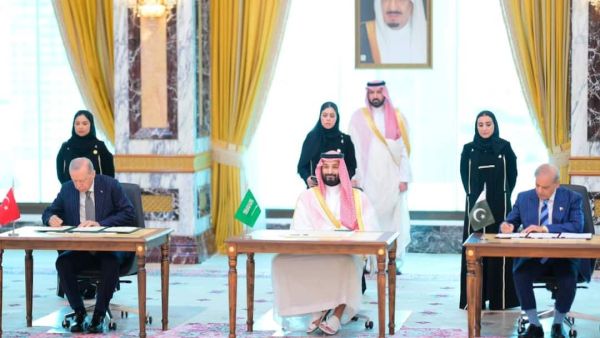
India is examining the implications of the newly signed Mecca Defence Pact between Pakistan, Turkey and Saudi Arabia, with the Ministry of External Affairs (MEA) saying it will take all necessary steps to safeguard the country’s national interests. MEA spokesperson Randhir Jaiswal said New Delhi is closely monitoring developments in West Asia and assessing the agreement from the perspectives of national security, regional peace and stability.
The pact, signed in Mecca on August 7, provides for greater defence cooperation and collective deterrence among the three countries.
Responding to questions during the MEA’s biweekly briefing on Tuesday, Jaiswal said India was examining the agreement’s implications for both national security and regional stability.
He stressed that India remains committed to protecting its interests and would take all necessary measures in response to developments.
The assessment comes amid heightened tensions in West Asia. The region has witnessed direct military exchanges and disruptions in the Strait of Hormuz, affecting energy supplies, shipping and wider regional security.
Arunachal Pradesh Is 'Integral' Part Of India: MEA Responds To China’s Renaming Move
The agreement was signed by Saudi Crown Prince Mohammed bin Salman, Turkish President Recep Tayyip Erdogan and Pakistani Prime Minister Shehbaz Sharif.
Under the pact, an armed attack against any one of the three countries will be treated as an act of aggression against all three. Official statements from the signatories said the agreement seeks to strengthen collective deterrence and expand defence cooperation.
Saudi Arabia separately clarified that the pact does not amount to a military alliance or religious bloc and does not involve nuclear ambitions or a regional arms race.
Riyadh said the agreement is aimed at developing sustainable, self-reliant defence capabilities while maintaining the kingdom’s existing relationships with Gulf, Arab and international partners.
Erdogan said the pact would strengthen collective deterrence, expand defence cooperation, support joint defence manufacturing and enhance counter-terrorism efforts.
He added that the agreement recognises the right to self-defence under Article 51 of the UN Charter and is not directed against any particular country.
The Turkish president also said other states committed to regional peace, prosperity and stability could participate.
The tripartite agreement builds on a bilateral Pakistan-Saudi defence pact signed in September, which similarly treats an attack on one signatory as an attack on both.
JSSC-CGL Paper Leaked In 2024? Ex-TDPL Manager Claims Rs 12L Taken From 15 Candidates