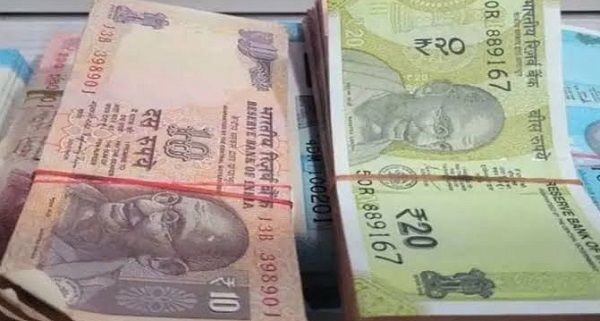
New Delhi. A big change can be seen in India's currency. the central government One billion polymer bank notes each of Rs 10 and Rs 20 The proposal to issue has been approved. These notes will currently be run as field trials (Polymer banknote). Union Finance Minister Nirmala Sitharaman gave this information in a written reply in the Rajya Sabha on Tuesday.
However, the date when these 'plastic notes' will start coming into the hands of common people in the country has not been decided yet. According to the government, the marketing process of the Reserve Bank of India (RBI) is still in the initial stage. Therefore, the exact time frame for introducing polymer notes and the possible expenditure on this cannot be estimated at present.
According to the Finance Minister, RBI had sent the proposal to the government based on the recommendation of its Central Board. In this One billion polymer bank notes each of ₹10 and ₹20 denominations It was said to be released for field testing.
this proposal Section 25 of the Reserve Bank of India Act, 1934 Sent under. After completion of field trials, regular issue of polymer notes in both these denominations was also proposed, which has been approved by the Central Government.
Polymer notes are different from normal paper currency. These are prepared from a special type of plastic film, which in technical language is BOPP i.e. Biaxially Oriented Polypropylene It is said.
It is a strong and transparent plastic sheet, whose thickness is approximately 90 micron It has been told. The note's design, serial number and various security features are based on this.
The biggest feature of polymer notes is their strength and longevity Is considered. Small denomination paper notes get spoiled relatively quickly due to constant handling, folding and use.
At the same time, polymer notes do not tear or get lost easily and their lifespan can be much longer than paper notes. According to available information, they are used in approximately up to 30 years Can be done.
This may reduce the need for RBI to frequently replace bad notes, print new notes and destroy old notes.
Another advantage of polymer notes is that liquids like water, rain or tea The effect is not like that of paper notes. Dust and dirt also stick relatively less on their surface.
If the note gets dirty, it can also be cleaned by wiping it. This may increase the utility and durability of smaller denomination notes.
Polymer currencies can be fitted with security features that are more difficult to counterfeit than ordinary paper notes. the most special of these transparent window it occurs.
This transparent part is an important part of the security system of the polymer note and it is not easy to copy it exactly with a normal printer or scanner. This can help in curbing the problem of fake notes.
Plastic currency is not a completely new concept to India. Polymer notes are already being used in many countries of the world.
currently in india Field trial of polymer notes of ₹10 and ₹20 Is proposed. Its objective will be to see how durable, safe and useful these notes prove to be in Indian conditions.
If the trial is successful, regular use of these notes can be started in future. However, the government has not yet clarified when the general public will start receiving polymer notes. At present, it is certain that an important step has been taken towards introducing 'plastic rupee' in India's currency system.