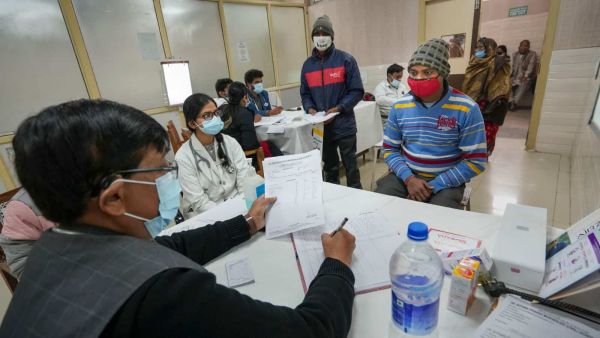
New Delhi: The parliamentary panel on health has recommended accelerating the expansion of standardised, low-cost health insurance products for the middle-income class, often excluded from publicly funded schemes and leaving them vulnerable to financial distress due to medical emergencies.
The recommendation is part of the 176th Report of the Department-related Parliamentary Standing Committee on Health and Family Welfare on ‘Affordability and Accessibility of Healthcare Facilities in Public and Private Sector’, presented in the Rajya Sabha on August 7.
The committee said the middle-income demographic requires “robust, accessible safety nets” and recommended expanding insurance products akin to Aarogya Sanjeevani, with simplified policy terms and wider demographic coverage.

It also recommended mandating transparent and standardised treatment packages across all healthcare providers to ensure predictability of costs, reduce catastrophic health expenditure and safeguard patient trust.
The panel said Ayushman Bharat-Pradhan Mantri Jan Arogya Yojana (AB-PMJAY) has covered more than 11 crore hospital admissions and empanelled 38,038 public and private hospitals, with treatments worth Rs 1.57 lakh crore authorised under the scheme.
However, it said the benefits of government health insurance schemes need to be insulated from medical inflation and unchecked escalation in technological costs.
The panel recommended a statutory mechanism for periodic revision of package rates of all government insurance schemes, taking into account regional economic variations so that private hospitals continue to participate without compromising quality of care.
The panel further recommended optimal utilisation of the National Health Exchange platform for faster and transparent cashless claim settlements and strict adherence to recent insurance reforms, including removal of upper age limits for purchasing policies and reduction of waiting periods for pre-existing diseases to three years.
It also flagged the burden of private healthcare costs, noting that the average out-of-pocket expenditure per hospitalisation episode stood at Rs 34,064.
It said annual medical inflation of 10-13 per cent was compounding the problem.
The panel recommended eliminating room-rent-linked inflation models for standard procedures across private hospitals and creating a statutory framework to standardise treatment guidelines and cap arbitrary price variations.
On affordable medicines, the committee recommended setting up Jan Aushadhi Kendras in all remaining block-level public health facilities and encouraging private tertiary hospitals to host AMRIT pharmacies to provide discounted implants and surgical consumables to a wider patient base.
It also recommended exploring public-private partnerships to expand free or highly subsidised haemodialysis centres beyond district hospitals to the sub-district level, noting that the national dialysis programme had already generated estimated patient savings of Rs 10,102 crore.
The panel suggested that states should increase their health allocations to at least eight per cent of their aggregate expenditure, with the Centre incentivising them to do so.
It also recommended bringing Ayush treatment packages under AB-PMJAY while maintaining zero out-of-pocket expenditure for beneficiaries.
The committee further called for statutory guidelines mandating integration of private healthcare providers into the Ayushman Bharat Digital Mission ecosystem and expansion of regional Tele-MANAS and eSanjeevani hubs to improve access to specialist mental and medical consultations in remote areas.
The report noted that out-of-pocket expenditure as a share of total health expenditure declined from 62.6 per cent in 2014 to 43.4 per cent in 2022-23, while per-capita government health expenditure increased from Rs 1,108 to Rs 2,786 during the period.