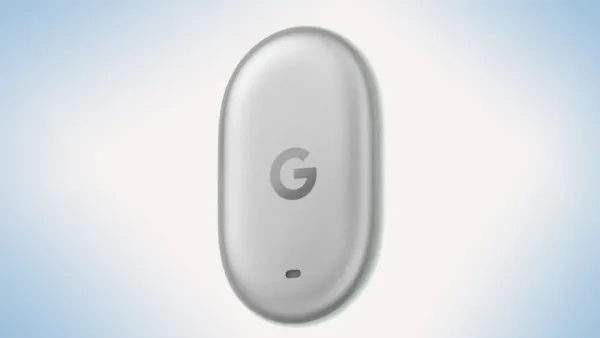
Google has finally entered the Bluetooth tracker market with the new Google Pixel Taggiving Android users a first-party tracking device designed to work with Google’s tracking ecosystem.
Bluetooth trackers have grown increasingly common due to their use in locating common objects like keys, wallets, bags, and suitcases. While Apple’s AirTag has been around for years, Android users have largely relied on third-party trackers. With Google Pixel Tag, that is set to change.
Google Pixel Tag works on the same principle as products like AirTag from Apple. These are small Bluetooth trackers that users can attach to or place among the things they are concerned about losing.
Google’s tracker is designed to work with its Find Hub ecosystem. This allows users to use their Android devices to help locate a missing item.
Google has set a price of $29 for a single tracker, and a pack of four would cost $99. The tracker is scheduled to launch on November 11, 2026, giving Android users a new first-party option for tracking everyday belongings.
The Google Pixel Tag is available in a Fog color scheme and is a mere 12 grams in weight. It uses a CR2032 coin-cell battery that Google rates for more than a year of use. The tracker also carries an IP67 rating, giving it protection against dust and water.
The Google Pixel Tag is compatible with both Bluetooth 6.0 and Ultra-Wideband (UWB). UWB may give distance and direction data if used with compatible devices, whereas Bluetooth 6.0 channel sounding will provide distance data if used with compatible mobile phones.
The tracker utilizes Google’s Find Hub network. In situations where a Pixel Tag is out of Bluetooth range of the user’s mobile phone, Nearby Android devices can help report the Google Pixel Tag’s location through the Find Hub network.

One of the unique aspects of its design is the absence of the keyring slot. The Google Pixel Tag does not have a built-in keyring hole, so users will need an additional accessory to attach it directly to a keyring. While this feature does not influence the tracking ability of the Pixel Tag, it can create some inconvenience for those who use it only with keys.
The basic idea is straightforward. If the Google Pixel Tag is close to your phone, you can use your device to help find it. If it is farther away, the wider Android network can help update its location when compatible Android devices detect the tag.
This network means the Pixel Tag does not need its own cellular connection to help locate a lost item.
Google Pixel Tag is not simply another Bluetooth device for your Android phone. It gets significant due to its role in Google’s bigger tracking system.
Google Find Hub is a network created by the company to enable users to find compatible devices and accessories. The network can use nearby Android devices to help identify the location of a lost tracker.
That gives Google a way to compete more directly with Apple’s Find My ecosystem. Previously, there were different third-party Bluetooth trackers available to Android users, but no tracker made by Google was available.
The Pixel Tag therefore gives Google both the hardware and software pieces of the experience.
For Android users, the Pixel Tag could make tracking lost belongings feel more like a built-in feature rather than something that requires choosing a third-party product.
Having control over the hardware would allow Google to have much more control over how the tracker functions with Android and Find Hub
This is particularly important as Bluetooth trackers become more common. Users increasingly expect their phones to help them find misplaced belongings in the same way they can locate a lost smartphone.
The Pixel Tag gives Google a direct answer to that expectation.
The Pixel Tag arrives at a time when Bluetooth trackers are already a familiar category. Its biggest advantage is its connection to Google’s Android ecosystem, while its smooth design could be its most noticeable weakness.
The lack of a keyring hole does not stop the Pixel Tag from doing its main job, but it does mean that attaching it to certain items may require an extra accessory.
Still, the arrival of Google’s first-party tracker is significant. The Pixel Tag brings a Google product for Android users and bolsters Google’s Find Hub ecosystem.
For those who often misplace their keys, bags, or any other valuable items, the Pixel Tag could serve as a useful addition to the Android experience.