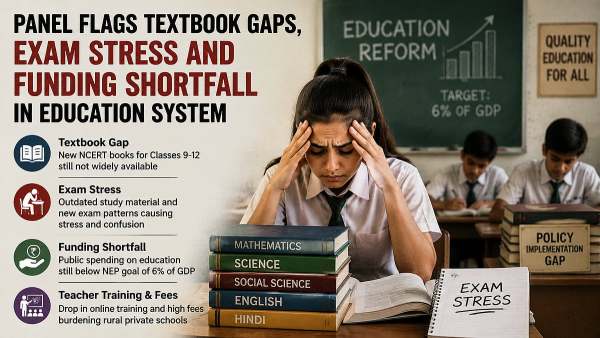
A parliamentary panel has flagged gaps in CBSE curriculum implementation for Classes 9 to 12, citing delayed NCERT textbooks and application-based board exams as sources of stress among students. The committee recommended faster textbook rollout, teacher training, fee support for disadvantaged schools and increased education spending to meet NEP 2020 goals.
New Delhi: A parliamentary panel has flagged a significant gap between curriculum designing and implementation for classes 9 to 12, saying the non-availability of textbooks and application-based Board examination patterns are creating academic stress and confusion among students, especially those appearing for classes 10 and 12 examinations.
The observations are part of the Tenth Report (Eighteenth Lok Sabha) of the Committee on Estimates (2026-27) on 'Budget and Policy Aspects for Providing Affordable and Quality Education in the Country including Review of CBSE', presented to Lok Sabha on Wednesday.
The committee observed that the Central Board of Secondary Education (CBSE) has onboarded the curriculum framework for Grades 9 to 12 with the goals of the New Education Policy (NEP) 2020 and the National Curriculum Framework (NCF) 2023.
Curriculum transition challenges