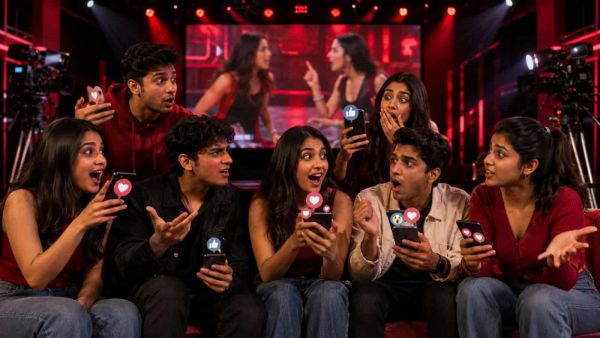
Hyderabad: Reality television is no longer a guilty pleasure watched quietly behind closed doors. For Gen Z, it has become a full-blown internet sport, complete with fan armies, viral edits, meme wars and heated debates that continue long after an episode ends.
From Bigg Boss and Roadies to Lock Upp, Splitsvilla, The Traitors, Desi Bling and The Alliance, a fresh wave of reality shows has taken over streaming platforms and social media feeds. But what exactly keeps younger audiences coming back for more?
In a recent Instagram carousel, Elle India declared that reality TV has officially entered its “chronically online era.” The publication noted that today, one on-screen fight quickly becomes a reel, the reel turns into a meme and the meme sparks an online debate involving thousands of viewers.

While drama remains the biggest attraction, the obsession runs deeper. The constant stream of clips, reactions and spoilers creates an intense fear of missing out. Even those who do not watch complete episodes often know who fought, who betrayed whom and which contestant is trending.
The carousel also suggested that reality television offers viewers the illusion of authenticity at a time when almost everything online feels carefully curated. Instagram feeds are polished, dating profiles are designed to impress and even casual photographs can require dozens of attempts. Against that backdrop, reality shows promise unfiltered personalities, spontaneous clashes and glimpses behind the curtain, even if producers continue to shape much of the final narrative.
These shows have also become powerful celebrity-making machines. Elle pointed to names such as Digvijay Singh Rathee, Ayushmann Khurrana and Ravi Kishan, whose journeys extended far beyond reality television. The latest crop includes Akanksha Choudhary, Gullu aka Kushal Tanwar, Yogesh Rawat and Shreya Kalra, who have built their own loyal online followings.
And, of course, no conversation about Indian reality television can be complete without Rakhi Sawant. The carousel cheekily noted that it would rather face her commentary than leave her out of the discussion altogether.
However, not everyone is celebrating the trend. One social media user argued that conflict-driven shows keep young audiences occupied with fan wars instead of paying attention to conversations about the country’s development.
Love it or hate it, reality TV clearly understands what Gen Z wants: unpredictable drama, personalities worth obsessing over and enough viral moments to keep the internet talking. The episode may end, but online, the real show is only getting started.