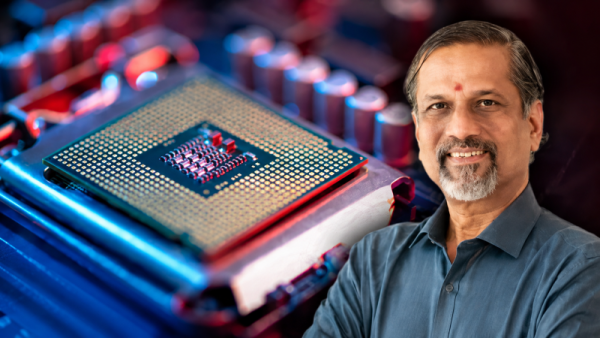
Tezzbuzz Desk- The effect of increasing demand for AI is now visible on the prices of computer memory as well. According to Zoho founder Sridhar Vembu, prices of some DDR5 memory kits have increased by nearly 500% in a year. He says that rising costs may also affect smartphones, laptops and other electronic devices in the future.
The demand for data centers and high-performance computing for AI is continuously increasing. Its effect is now visible on the prices of memory and other hardware components. Zoho founder Sridhar Vembu has expressed concern about the sharp rise in memory prices. According to him, it is not easy for companies to immediately impose additional burden on customers despite rising costs.
Sridhar Vembu, citing Tom's Hardware report, said that the prices of some DDR5 memory kits have increased manifold in the last 12 months. According to the report, the average price of a 64GB DDR5-5600 kit was around $191 in August 2025, increasing to around $1,118 in August 2026. Accordingly, the price has increased by about 485%.
Similarly, the price of 128GB DDR5-6400 kit also reached around $3,399, while its lowest recorded price is said to be around $329. This means that there has been a sharp rise in the prices of high-capacity memory.
According to Vembu, the rising cost of memory is not the only challenge. Tokenization and computing spending to AI is also increasing. Companies have long avoided passing on increased costs directly to customers, but if costs continue to rise like this, it may become difficult to do business at the old prices. He linked the growing investment in AI infrastructure to growing demand in several sectors such as power generation, transformers, diesel backup, cooling systems, memory, CPUs and GPUs.
The continuous increase in prices of memory and other hardware components may also impact consumer electronics in the future. If the cost of companies making smartphones and laptops increases, some part of it may reach the customers. However, the actual impact on prices will depend on how long memory prices remain high and how companies manage the increased costs.
Sridhar Vembu also raised an important issue for the technical sector. He says that for a long time software development assumed that computer memory was relatively cheap and available in sufficient quantities. Now, amid rising costs, the need for memory-efficient programming and better compilers may be more felt. According to Vembu, it is also important to focus on designing AI systems to perform better in less memory. He believes that ignoring unnecessary memory consumption can now prove costly. Especially at a time when AI systems require large-scale computing and memory.
Vembu also compared the huge investment in AI to the telecom investment boom that took place between 1995 and 2000. He argues that just because a technology is real and useful does not ensure that all business investments to it will be successful. Giving the example of the difficulties faced in the telecom equipment sector between 2001 and 2003, he said that at that time the technology was real and later it was widely used, but despite this many companies could not survive.
According to Vembu, it is important to understand the potential of the technology and the investment risks associated with AI separately. At present, the direct impact of increasing investment in AI infrastructure is visible on the demand and prices of many components including memory.