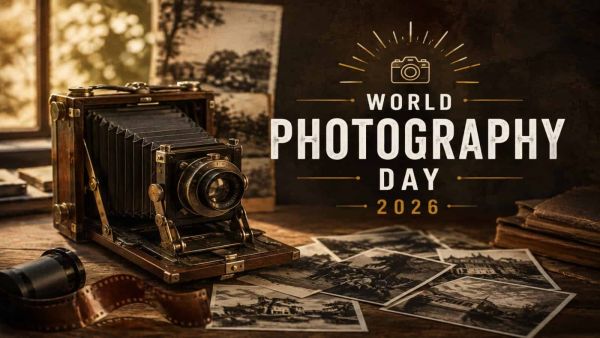
Today, August 19, as the world celebrates World Photography Day, it is worth remembering a remarkable Indian camera that once earned a reputation far beyond the country.
The Vageeswari, a handcrafted large format camera from Alappuzha, Kerala, is a fascinating story of Indian ingenuity, craftsmanship and determination.
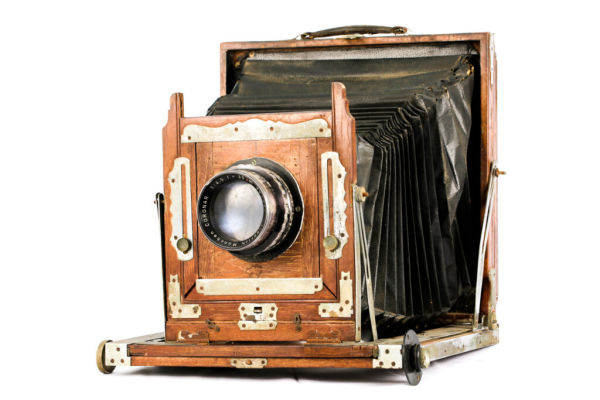
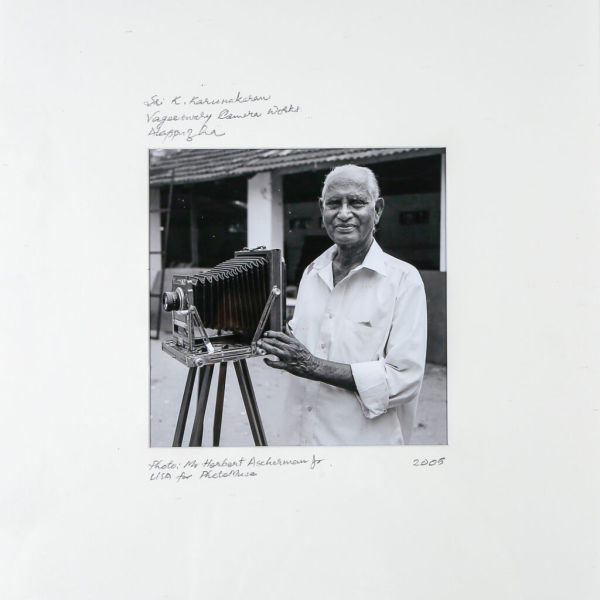
The story began in 1942, when K. Karunakaran was just 16. His father, Kunju Kunju Bhagavathar, was a musician who also repaired musical instruments.

When photographer Padmanabhan Nair brought a foreign made camera with torn bellows to their workshop, Bhagavathar repaired it. Watching this closely, young Karunakaran wondered if a camera could be made in India.
Karunakaran studied camera technology through books and magazines and travelled to cities including Madras and Bombay to learn more.
He also dismantled an old camera to understand how it worked. By 1945, he had built his own field camera, using locally made parts except for the lens.
The Vageeswari was built mainly from teakwood, with brass clips and screws, a leather bellows and a German imported lens. Every camera was assembled by hand.
Its foldable design allowed the large format camera to be carried in a compact form.
The first camera was sold for Rs. 250, a fraction of the cost of many imported cameras at the time. Its precision, strength and finish soon made it popular among photographers.
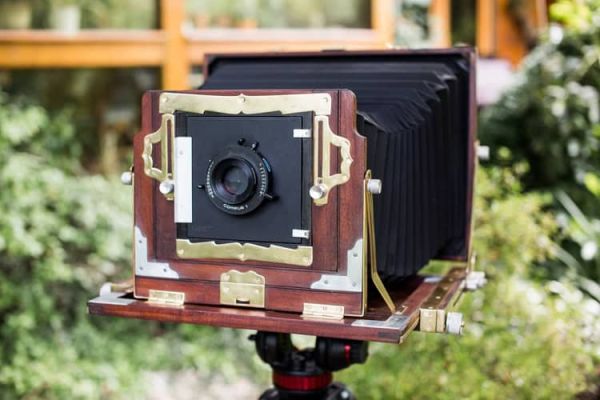
Karunakaran developed eight variants of the camera. Smaller models could take up to four passport size photographs, while larger versions were suitable for group photographs.
This was particularly useful for studios when family, school and other group portraits were popular.
The demand grew rapidly. By the 1950s, Karunakaran’s workshop had around 30 workers and was producing between 50 and 100 cameras a month.
The cameras were also exported, with orders reaching countries including Sri Lanka, Singapore, Malaysia, Nepal, Thailand and Germany.
Vageeswari’s story was not limited to portrait photography. Before digital technology transformed the industry, Karunakaran supplied cameras for forensic fingerprint photography.
He also developed specialised equipment, including a camera for technical work and an ultrasound scanner imagery copier using Japanese technology.
For more than four decades, Vageeswari remained a major name in field photography. Its fortunes changed in the late 1980s when compact cameras became increasingly popular.
The large format camera eventually became outdated as photography moved towards smaller and more advanced equipment.
Today, surviving Vageeswari cameras are regarded as rare antique collectibles and pieces of photographic history. They can be found in private collections and museums, including PhotoMuse in Kerala.
Their value can be considerably higher than the original Rs. 250 price, depending on rarity, condition and provenance.
Karunakaran passed away in 2016, but his creation continues to fascinate photography enthusiasts and collectors. The Vageeswari is a reminder that India’s history of innovation is filled with stories that deserve to be rediscovered.
Long before smartphones could capture hundreds of pictures in minutes, one young man in Kerala showed that patience, craftsmanship and curiosity could produce a camera capable of competing with the best in the world.