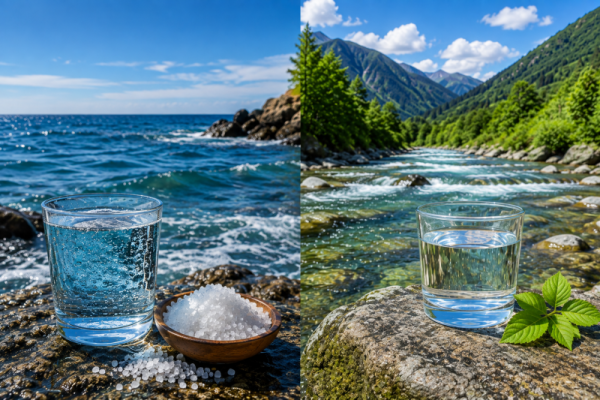
Tezzbuzz Desk- Whenever we go to the sea shore, the taste of its water is felt salty, whereas the water of rivers and lakes is usually sweet or very less salty. Have you ever wondered where so much salt comes from in sea water and why the water of rivers does not become salty in the same way? The water cycle, minerals dissolving from rocks and many natural processes occurring in the sea are responsible for this.
Water on Earth continuously rotates in a cycle. Due to the heat of the Sun, water from the sea, rivers and lakes turns into vapor and rises up, forming clouds and then comes back to the ground in the form of rain. The form of water keeps changing throughout this process, but most of the salts dissolved in water do not go up with the vapor.
When rain water falls on the ground, it comes in contact with soil, rocks and minerals. Water slowly wears away the rocks and dissolves some of the minerals and salts present in them. After this this water flows further through small streams and rivers. Small amounts of calcium, magnesium, sodium and other dissolved minerals may be present in river water. However, their concentrations are usually much lower than in seawater. The water of the river keeps flowing forward and its water keeps changing. Therefore, salts do not accumulate in large quantities in it like in the sea.
Rivers have long been a major means of transporting dissolved minerals and salts to the sea. Apart from this, geochemical processes occurring within the ocean and hydrothermal vents present on the ocean floor also affect the balance of various elements in sea water.
When sea water turns into vapor due to the heat of the sun, mainly water goes into the atmosphere. Dissolved salts and most minerals are left behind. The water falling from the clouds in the form of rain then reaches the land and sea and this natural cycle continues continuously.
However, this does not mean that the salt in the ocean continues to increase without any limit. The minerals and ions present in the sea also come out or accumulate through many natural processes. Due to this balance, the salinity of sea water remains around a certain average level.
Considering sea water as just salt water does not give the whole picture. Many types of dissolved ions and minerals are present in it. mainly in sea water sodium and chloride ions are found, which are the major components of common salt i.e. sodium chloride. Apart from this, ions like magnesium, calcium, potassium and sulphate are also present in sea water. These different dissolved substances make the chemical composition of sea water different from that of rivers and lakes.
No, salinity is not exactly the same in every part of the ocean. How salty water is in an area depends on a number of conditions such as rainfall, evaporation, freshwater coming from rivers and ocean currents. Where evaporation is high and fresh water supply is low, water may be relatively salty. At the same time, the salinity of surface sea water may reduce in areas that receive high rainfall or large amounts of fresh water from large rivers.
Rivers are an important medium for transporting dissolved substances to the sea, but the whole story of sea salt is not limited to rivers only. Geological processes occurring on the ocean floor, hydrothermal vents, and chemical reactions with sea rocks also influence the movement of elements in seawater. Apart from this, some dissolved substances are used by marine organisms or get deposited on the sea floor. In this way, both the processes of arrival and removal of salts in the sea continue for a long time.
The amount of salt dissolved in sea water is so high that it is not considered safe for the human body to drink it directly. The body needs water to flush out excess salt and drinking sea water can further increase the water deficiency in the body.
Therefore, to make sea water drinkable desalination Such processes are used to remove excess salts and other dissolved substances from water. So next time you see salty ocean water, remember that the reason for this is not just salt, but the water cycle that has been going on on Earth for millions of years, the weathering of rocks and the complex balance of natural geochemical processes occurring in the ocean.