It is May 2025 and Ajax supporters are in shock.
In one of the most dramatic collapses in Eredivisie history, their team has squandered a nine-point advantage in the space of just six matches, allowing PSV Eindhoven to seize the title in astonishing fashion.
Blame is immediately being assigned, and it does not take long for one glaring difference between the two sides over the course of the season to stand out — goalscoring.
Over 34 matches in the campaign, PSV scored 36 more goals than their nearest title challengers. A major factor behind that gap was the poor output of Ajax’s attackers, especially Brian Brobbey.
The Dutch forward finished with only four league goals — fewer than the leading scorers at two of the relegated clubs, Almere City and RKC Waalwijk. Across all competitions, that total was only 7 in 44 appearances.
That dismal return came just one year after the most prolific goalscoring season of his career, neatly summing up Brobbey’s spell in Amsterdam, which repeatedly swung between exciting promise and maddening inconsistency. During an uneven period with his boyhood club, Brobbey often hinted at something special without ever truly catching fire.
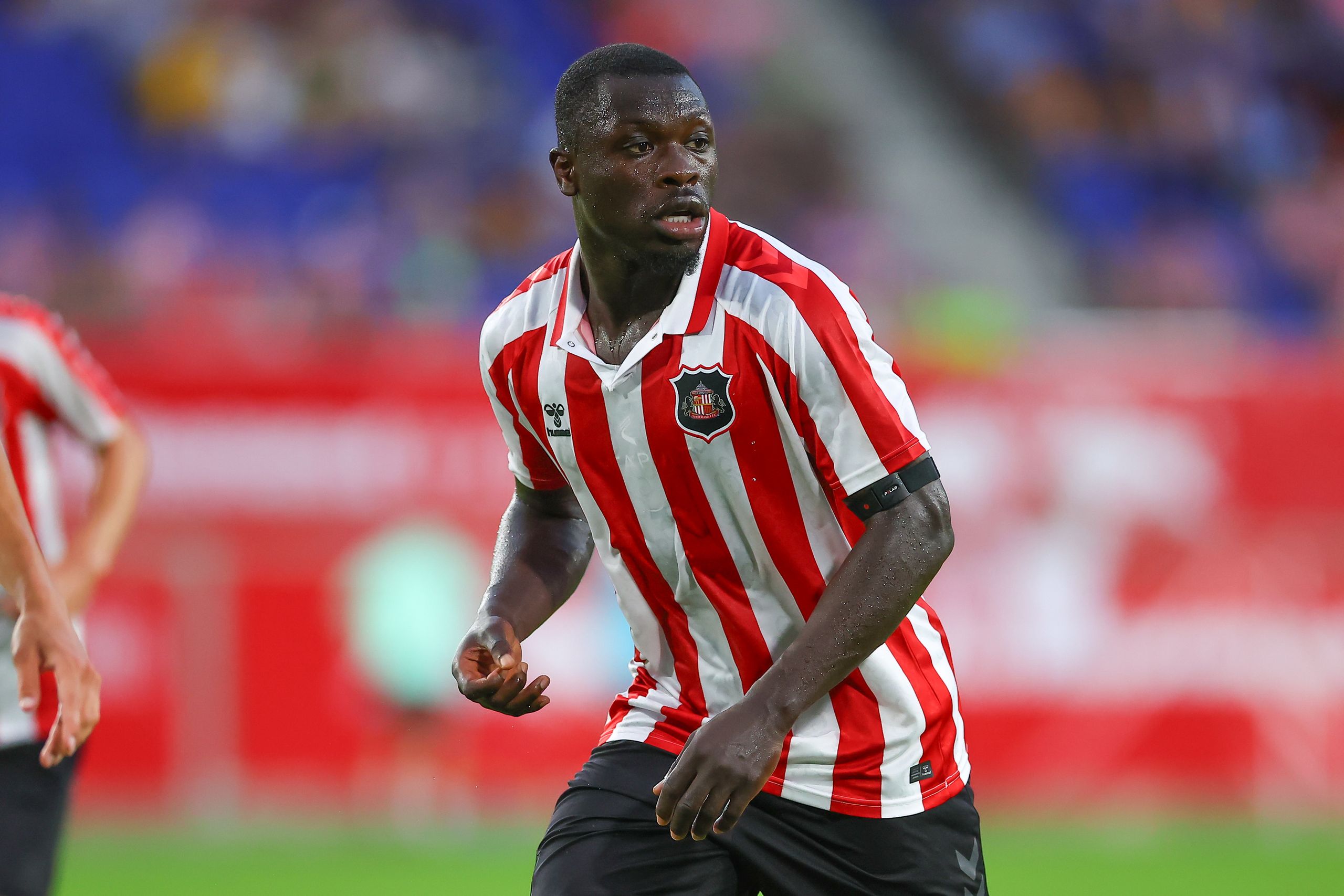
So when Brobbey was sold that summer, as many had expected, the dominant feeling was that the move suited both player and club. If there was any real surprise, it was that he had earned a Premier League transfer, with newly promoted Sunderland paying a reported £21.6 million for him.
A year later, the story of Brian looks completely different.
Very few would have imagined that just over 12 months after that flat ending to his Ajax career, Brobbey would not only be starting for the Netherlands at the 2026 World Cup, but also tormenting opposition defences. For a long time, Oranje supporters had viewed him mainly as a powerful impact substitute and a squad option. Now, after scoring three goals in three starts at a tournament where he has also linked play superbly and displayed his pace and strength in abundance, he is clearly the first-choice no.9 for the foreseeable future.
It has become one of the most striking redemption stories of the past year. And it all began with the vision shown by those at the Stadium of Light.
Anyone who had watched Brobbey closely in the Eredivisie may well have felt that if the Black Cats were searching for the crucial ingredient needed to survive in the Premier League — a reliable goalscoring striker — then they should have looked elsewhere.
The academy product had earlier returned to Ajax after a difficult half-season with RB Leipzig, first on loan and then on a permanent deal in 2022. Even allowing for the patience usually granted to young players, Brobbey presented a clear paradox over the following three and a half seasons.
One match, he would appear to be a young striker with every attribute required to become one of the world’s best traditional centre forwards. The next, he could resemble one of those bigger schoolboys who gets picked for the football team but then plays as though he has barely seen a football before.
As Sunderland fans can now confirm, Brobbey possesses outstanding strength, excellent hold-up play, speed and the natural instinct to get into dangerous positions inside the box. The issue at Ajax was that too often he would do everything correctly until the final touch, and then fail to finish. It was almost as though a scientist had built the ideal young centre forward, only to lose focus before adding the final and most important detail.
As it turns out, the genuine striker was always there. He simply needed the North East rather than North Holland to flourish.
Given his physical profile, there was never much doubt that Brobbey could handle the intensity and aggression of Premier League football. Even so, it has surprised many — including observers across the North Sea — just how quickly he adapted to life on Wearside.
Seven Premier League goals and one assist are not, in isolation, eye-catching numbers. Yet what has stood out is the nature of those contributions and the broader development in his all-round game.
After a slow beginning, when he was initially used from the bench, two moments helped launch his career in England — one showing the player he had been, the other the player he is rapidly becoming. In an away victory at Chelsea, it was Brobbey’s outstanding strength, hold-up play and lay-off that allowed Chemsdine Talbi to arrive and score a late winner. It was classic Brobbey. Then, a fortnight later, a much rarer side of his game emerged when he produced an acrobatic 94th-minute finish to rescue a point against Arsenal. It was exactly the sort of instinctive moment that had so often been missing at Ajax.
Right now, Brobbey looks increasingly like a player capable of delivering in decisive moments. Last season brought late equalisers against Arsenal and Tottenham Hotspur, the leveller that sparked an away win over Everton, and winning goals against Crystal Palace, Bournemouth and, naturally, in the Tyne-Wear derby at St James’ Park. Add in the previously mentioned assist against Chelsea, and Brobbey directly contributed to 11 points for Sunderland. Without those contributions, Sunderland would not have qualified for Europe and instead would have finished only four points above the relegation zone, sitting between Tottenham and Nottingham Forest.
Brobbey’s ability to occupy defenders and be a constant physical problem is also hugely important for Sunderland when they are trying to move up the pitch, as it creates space for team-mates. His sharp burst of pace into the penalty area — often after laying the ball off and spinning in behind — is frightening when executed properly. The clearest example came with his opening goal against Sweden at the World Cup, where he looked more like a 100-metre sprinter than a footballer.
At his best, watching Brobbey can feel like stepping back into a different era, when old-school strikers relished the dirty work, backed into defenders and embraced the physical battle. He is the sort of player who is happy to run the channels and simply attack the penalty area to create chaos. At times, he looks as though he was built for football in the noughties.
The most exciting aspect of Brobbey is that, in theory, there is still much more to come from a player who is only 24 years old. The challenge for the Amsterdam-born forward now is to raise his output again and show that he can move beyond the barren spells that have previously damaged his confidence. Some strikers carry themselves with the certainty that they were born to score goals. At times, Brobbey gives the impression that he just needs a calm reminder of how much potential he has.
According to XG Stat, among Premier League strikers last season, he ranked in the top 16% for goal conversion but in the bottom 25% for non-penalty expected goals. That suggests that if he can sharpen his decision-making in the final third, his potential goals return is very high. And for a striker who does most of his work inside the penalty area, being in the bottom 22% for touches in the box per 90 minutes is an area that clearly needs improvement. In addition, as highlighted by FotMob, a player who is among the very best in the division for aerial duels should certainly be managing more than only six headed shots across an entire season.
For much of his still-young career, Brobbey has been something of a football mystery. Was he actually a good striker or not?
The doubts over whether he could succeed in the Premier League were also understandable. Especially because, as recent years have shown, Dutch strikers in England — much like the Netherlands’ own Bitterballen snack — have tended to be hit and miss. For every Ruud van Nistelrooy, there has been a Memphis Depay.
There is still room for him to improve, but those who doubted him have been proved wrong. And those who wrote him off are still being forced to swallow that reality.
All the individual pieces required for Brobbey to become a top-class centre forward were always present. Perhaps all he really needed was the right setting to bring them together properly.