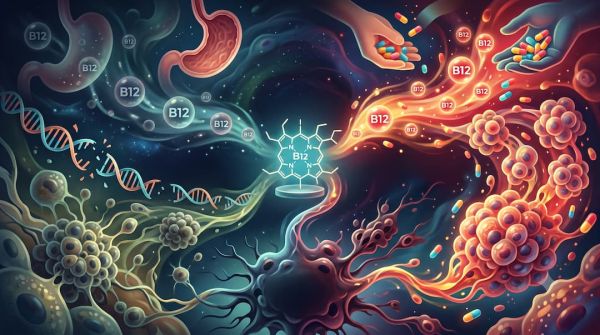
Vitamin B12 is an essential nutrient that plays an important role in several vital functions in the body. It helps in DNA production, supports the nervous system, contributes to the formation of healthy red blood cells and is involved in the metabolism of fats and amino acids. A deficiency of B12 can cause health problems, particularly in people who follow strict plant-based diets or have conditions that affect nutrient absorption. But in recent years, researchers have also been examining another question: Could unusually high or low B12 levels be linked to cancer? The answer is more complicated than it may seem. Studies have found associations between abnormal B12 levels and several cancers, but current evidence does not establish that B12 itself causes cancer.
The connection between B12 and cancer has attracted scientific interest because of the vitamin's role in DNA synthesis and cell metabolism. Researchers initially considered whether insufficient B12 could interfere with DNA repair and potentially contribute to mutations. However, some studies have found a different pattern. People with certain cancers have sometimes been found to have unusually high levels of B12 in their blood. This does not necessarily mean that excess B12 is causing cancer. Cancer itself can change the way the body stores, transports and uses B12, potentially resulting in elevated blood levels.
The amount of B12 consumed through food or supplements is not the same as the amount measured in the bloodstream. Blood B12 levels are influenced by how the body absorbs, stores, transports and uses the vitamin. The liver stores substantial amounts of B12, while proteins in the blood transport the vitamin around the body. Certain cancers, particularly advanced cancers or cancers affecting the liver, can interfere with these processes. Some tumours may also alter the production of proteins involved in B12 transport. As a result, a high B12 reading could sometimes reflect changes occurring in the body because of an underlying disease rather than being the cause of that disease.
A recent study involving more than 37,000 people with colon cancer examined B12 blood-test results recorded around the time of diagnosis. Researchers found that patients with elevated B12 levels had poorer survival outcomes than those with normal levels. They were also more likely to have advanced disease at diagnosis and to develop metastases, including spread to the liver. Researchers further examined colon tumour samples and identified increased activity of the MTR gene, which is involved in a biochemical pathway that requires B12. Tumours with greater activity of this gene were associated with poorer survival. However, these findings do not prove that B12 fuels cancer or that taking B12 causes tumours to grow. They suggest that the relationship between B12 metabolism and cancer may be more complicated than previously thought.
Interestingly, research has reported associations at both ends of the B12 spectrum. A 2024 observational study involving cancer patients and people without cancer found a U-shaped association between dietary B12 intake and cancer risk. Both unusually low and unusually high reported intake were associated with increased risk compared with moderate intake. However, such studies have important limitations. Dietary intake was based on people's recollection of what they ate, and observational research can identify associations but cannot establish that B12 caused cancer. Researchers therefore cannot conclude that increasing or reducing B12 intake will prevent cancer.
The relationship between vitamin B12 and cancer remains unsettled. Current research suggests that abnormal B12 levels, particularly elevated blood levels in people who already have cancer, may sometimes act as a marker of disease or changes in the body rather than being a direct cause of cancer. At the same time, B12 remains an essential nutrient, and deficiency can cause serious health problems. People who have a confirmed deficiency should follow appropriate medical advice rather than avoiding B12 because of concerns about cancer. It is also important not to interpret a high B12 blood-test result on its own. If B12 levels are unexpectedly high without a clear explanation, a healthcare professional can assess the result alongside other tests, medications, supplements and overall health. In short, science has found a link between abnormal B12 levels and cancer outcomes, but a direct cause-and-effect relationship has not been established. More research is needed to understand whether B12 is contributing to cancer biology or whether cancer is responsible for the changes in B12 levels.
[Disclaimer: The information provided in the article is shared by experts and is intended for general informational purposes only. It is not a substitute for professional medical advice, diagnosis, or treatment. Always seek the advice of your physician or other qualified healthcare provider with any questions you may have regarding a medical condition.]