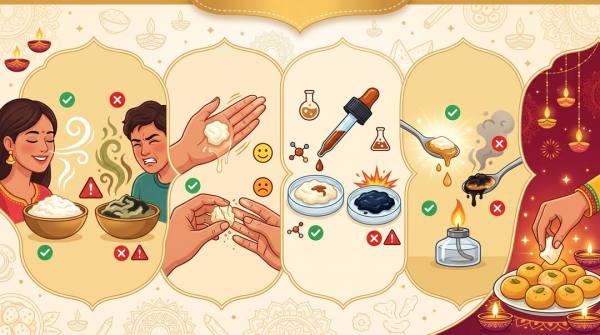
As the festive season approaches, the demand for sweets rises sharply. Mawa, also known as khoya, is a key ingredient in several traditional Indian sweets. However, increased demand during festivals can also raise concerns about adulterated or poor-quality mawa entering the market. Fake or adulterated mawa may not always be easy to identify by appearance alone. Still, paying attention to its colour, texture, smell and taste can help you make a more informed choice. Here are some simple things to keep in mind when buying mawa this festive season.
Genuine mawa generally has a light cream to off-white colour and a soft, slightly grainy texture. Be cautious if the mawa appears unusually bright white, excessively shiny or has an unnatural colour. You can also gently press a small portion. If it feels excessively hard, rubbery or unusually elastic instead of soft and crumbly, it may be a reason to avoid the product.
Fresh, genuine mawa generally has a mild, natural milky aroma. If it has a strong chemical, soapy or otherwise unusual smell, it is better not to purchase it. However, smell alone cannot confirm whether mawa is genuine. Some adulterated products may not have an obvious unusual odour, so other signs should also be checked.
If the seller allows you to taste the mawa, a small amount can provide another indication of its quality. Genuine mawa generally has a mild milky flavour with a slight natural sweetness. Avoid mawa if it tastes bitter, soapy, unusually sweet or otherwise different from the normal taste of khoya. However, taste should also not be considered a definitive test of adulteration.
An iodine test can provide a preliminary indication of starch adulteration in mawa. A small quantity of mawa can be mixed with water, heated and allowed to cool before adding a few drops of iodine solution. If the mixture develops a blue or blue-black colour, it may indicate the presence of starch. However, this is only a preliminary home test. It cannot detect every form of adulteration and should not be treated as a definitive food-safety test.
One of the simplest precautions is to purchase mawa from a reputed sweet shop, dairy or trusted seller. Be particularly cautious about products being sold at unusually low prices. For packaged mawa, check the packaging, manufacturing and expiry or best-before details, storage instructions and other information provided on the label. If the product appears damaged, smells unusual or raises any doubts about its quality, it is better not to consume it.
If the mawa has an unusual colour, smell, texture or taste, avoid using it. Home tests can provide clues about certain types of adulteration, but they cannot establish food safety conclusively. For a definitive assessment, food testing at an authorised laboratory is the more reliable option. During the festive season, taking a few simple precautions while buying mawa and sweets can help reduce the risk of consuming adulterated food.