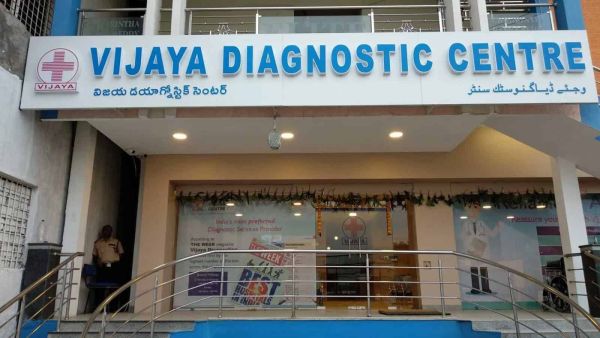
Hyderabad: The Telangana High Court has quashed a police case against four staff members of Vijaya Diagnostic Centre who had issued an allegedly false “reactive” Hepatitis B report to a woman ahead of her hernia surgery, saying that criminal law cannot be invoked to punish every instance of professional negligence.
Justice N Tukaramji held that even if there was a lapse in issuing the report without a confirmatory test, this could at most support a civil or consumer complaint over deficient medical service and not a criminal case.
“Penal liability arises only where the negligence is so gross and reckless as to endanger human life… mere inadvertence, an error of judgment, or a lapse in the exercise of due care cannot, by themselves, constitute an offence,” the High Court said, holding the case did not meet the threshold under Section 336 of the Indian Penal Code (IPC), which criminalises acts endangering life or safety.

The complainant, tested at Vijaya Diagnostic Centre on June 10, 2022, ahead of hernia surgery, was found “reactive” for Hepatitis B surface antigen (HBsAg) through a rapid screening test, causing her distress and pushing up her expected surgery cost, the prosecution said.
A fresh test at another hospital and a re-test of her retained sample using a more advanced method, both came back “non-reactive.” Police, relying on an expert opinion that reactive rapid tests should ordinarily be confirmed before a final report is issued, filed a case against four staff – a consultant microbiologist and three managers – under Section 336.
The accused argued the report itself carried a disclaimer that the screening test alone should not be treated as conclusive, and that rapid tests can occasionally produce false positives.
The High Court agreed that criminal negligence is “qualitatively different” from civil negligence, requiring gross or reckless conduct reflecting utter disregard for life. It found that even the prosecution’s own expert opinion did not call the reactive result erroneous or say skipping confirmation amounted to gross negligence. It merely described standard lab protocol.
“Such discrepancy, by itself, cannot automatically lead to an inference of criminal negligence,” the High Court said, adding that the accused’s false-positive explanation had not been challenged by any independent expert opinion.
The court also found the charge sheet did not attribute any specific act to any of the four accused, holding that criminal liability is personal and cannot rest merely on someone’s managerial position.
Concluding the dispute was, at best, a case of deficient professional service, the court quashed the proceedings against all four.