Rating: ⭐️½ / 5 (1.5 out of 5)
There are films that leave you speechless because they are brilliant. And then there are films that leave you speechless because you are still trying to figure out what exactly you just watched.
Toxic: A Fairy Tale for Grown-Ups somehow manages to be the latter.


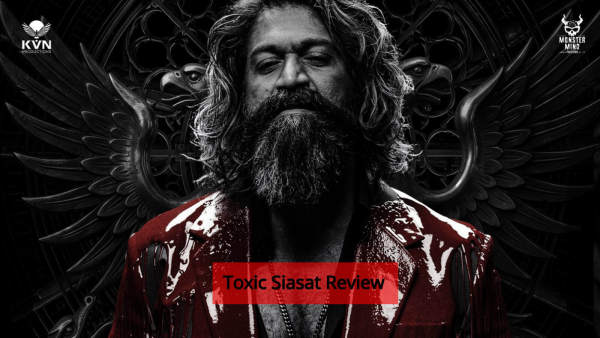
After making audiences wait four long years for his return to the big screen following KGF: Chapter 2, Yash arrives with a film that promises gangster drama, larger-than-life action, complicated relationships and a story told through a distinctly female gaze. Directed by Geetu Mohandas, Toxic certainly looks like a film made on a gigantic canvas. It is dark, stylish, violent and packed with lavish production design.
But somewhere between all the blood, bullets, slow-motion walks and visually stunning frames, the actual story gets lost.
And that is the biggest problem with Toxic.
Set against the criminal world of Goa, the film follows Raya, played by Yash, a man who grows up in violence and eventually becomes a powerful figure in the underworld. His elder sister Ganga (Nayanthara) is not merely family but his protector and partner in crime.
Raya’s life takes several complicated turns. There is Rebecca (Tara Sutaria), his betrothed, Nadia (Kiara Advani), whose relationship with Raya brings love, chaos and a child into his life, and Melissa (Rukmini Vasanth), whose place in Raya’s world remains deliberately mysterious.
Then comes Ticket, also played by Yash, Raya’s estranged son, whose arrival brings the father-son conflict that eventually becomes the film’s central thread.
On paper, there is enough material here for a gripping gangster saga. Unfortunately, Toxic keeps adding layers without giving most of them enough room to breathe.
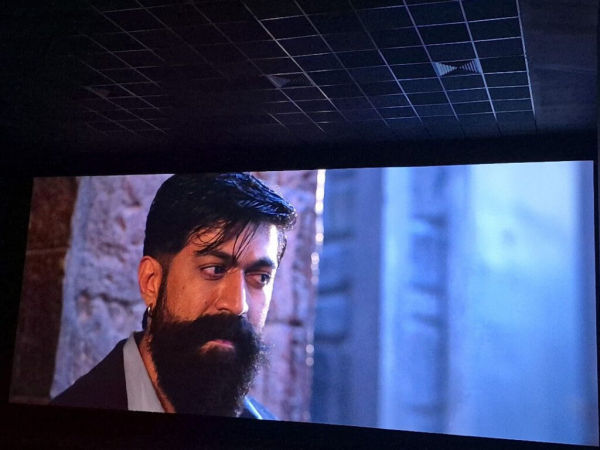
As Raya, he carries the swagger, attitude and commanding body language that audiences have come to associate with him after KGF. He knows how to enter a frame, deliver a dialogue and turn even an ordinary moment into a theatrical elevation.
But the problem is that Raya often feels like Rocky Bhai in a different universe. The mannerisms, attitude and heroic presentation occasionally feel too familiar.
Yash is more interesting when he plays Ticket. The character gives him an opportunity to move away from the familiar image, and he brings a different energy to the role. The dual-role aspect is easily one of the film’s more intriguing elements.
Still, the writing doesn’t give the father-son relationship enough emotional depth. Considering that Yash is playing both sides of this conflict, this could have been one of the most powerful portions of the film. Instead, it never reaches the emotional intensity it promises.
If there is one department where Toxic consistently finds some life, it is its women.
Kiara Advani’s Nadia is arguably the film’s strongest character. Unlike several characters who appear and disappear without leaving much impact, Nadia gets an actual emotional journey. Kiara handles the changing shades of the character well, and her scenes with Yash bring some much-needed warmth to a film otherwise dominated by violence and spectacle.

Nayanthara, as Ganga, brings restraint and maturity to the first half. Her character has the potential to be much more powerful, but the writing doesn’t completely utilise her.

Huma Qureshi gets an interesting revenge-driven character and delivers a decent performance, while Tara Sutaria does justice to the limited material given to her.

Rukmini Vasanth shares an interesting chemistry with Yash, but her character feels like one of the film’s biggest missed opportunities. She is introduced with considerable intrigue, yet the screenplay never gives her enough importance.
In many ways, the women in Toxic are more interesting than the world built around them.
The story of Toxic isn’t necessarily complicated because it is deep. It is complicated because the screenplay keeps throwing characters, timelines, relationships and situations at the audience without giving them enough clarity.
The film runs for around 3 hours 15 minutes, and that length becomes increasingly difficult to justify.
The first half spends a considerable amount of time establishing Raya’s violent world, but the actual narrative often feels like it is standing still. There are stretches filled with violence, intimacy and philosophical dialogues, while the emotional core remains underdeveloped.
Just when you expect the Raya-Ticket conflict to take centre stage, the film takes its time getting there. Scenes are stretched, conversations continue for too long and several sequences feel like they could have been trimmed significantly.
The result is a film that constantly looks like it is building towards something, without always delivering the emotional payoff.
This is perhaps where Toxic becomes the most frustrating. Visually, the film is gorgeous. Rajeev Ravi’s cinematography gives the film a distinct texture, while the production design is undoubtedly one of its biggest strengths. The sets, locations, costumes and lavish environments make it clear that no expense has been spared.
There are frames that look spectacular enough to be pulled out and displayed on their own. But cinema isn’t just about making beautiful frames.
When the visual grandeur doesn’t strengthen the story, develop a character or deepen an emotion, it starts feeling like decoration. Toxic repeatedly falls into that trap.
It is a film that you can admire visually while simultaneously wondering why the story isn’t moving.
There is violence. And then there is a lot of violence. From the very beginning, Toxic makes it clear that this isn’t going to be a gentle ride. Guns, blood, bodies and brutal action dominate large portions of the film.
Violence can absolutely work in a gangster film when it has narrative or emotional purpose. Here, however, the sheer volume of it begins to feel repetitive.
At times, it feels as though the film is using violence and elevation scenes to compensate for the lack of movement in the story.
The background score, too, often adds to the sensory overload. Ravi Basrur’s music works in places, particularly when the film wants to create scale, but the score can become excessively loud and overwhelming.
One of the film’s most distracting problems is its editing. The cuts can feel abrupt and, at several points, oddly placed. Instead of creating momentum, some transitions make the narrative even harder to follow.
The film desperately needed tighter editing, especially considering its lengthy runtime. A story this packed with characters and subplots requires an editor who knows exactly what to remove. Toxic often seems unwilling to let go of anything.
And when a film begins feeling exhausting within the first portion itself, three-plus hours can feel like an eternity.
There is no doubt that Geetu Mohandas has attempted something ambitious. Toxic doesn’t look like a safe film. It wants to be stylistically bold, emotionally layered and different from a conventional gangster drama. But ambition alone cannot carry a film.
The director’s control is evident in certain sequences, particularly the visual construction of the world and some of the dramatic moments involving Raya, Ganga and Nadia. Yet the film struggles to maintain that control across its entire runtime.
And that is what makes Toxic such a strange viewing experience. You can see the effort. You can see the money. You can see the ambition. But you don’t always feel the story.
Toxic wants to be a fairy tale for grown-ups. Instead, it becomes a long, loud and occasionally beautiful gangster saga that keeps asking for your attention without always giving you a reason to stay invested.
Yash fans and action-film lovers may find enough to enjoy. For everyone else, this is one fairy tale that feels far too long to finish.