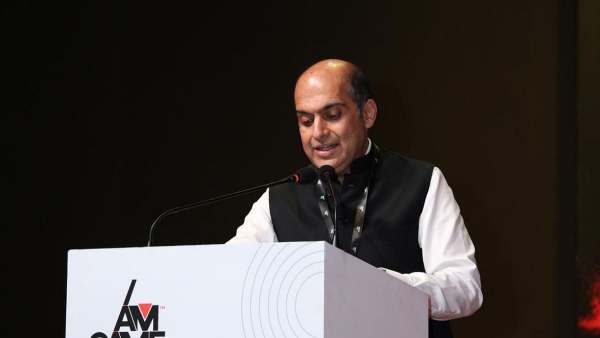
Jalaj Dani urged Corporate India to move beyond sports sponsorships and build long-term sporting institutions. Speaking at IAMGAME 2026, he called for investment in academies, coaching, talent identification and sports science to help India become a true sporting nation.
Jalaj Dani, President, SPORTSCOM, called for a fundamental shift in the way Corporate India engages with Indian sport, urging businesses to move beyond sponsorships and take long-term ownership of sporting properties, institutions and talent development. Speaking at IAMGAME 2026, Dani argued that while India has built one of the world’s most commercially successful sporting properties in the IPL, the country continues to struggle to build the institutional foundations required to become a true sporting nation.
Pointing to the contrast between the IPL’s estimated $20 billion valuation and India’s six medals at the Paris Olympics, Dani said the numbers highlight a fundamental gap in India’s sporting ecosystem. “We are at the same time the most brilliant sponsorship market in the history of sport and one of the weakest institution builders,” he said, arguing that Corporate India has traditionally treated sport as something to “rent” through jerseys, athlete endorsements and associations with established winners.
Dani drew a distinction between sponsorship and ownership, saying: “A sponsor asks, what can this sport do for my brand? An owner asks, what can my institution do for this sport?” He argued that sponsorship is necessary but insufficient, as lasting sporting ecosystems require investment in academies, coaching, talent identification, sports science and institutions that can develop athletes before they become champions.
Using Japan as an example, Dani highlighted how corporations have historically played a deeper role in building sporting institutions, while pointing to his own experience of investing in and building properties such as Ultimate Table Tennis and Chennaiyin FC. He said the decision to invest in sports that did not already have a large audience was deliberate: “If we want to build India and become a sporting nation, we cannot only invest where the audience already exists. We have to build the audience, build the institutions and give athletes a platform to grow.”