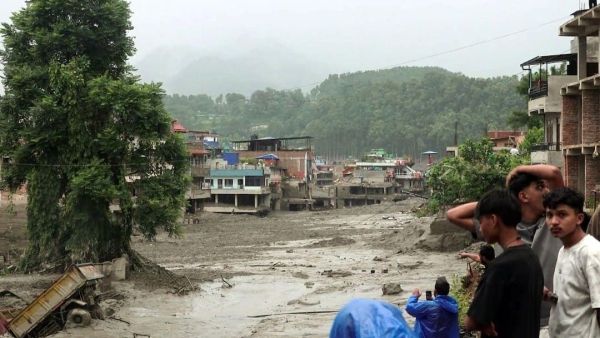
The death toll from the devastating flash floods in central Nepal rose to 469 on Friday, with more bodies recovered as search and rescue teams continued operations for the third consecutive day.
Nepal Police said the bodies had been recovered from eight districts across the Himalayan nation. Chitwan recorded the highest number, with 178 bodies recovered, followed by Nawalparasi East with 110 and Gorkha with 44.
Authorities have also recovered 37 bodies from Nuwakot, 33 from Dhading, 28 from Tanahu, 27 from Nawalparasi West and 12 from Rasuwa.
According to Nepal Police, 1,545 injured and stranded people have so far been rescued from different flood-affected areas. Of those rescued, 84 are currently receiving treatment at hospitals in Kathmandu.
Rescue and search operations remained underway for the third day, with 7,451 security personnel deployed across the affected regions. The force includes 2,391 personnel from the Nepal Army, according to the police statement.
The floods followed an ice-rock avalanche triggered by a glacial collapse near the Nepal-Tibet border on Wednesday. The resulting torrent of water, mud and debris swept downstream through central Nepal, devastating towns and villages and destroying or damaging homes, vehicles, roads, bridges and hydropower projects.
Adding to concerns, a large barrier lake has formed in Nepal, with Chinese authorities warning that it is already overflowing and could breach as more water enters the lake in the coming days.
China’s Ministry of Water Resources estimated the lake’s volume at around 2 million cubic metres as of Thursday morning. Another 3 million cubic metres of water is expected to flow into the lake over the next three days, creating a high risk of a breach, China Central Television reported, according to the Global Times.
The lake has formed near the confluence of the Chhochen Khola and Purepu Tsangpo rivers in Nepal. Chinese authorities are closely monitoring the situation and conducting flood simulations to assess the possible impact of a breach and support emergency rescue efforts.
The Chotchen and Purupe rivers originate in Tibet and merge before crossing into Nepal, where the river is known as the Bhotekoshi.
The Bhotekoshi is the principal upper tributary of the Trishuli River. With authorities continuing to monitor the barrier lake and rescue teams searching affected areas, concerns remain over the possibility of further flooding as additional water flows into the lake.