3
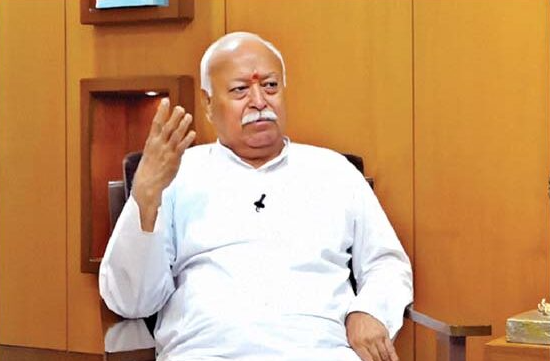
Dr Mohan Bhagwat’s arrival in New York has triggered something considerably larger than the controversy surrounding the appearance of an RSS Sarsanghchalak at Madison Square Garden, America’s most powerful political arena. It has carried one of India’s most enduring ideological arguments directly into the American political and media mainstream. In the space of a few days, the RSS has become the subject of intervention by a congressionally created American commission, opposition from New York’s political establishment, mobilisation by advocacy and civil-rights organisations, counter-mobilisation within Hindu America, and sustained attention across sections of the American mainstream media. What might once have remained an argument among Indians— or at most within the Indian diaspora—is now being interpreted, contested and politically framed by American institutions themselves. That is the larger significance of the Bhagwat visit. The immediate controversies surrounding Madison Square Garden (MSG) will inevitably pass. What may endure is the precedent they reveal: as India becomes more consequential to America and Indian Americans become more visible within American public life, India’s ideological battles are acquiring an American address as well.
INDIAN DEBATE BECOMES AMERICAN ONE
India has travelled into American politics before. Kashmir, Khalistan, caste, religious freedom and the politics of Prime Minister Narendra Modi have all periodically generated congressional letters, activist campaigns, demonstrations and media attention. PM Modi himself has filled American arenas and transformed diaspora gatherings into spectacles of political and cultural assertion. But the reaction to Mohan Bhagwat is different in one important respect. He holds no elected office, represents no government and exercises no constitutional authority. He heads the Rashtriya Swayamsevak Sangh, an organisation whose influence upon India’s political and social evolution is undeniable, but whose precise character remains fiercely disputed between its supporters and critics. Yet his presence in New York was sufficient to draw into the same argument a US federal commission, the city’s political establishment, organised advocacy networks and major international and American news organisations. The US Commission on International Religious Freedom, or USCIRF, urged targeted sanctions against RSS members and Indian officials it alleges are complicit in religious-freedom violations and sought revocation of Mohan Bhagwat’s visa. India has consistently rejected USCIRF’s assessments, accusing the commission of bias and questioning its credibility. There is an important distinction often lost in the political noise. USCIRF is an advisory commission. Its recommendations are not the policy of the United States government, and there had been no corresponding action by the White House, State Department or Treasury implementing its demands. That distinction does not diminish the political significance of the intervention. It clarifies it. America did not sanction the RSS or its chief. But an institution created by the US Congress was debating whether it should. That, in itself, marks how far the argument has travelled.
You Might Be Interested In
RSS ENTERS AMERICAN MEDIA LEXICON
Equally striking has been the scale and range of media attention. The Associated Press reported on the opposition and sanctions demands. Reuters focused attention on USCIRF’s intervention. The Wall Street Journal examined the appearance through the larger question of the RSS’ international visibility. Religion News Service scrutinised the organisation’s conception of Hindu unity, while Al Jazeera investigated the American organisation hosting the gathering. These publications do not share an ideological position, nor have they approached the RSS through an identical frame. But their collective attention has produced something consequential: an organisation that for much of its hundred-year existence was overwhelmingly discussed through the vocabulary of Indian politics is increasingly being explained to an American audience. For Americans encountering the RSS through this coverage, the introductory vocabulary has often been formidable: Hindu nationalism, Hindutva, Narendra Modi, majoritarianism, minorities and religious freedom. The RSS and its supporters would contest several of the assumptions embedded in that framing. Critics would argue that precisely those questions require international scrutiny. But something more fundamental has changed irrespective of which interpretation one accepts. The argument over what the RSS represents is no longer being conducted only in Nagpur, Delhi or India’s television studios. It is being conducted in New York and Washington, in American newsrooms and among American advocacy organisations. In its centenary year, the RSS has acquired an international visibility that would have been difficult to imagine through much of its history.
BATTLE OVER WHO SPEAKS FOR HINDU AMERICA
There is another dimension to this story that can easily disappear beneath the argument over the RSS: the transformation of Hindu America itself. The Indian immigrants who arrived in the United States in earlier decades were largely occupied with the arduous business of establishing themselves. They built careers, businesses and families while sustaining religion and culture through temples, homes and community associations. Their children and grandchildren inhabit a different America. The community is wealthier, better organised, more politically aware and increasingly unwilling to confine its Hindu identity to the private sphere. Temples, advocacy organisations, cultural institutions and professional networks have multiplied. Hindu vocabulary has entered American public discourse in ways that would have been almost unimaginable to the first generation. But visibility brings contestation. The opposition to Mohan Bhagwat did not come only from outside the Indian or Hindu community. Hindus for Human Rights was among the organisations opposing the gathering, with its leadership arguing that the RSS and Hindutva do not speak for all Hindus. On the other side are Hindu Americans who regard precisely such representations of the RSS—and, more broadly, of Hindu civilisational assertion—as distorted by political and academic frameworks they believe have long treated organised Hindu identity with suspicion. The disagreement therefore cannot conveniently be reduced to Hindus versus their critics. It is also an argument among Hindus about Hinduism, Hindutva, India and representation. And perhaps that is one of the most revealing consequences of the visit. Hindu America is no longer merely preserving an inherited identity. It is publicly arguing over what that identity means.
POLITICS OF DEFINING RSS
The American debate also exposes a persistent difficulty in understanding the relationship between the RSS, the BJP and Government of India. American reporting frequently explains the RSS through its relationship with Prime Minister Modi and the BJP. The connection is plainly relevant. The ideological and organisational history linking the Sangh and the BJP cannot simply be wished away. But neither can the RSS, BJP and Government of India be treated as interchangeable institutions. Mohan Bhagwat himself reportedly reinforced that distinction during an interaction with Indian-American business and technology figures in New York. When discussions concerning investment and manufacturing moved into areas properly belonging to government, he made clear that he was not speaking on behalf of the Indian government. That distinction becomes particularly important when an American institutional debate moves from criticism of an organisation to recommendations for sanctions and visa restrictions. It is one thing to scrutinise the RSS. It is another to collapse the boundaries between a social organisation, a political party and a sovereign government.
AMERICA BECOMES THE NEW ARENA
There is an irony in the controversy surrounding Madison Square Garden that should not be missed. America’s political system allows a federal commission to recommend action against a visitor while that visitor remains legally present in the country. Political leaders can condemn his appearance without possessing the power to prevent a lawful private gathering. Advocacy organisations can mobilise against him, while thousands who profoundly disagree with them are equally entitled to assemble. The argument is not being extinguished. It is being absorbed into America’s own democratic contest. And that may ultimately prove more consequential than any individual speech, protest or headline. India and America are drawing closer strategically at precisely the moment when the arguments within India are becoming more visible in America. Technology, defence, trade and geopolitics bind the two countries together, but millions of people now create another bridge between them. Ideas cross that bridge too—as do disagreements. For decades, the Indian diaspora carried to America its enterprise, professional ambition, food, festivals, languages, temples, spirituality and cultural memory. Its success has made Indian Americans one of the most consequential immigrant communities in the United States. Now something less comfortable is travelling with them: India’s argument with itself. What constitutes Hindu identity? What does Hindutva mean? How should the RSS be understood after a century of existence? Where does civilisational confidence end and majoritarian politics begin? Can Hindu assertion and religious pluralism coexist? And who possesses the legitimacy to answer those questions? Americans are increasingly being drawn into those debates, sometimes with sophistication, sometimes through ideological shorthand and sometimes through the competing representations of Indian groups themselves. Mohan Bhagwat’s appearance at Madison Square Garden did not create these arguments. But his arrival in New York has brought them together with unusual force and visibility. That is why the real story is larger than Madison Square Garden. An organisation born in India a century ago has become the subject of an American political argument. Hindu Americans are contesting its meaning. American institutions are examining it. American media organisations are trying to explain it. And India’s ideological divisions are increasingly becoming part of America’s own public conversation. The Indian diaspora once carried India to America. It is now carrying India’s debates with it.