Everton accepted a £35 million offer from Nottingham Forest for Harrison Armstrong before being forced into a U-turn following a furious backlash from supporters.
Rule number one for owners: never destroy hope, never take away a fanbase’s right to dream. For Everton supporters, Harrison Armstrong embodies exactly that: hope, and the chance to dream. The 19-year-old midfielder is a local boy from West Derby, one of their own, living out the same dream as the fans by wearing the famous royal blue shirt of the club he loves. Rule number two for owners: do not sell treasured home-grown talent.
Everton fans at the Vitality on Saturday left The Friedkin Group (TFG) in no doubt about their feelings over the proposed £35 million move for Armstrong to Nottingham Forest. “Don’t sell Armstrong, Harrison Armstrong, I just don’t think you understand,” they sang. “If you sell Armstrong, Harrison Armstrong, you’re going to have a riot on your hands”.
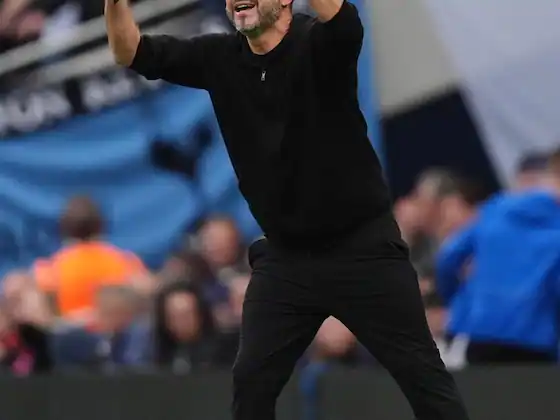
Everton manager David Moyes was plainly opposed to the deal. TFG saw the reaction, heard the anger, recognised the mistake in the plan and abandoned the sale of a player widely regarded as Everton’s finest home-grown prospect since Wayne Rooney. Armstrong is unquestionably a player worth keeping and backing.
“The potential sale of Harrison Armstrong goes against everything our fanbase stands for, a young talented Scouser who is the future of our club,” Everton supporters’ group The 1878s said in a statement. The group even threatened to stop organising the flags and tifo displays that add so much to the match-day atmosphere. TFG was interfering with the very fabric of Everton life.
There is also the question of what best serves the player’s development. Moyes has a strong record with young footballers, managing the precocious Rooney as carefully as possible when the powerful teenager burst memorably on to the scene in 2002. Moyes tends to protect such prospects in an almost paternal, certainly pastoral, manner. He knows they will eventually leave the footballing family home, so he tries to prepare them properly while also getting the best from them.
Moyes also offered crucial support to a teenage Ross Barkley when he suffered a double leg break in 2010, even making sure the youngster received a new contract while lying in a hospital bed and worrying about his future.
Moyes is likely to ease Armstrong in and out of the side, avoiding excessive physical or mental pressure on the 19-year-old. Armstrong appears capable of coping with the demands. Part of that comes from the education he gained after Moyes sent him on loan to Preston North End last season.
A wider issue is at play here, and it affects supporters everywhere. Financial sustainability regulations are not fit for purpose when it comes to nurturing young talent. From FFP to PSR to SCR, there needs to be a rethink not only of the terminology but also of the substance. The “pure profit” aspect of selling academy products is far too tempting for more short-sighted owners. It was one of the reasons a frustrated Eddie Howe had to let Elliot Anderson go to Forest in a rushed sale. It is also why TFG considered cashing in on Armstrong. The player becomes an accounting entry rather than a sporting asset.
TFG do need to balance the books at a club that has posted worrying figures in recent years and has been punished for them, but there are more acceptable alternatives and other players who could be sold. From a Premier League point of view, it would make sense if clubs were given stronger incentives to keep “one of our own”. One possible solution would be to allow the first few years of an academy graduate’s wages — perhaps the first 50 first-team appearances — to be offset against SCR calculations. That would create a financial reason to retain home-grown talent.
Everton supporters are entirely justified in taking pride in the fact that a local player has appeared in every league campaign since the Football League began in 1888. In truth, the tradition goes back even earlier than that. Liverpool-born goalkeeper Charles Joliffe played for Everton from 1885 until he was eventually replaced by Robert Smalley, who arrived from Preston.
To Evertonians, Armstrong is more than just a footballer. He is a symbol of the area, almost an antidote to the modern, money-driven game.
That connection with the community matters enormously, especially in a period when the Premier League is so heavily populated by overseas players.
Everton’s owners should have known the proposal would cause outrage. If TFG did not realise that, then they need better advisers — or better lines of communication with supporters. That is one of the most troubling aspects of the entire episode: TFG’s failure to understand this from the outset. It borders on arrogance. Everton Football Club is more than a business; it is a footballing institution, a community asset, a producer of local talent and a beacon of hope. The Armstrong episode underlined all of that. Owners elsewhere should take note.