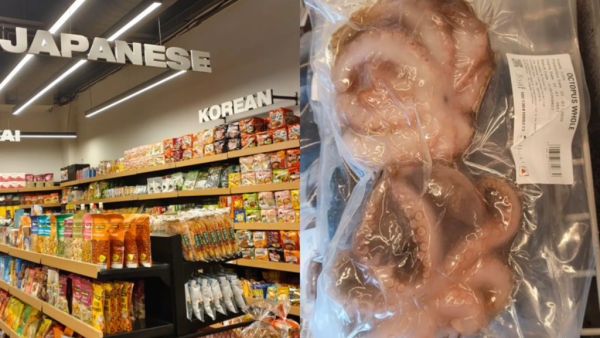
A packet of frozen octopus in a Gurugram supermarket has become an unlikely talking point about the city's changing real estate market. Real estate expert Abhishek Bhardwaj recently shared how a visit to a supermarket in Sector 65 made him notice something interesting.
For him, the frozen octopus was not just an unusual item on a food shelf. It was a clue about who is moving into the area, what kind of food they are looking for, and how their arrival is already changing rental prices in the neighborhood.
While walking around the market below the residential towers in M3M Sky City with a friend, Bhardwaj noticed a supermarket that stood out. When he asked his friend about the shop, he invited him to see a Korean corn dog. But things got much more interesting inside.
His friend took him past the corn dog freezer and towards the back of the store, where he picked up a vacuum-sealed packet containing two frozen octopuses. A strict vegetarian, Bhardwaj admitted that the sight was quite enough for him. But the sight wasn't the only thing that got registered into his mind. He questioned why a supermarket selling specialized Korean and Japanese food had opened here.
No food business will ever start stocking products randomly. And for a supermarket, the investment goes much beyond just stock to rent, interiors, freezers and more. For businesses dealing with imported and specialized food products, the first requirement has to be demand, customers who are willing to buy them.
Regular grocery items such as paneer and dahi have a much wider market, Bharadwaj stated, but a frozen octopus or a Korean corn dog needs a more specific customer base. So, why was this supermarket stocking them in Sector 65?
According to Bharadwaj's friend, over the last year or two, many Korean and Japanese families have moved into the 2BHK towers at M3M Sky City. And suddenly, the supermarket made sense, because the customers were already there. These buildings have eight units on every floor, with homes ranging from around 1,200 to 1,500 square feet. According to Bhardwaj's post, many of these apartments have gone on long leases to Korean and Japanese families over the last year or two.
His friend said he sees them regularly. And that growing population appears to have created demand for food and products familiar to them. The food on the shelf was telling him who was living in the buildings above.
This is where the story gets particularly interesting. Someone had to decide that opening a supermarket with Korean and Japanese food was worth the investment.
That means paying for the shop, setting up the interiors, buying freezers, and stocking specialized inventory. Bharadwaj pointed out that a business would not take that risk simply for the sake of having an interesting food aisle.
There had to be enough families living nearby that would actually buy these products. And that's what the business owners counted on before committing to such a setup.
A neighborhood does not change overnight. Rather, when people move in, businesses begin noticing them. And slowly, the market changes to meet their needs. In this case, Bhardwaj sees Korean and Japanese families choosing specific societies in Sector 65 as an important signal for the rental market.