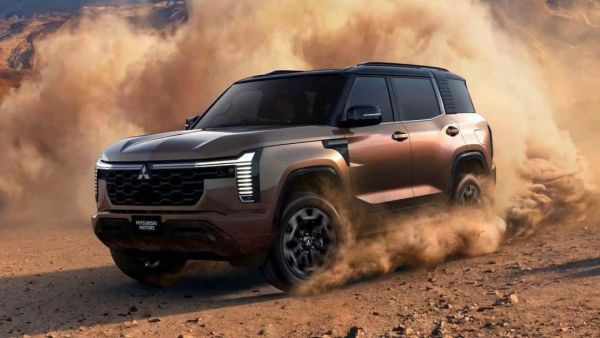
Mitsubishi has revealed the all-new Pajero, marking the arrival of the SUV’s fifth generation. The new model is larger, more luxurious and considerably more premium than its predecessor, while retaining the rugged character that made the Pajero an iconic name in the SUV segment.
The new Pajero adopts a fresh design language inspired by Mitsubishi’s latest models. Its exterior features more sculpted lines and a tougher stance, giving the SUV a modern appearance without completely moving away from its off-road-focused identity.
However, one of the most noticeable changes is at the rear, where Mitsubishi has done away with the traditional externally mounted spare wheel. Despite the change, the new design gives the Pajero a more contemporary appearance while retaining its imposing proportions.
The fifth-generation Pajero is more than 4.9 metres long, making it a sizeable SUV. It also gets a longer wheelbase, which should translate into greater cabin space for passengers.
With a ground clearance of 230mm and its tall stance, the SUV retains the commanding road presence expected from a Pajero. The interior, meanwhile, has undergone a much more significant transformation.
The cabin now takes a distinctly more premium approach, with considerably more technology and equipment. The iconic Pajero instrumentation has also been retained in a modernised form, with the information now integrated into the main touchscreen.
Other features are expected to include heated and ventilated seats, a 360-degree camera, acoustic window glass and connected-car technology, among several other convenience and safety features.
Despite its move towards a more luxurious character, the new Pajero has not abandoned its off-road roots.
The SUV continues to use a ladder-frame architecture and comes with a proper four-wheel-drive system, including low-range gearing. This gives the Pajero the hardware needed to tackle challenging off-road terrain rather than merely offering an SUV-like appearance.
Power comes from a 2.4-litre diesel engine producing around 200bhp. The engine is paired with a new eight-speed automatic gearbox, while Mitsubishi has also equipped the SUV with a range of off-road technologies.
This combination of a ladder-frame platform, diesel power and low-range 4x4 capability keeps the Pajero positioned as a serious off-road SUV despite its significantly more premium character.
Unfortunately for Indian SUV enthusiasts, the new Pajero is not expected to come to India. Mitsubishi currently does not sell passenger cars in the country, making an India launch of the fifth-generation SUV unlikely.
That is a missed opportunity, considering the Pajero name still has considerable recognition among Indian SUV enthusiasts. Its combination of ruggedness, imposing design, off-road capability and Mitsubishi’s heritage could make it an interesting proposition in the Indian market.
For now, however, Indian buyers will have to admire the new Pajero from afar as Mitsubishi continues its global product strategy without an established passenger-car presence in India.