A study published in the renowned science journal Science Advances has astonished doctors and scientists worldwide. According to this study, a bacterium that causes serious gum disease has been found in the brains of patients suffering from Alzheimer's disease. Following this revelation, a discussion has intensified on social media as to whether gum disease is the primary cause of Alzheimer's. Let's find out the truth behind this research and what scientists have to say about it.
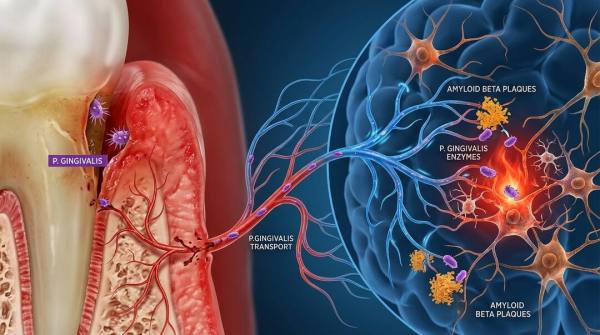
At the heart of this research is a dangerous bacterium called Porphyromonas gingivalis. This bacterium is responsible for periodontitis, a serious and chronic gum disease. When scientists examined brain tissue from people who had died from Alzheimer's, they found surprising results. Nearly 96 percent of Alzheimer's brain samples contained toxic enzymes produced by this bacterium. Furthermore, traces of this bacterium's DNA have also been found in the brain fluid of some living patients.
Doctors say that when our gums become severely inflamed or infected, the fine blood vessels there become weakened. These bacteria enter the bloodstream when we brush our teeth or chew food. Traveling through the bloodstream, these bacteria reach the rest of the body and eventually our brain. Once in the brain, these toxic enzymes damage neurons and cause inflammation, increasing the risk of memory loss.
Scientists also experimented on mice to test this theory. When this bacterium was introduced into the mice's mouths, it eventually reached their brains. Once in the mice's brains, it accelerated the production of a defective protein called amyloid beta. This is the protein that forms clumps or plaques in the brains of Alzheimer's patients. However, when the mice were given drugs that blocked this enzyme, the inflammation in their brains decreased, and the cells remained protected.
These research data might suggest that Alzheimer's is caused by poor dental hygiene, but scientists have clarified that this is not the case. While a link has been found between gum bacteria and Alzheimer's, it has not been proven that this is the primary or sole cause. Alzheimer's is a complex disease caused by a combination of factors, including aging, high blood pressure, and impaired protein balance in the brain. In large human clinical trials, drugs that kill this bacteria have not been completely successful in curing Alzheimer's patients.
While this may not be a direct cause, this research has opened a new avenue for medical science. Scientists are now delving deeper into whether controlling internal infections and inflammation in the body can improve brain health.