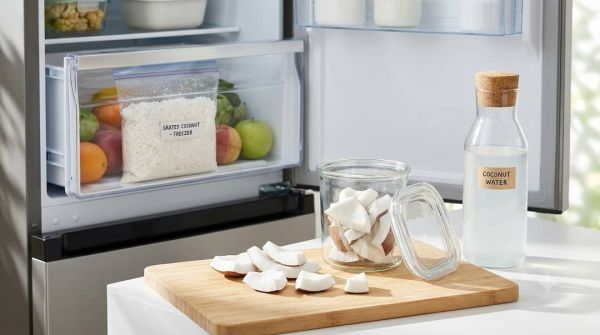
Easy ways to keep cut Coconut fresh for days: Coconut is used in a variety of dishes, from sweets to vegetables, chutneys, and more. Fresh coconut is prized for its flavor, coconut water, and its many nutrients. However, one problem is that once cut, it's difficult to keep it fresh for long. Its taste and aroma change over time, and if not stored properly, it can even spoil.
In fact, fresh coconuts contain a high amount of water and natural sugars. Once cut, when the inner part is exposed to air, oxidation can begin, and bacteria can grow rapidly in the warm environment. This is why whole coconuts and cut coconuts should be stored differently. If you want to use your coconut for several days after cutting it, you can try these simple methods.
If the coconut hasn't been harvested yet, it can be stored at room temperature for a short time. Store it in a cool, dry, and well-ventilated area. Avoid direct sunlight or excessive humidity. In cool weather, a whole coconut can last for about one to two weeks, while in hot or humid weather, its shelf life may be shorter.
If you want to keep it for a longer period, the refrigerator is a better option. Whole coconuts can be stored in the crisper drawer of the refrigerator. The cool temperature helps slow the spoilage process, and they can last for several weeks. Another easy way is to gently shake the coconut when purchasing or before storing it. If you hear the sound of coconut water inside, it may be a sign of freshness. D
Once the coconut is cut, it's best to refrigerate it as soon as possible rather than storing it outdoors. First, separate the coconut's white flesh from the shell. If necessary, rinse it quickly with clean water and dry it thoroughly. Then, place the coconut pieces in a clean, airtight container and refrigerate them immediately. Leaving the coconut open can cause it to spoil faster due to moisture and exposure to air. Properly packaged, cut coconut usually has a shelf life of a few days. However, be sure to check its odor, color, and texture before using.
If there's any remaining coconut water after cutting it, it's best not to leave it at room temperature. Immediately transfer the coconut water to a clean, lidded glass bottle or container and refrigerate it. It's best to use it quickly rather than storing it for extended periods. If the coconut water develops a sour or unusual odor, or if it develops bubbles and a fizzy texture, avoid drinking it. These could be signs of spoilage.
If you have a large amount of coconut and want to preserve it for a long time, freezing is one of the easiest options. Cut or grate the coconut's white flesh into small pieces. Then, place it in a freezer-safe bag or airtight container. Try to keep the package free of air. It's also a good idea to write the storage date on the bag or container.
Frozen coconut can be used for several months. However, its taste and texture may change slightly after freezing. Grated coconut can be easily used in smoothies, desserts, and cooking. Coconut water can also be frozen in ice cube trays. Once frozen, store these cubes in sealed freezer bags. These can be used in smoothies or cooking.
After storing a coconut, inspect it carefully before using it. If it smells sour or rotten, the flesh becomes sticky or very soft, the color is yellow, gray, or black, or mold is visible, do not use it. A bitter or strange taste can also be a sign of spoilage. It is better to discard the entire coconut rather than trying to save it or remove the damaged part and eat the rest.
Leaving chopped coconut at room temperature for several hours, not sealing the container properly, using dirty spoons or knives, and delaying refrigerating it after cutting can all cause it to lose its freshness quickly. Avoid storing coconut with other perishable items. Also, keep it away from strong-smelling items, as coconut can easily absorb the odors of surrounding food.