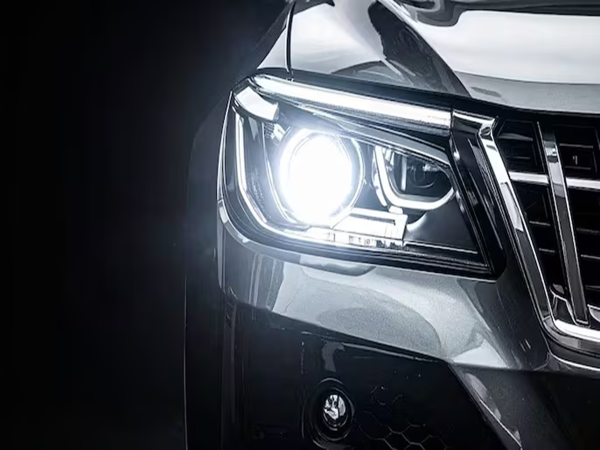
The glare caused by the high-beam headlights of vehicles on the road at night is a major cause of road accidents. To mitigate this risk and enhance road safety, the Ministry of Road Transport and Highways (MoRTH) has proposed amendments to the Central Motor Vehicles Rules.
According to a *Times of India* report, these new safety norms could come into effect from April next year. Stricter legal regulations are being introduced because the misuse of high beams has persisted despite the Ministry's awareness campaigns.
**Automatic Headlights to Operate Only on Low Beam**
Currently, the Automatic Headlight On (AHO) system in two-wheelers can activate either the low beam or the high beam, depending on the vehicle's settings. However, under the new rules, the AHO system in new two-wheelers will ensure the headlight remains in low-beam mode upon automatic activation. This rule will apply only to newly manufactured two-wheelers and will not affect vehicles already on the road.
**Reduction in Headlight Brightness and Candela Limits**
There is a proposal to lower the maximum light intensity limit of headlights to prevent dazzling the eyes of oncoming drivers at night. Specifically, the proposal seeks to reduce the maximum permissible intensity from 150,000 candela (cd) to 100,000 cd. For cars and other four-wheelers, the limit may be reduced from 225,000 cd to 150,000 cd.
**Reduced Glare from White Light**
Research has shown that headlights and fog lamps emitting intensely white light or having high color temperatures create excessive glare, thereby impairing the visibility of oncoming drivers. Consequently, the draft rules propose capping the maximum color temperature of vehicle lighting at 6,500K. Additionally, it has been proposed that the mounting height of main-beam headlights be aligned with that of passing-beam (low-beam) headlights.
**Speed-sensitive high-beam warning alarm**
To curb the unnecessary use of high beams within city limits, new cars and motorcycles may be equipped with a speed-sensitive audio alarm system. If a driver manually switches to high beam while driving in the city or on congested roads, the vehicle will emit a beep or an audible warning, prompting the driver to switch back to low beam. This alarm will be speed-sensitive; the warning will not sound if the vehicle is traveling on a highway at speeds exceeding 60 km/h, as high beams are necessary for long-range visibility on dark highways.
Strict measures are also being taken to enhance the visibility of heavy vehicles—whether stationary or in motion—on roads at night or during foggy and inclement weather. According to a draft proposal, the installation of certified reflective tape may be made mandatory for all buses, trucks, and heavy commercial vehicles. This will enable vehicles approaching from the front or rear to spot these heavy vehicles from a distance, thereby helping to prevent accidents.
Disclaimer: This content has been sourced and edited from NDTV India. While we have made modifications for clarity and presentation, the original content belongs to its respective authors and website. We do not claim ownership of the content.