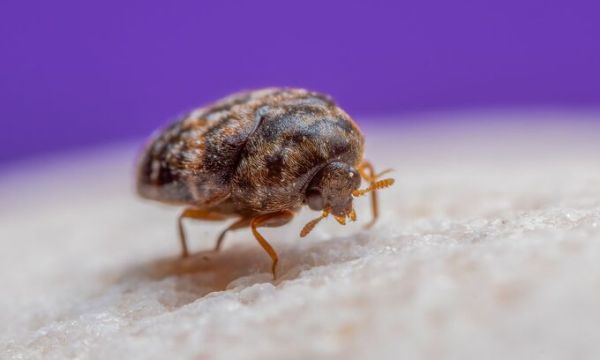
Despite their name, carpet beetles do not only damage carpets. Their larvae can feed on a range of natural materials, including wool, silk, leather, fur and pet hair, potentially damaging clothing, rugs, upholstery and furniture, according to Country Living.
Adult carpet beetles, by contrast, mainly feed on pollen, plants and flowers.
The insects typically lay their eggs in carpets, rugs and other dark, undisturbed areas. Once hatched, the larvae feed on natural fibers and animal-based materials and may also hide inside closets or beneath furniture.
Adult carpet beetles often enter homes through open windows and doors, particularly during spring and summer. They can also be carried indoors on potted plants because the adults are attracted to flower pollen.
Because carpet beetles reproduce quickly and their eggs and larvae can be difficult to spot, an infestation may go unnoticed until damage appears.
The larvae are usually around one-eighth of an inch long, tan in color and covered with hairy bristles. Damage caused by them can sometimes be mistaken for that left by clothes moths.
|
An adult carpet beetle on fabric. Photo from Pexels |
How to get rid of carpet beetles
Use vinegar
Mix equal parts white vinegar and water and lightly spray carpets and other suitable fabric surfaces. The acidity of vinegar can help control carpet beetles.
Vacuum hidden areas
Vacuum thoroughly along carpet edges and baseboards, as well as inside closets, beneath furniture and around vents.
This can remove larvae along with hair, lint and dead insects that may serve as food sources.
Heat-treat affected fabrics
Wash suitable items in hot water and dry them in a machine, while delicate fabrics can be professionally dry-cleaned.
The heat from a dryer can kill carpet beetle eggs and larvae.
Southern Living also recommends steam-cleaning affected carpets and upholstery when the materials can safely withstand heat and moisture.
Use insecticides only when necessary
Cleaning should generally be the first step in dealing with carpet beetles. If the infestation continues, use only insecticides approved locally and specifically labeled for carpet beetles or fabric pests.
Products should be applied only to approved areas, such as carpet edges and cracks where the insects may be hiding, and label instructions should be followed carefully.
Insecticides should not be sprayed directly onto clothing or bedding. Once the infestation has been eliminated, vulnerable fabrics should be cleaned before being stored in tightly sealed plastic bags or containers.