During Ganpati festival, we all decorate our house and Bappa’s pandal very beautifully. From flowers, garlands to Durva, leaves and other worship materials are used with reverence. But after the celebrations are over, a question arises that what should be done with all this?
It is often seen that after puja, people throw flowers and other materials in the garbage or throw them in rivers and ponds. This causes a lot of damage to the environment in some way or the other. In such a situation, if you show a little wisdom then these things can be reused. So this time after Ganesh Chaturthi, instead of throwing away puja material, try these easy ways to give it back to nature-
This can be the first step when you want to dispose of puja materials in an eco-friendly manner. Instead of putting all the ingredients in one bag after the puja, separate them first. Keep flowers, leaves, durva and other natural ingredients aside. On the other hand, keep plastic decorations, thermocol, ribbon, wire and synthetic flowers etc. Apart from this, keep aside metal puja items, glass items and reusable items. Remember that if the flowers have plastic strings, wrappers or other decorative items attached to them, remove them first. This will make it easier to convert organic waste into compost or for other uses.
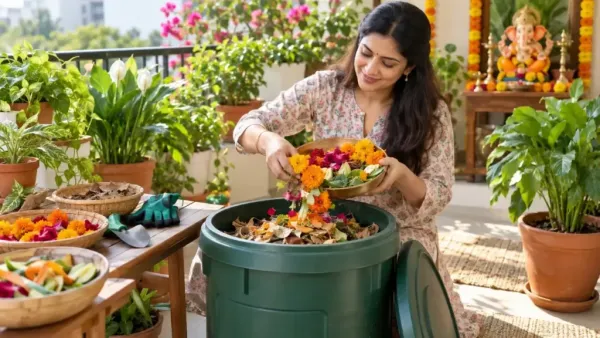
The easiest and best way to use the flowers left after Ganpati Puja is to use them to make compost. You can cut flowers and leaves into small pieces and put them in home compost. Compost can be prepared by mixing these with dry leaves, vegetable peels and other suitable organic materials.
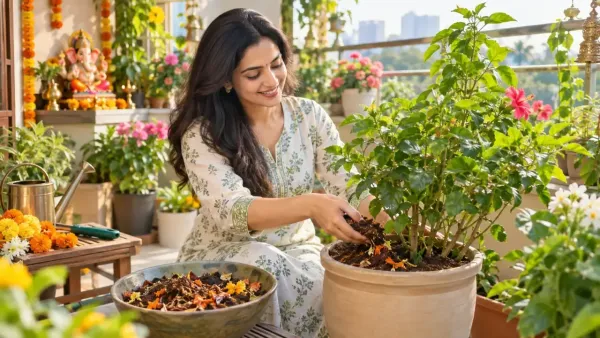
If there is no arrangement for making compost in your house, then they can also be used in pots at home. For this, cut the dried flowers into small pieces and mix them in the prepared compost and then use that compost in the soil of the plants.
This is a good idea to reuse puja materials. If the flowers are not too spoiled, they can also be dried and used. For this, you can dry rose petals, marigold flowers and other fragrant petals thoroughly in the shade and prepare decorative bowls, flower bundles or home decor items in any other creative way.
People often throw away the flowers, plastic skirting, thermocol, ribbon and wire used in Ganpati decoration. These need to be disposed of properly, so remove the plastic and wire before disposing of the garland. You can use it during art and craft projects. Otherwise put them in the respective waste category. At the same time, clean the decorations which can be used next year and keep them safe. There is no need to buy everything new. Storing decorations after the festival is also an easy way to reduce waste.
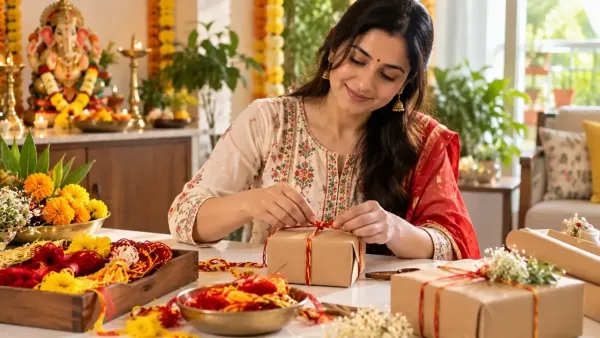
The clean Kalava or Mauli left after the puja can be used for any creative work like gift packing or decorative hanging. However, if it is dirty, soaked in oil or mixed with any other waste, it is better to separate it and dispose of it as per local waste regulations.
How is compost made from dried puja flowers?
Cutting puja flowers into small pieces and mixing them with dry leaves, soil and coco peat and keeping them in a compost bin creates excellent organic fertilizer within a few weeks.
Can puja flowers be put directly in the pot?
Yes, flower petals can be dried and broken into small pieces and mixed directly into the pot soil, which acts as natural mulching and fertilizer.
What should be done with the plastic and thermocol of Ganpati decorations?
Instead of throwing away plastic skirts, ribbons and thermocol, clean them and save them for next year’s festival or give them in dry recycling waste.
How to properly use Kalave or Mauli left after puja?
Clear Kalave can be used in gift wrapping or craft projects. Separate dirty or oiled waste and throw it as per dry waste disposal rules.