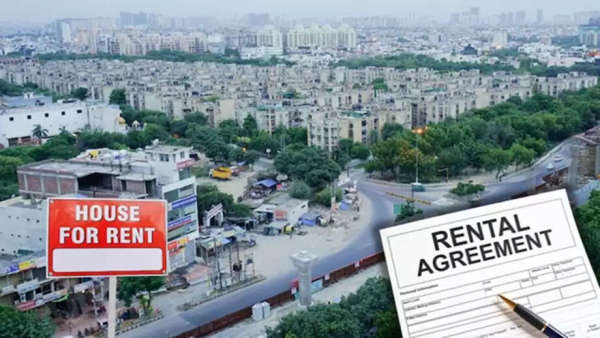
Millions of people in the country live on rent, and their biggest problem is the arbitrary behavior of landlords. In some cases, a six-month security deposit is demanded before renting a house, while in others, rent is increased without a written agreement. To address this problem, the government is pushing for the nationwide implementation of the Model Tenancy Act.
The new Rent Rules 2025 make it clear that security will be monitored, rents will not be increased arbitrarily, and no one will be evicted without reason. This law brings significant relief to ordinary tenants and will make the entire rental system more transparent and secure. Let's understand each point in simple terms.
Arbitrary security deposits will no longer be allowed
With the new rules, landlords will no longer be able to demand arbitrary security deposits. Residential houses can only be guaranteed a maximum of two months' rent, while commercial spaces like shops and offices are limited to six months. This will significantly reduce the financial burden on tenants when renting a home.
A home cannot be rented without a written rent agreement.
The Model Tenancy Act states that a written rent agreement is mandatory for every tenancy. It clearly states the rent, increase, repair responsibilities, and rental period. Both parties must submit this agreement to the Rent Authority within 60 days of the agreement's creation.
Rent agreements will now also be registered online.
States will be required to create a digital platform where rent agreements will be recorded online. This record will be officially recognized and will be considered the most important evidence in case of a dispute. This will make the entire process easy, secure, and clear.
Strict rules on rent increases:
Landlords will not be able to increase rent without a reason. The rent increase will be limited to the amount previously agreed upon in the written agreement. Furthermore, a written notice to the tenant three months before any rent increase will be mandatory.
Evictions will not be allowed without reason.
Landlords will no longer be able to evict tenants at will. This requires an order from the Rent Authority, and the reasons must be legally established, such as non-payment of rent, illegal activity, or subletting without permission.
Failure to vacate on time could result in heavy fines.
If a tenant fails to vacate after the lease expires, they will be required to pay double the rent for the first two months and quadruple the rent thereafter. This will also protect landlords.
A uniform template will simplify rental agreements.
The government is preparing to introduce a uniform rental agreement template so that no party can add arbitrary conditions. This will provide relief to tenants from deceptive conditions.
Disputes will now be resolved quickly, eliminating the need to go to civil courts.
The new law provides a three-tier system for dispute resolution: the Rent Authority, the Rent Court, and the Rent Tribunal. The aim is to ensure that rent-related matters are resolved within 60 days. This will alleviate lengthy legal processes.
Not yet implemented nationwide, states will have to amend their own rules.
This law is a model. Implementation is the responsibility of the states. Several states, such as Uttar Pradesh and Tamil Nadu, have already enacted their own new rent laws. Delhi is also preparing to replace the old 1958 law with a new one.
The rental market will become safer and secure.
The new rules will create a system that protects tenants and provides legal support to landlords. This will make the rental market transparent across the country and provide relief to people from arbitrary taxation.
Disclaimer: This content has been sourced and edited from NDTV India. While we have made modifications for clarity and presentation, the original content belongs to its respective authors and website. We do not claim ownership of the content.