The Vijay Hazare Trophy is one of the greatest domestic tournaments in Indian cricket and is the stage on which state pride and personal ambition clash. Named after the legendary Vijay Hazare—Maharashtra's finest cricketing export and India's first Test match-winning captain—this 50-over tournament has been the launching pad for countless international careers.
Since the time of its creation as Ranji One Day Trophy in 1993/94, it has grown to become a highly competitive List A tournament with 38 teams in five categories. It is not just about silverware, the tournament is where the future stars make their debut, the older ones come back into their stride and the selectors find the next generation of Indian cricketing gems.
The Vijay Hazare Trophy captures all the excitement of limited-overs cricket in record-breaking performances on the bats and shattering spells on the bowling side. Every season adds a new twist to the history of this great competition, as it is already taking its place as a vital constituent of cricketing in India.
History of the Vijay Hazare Trophy
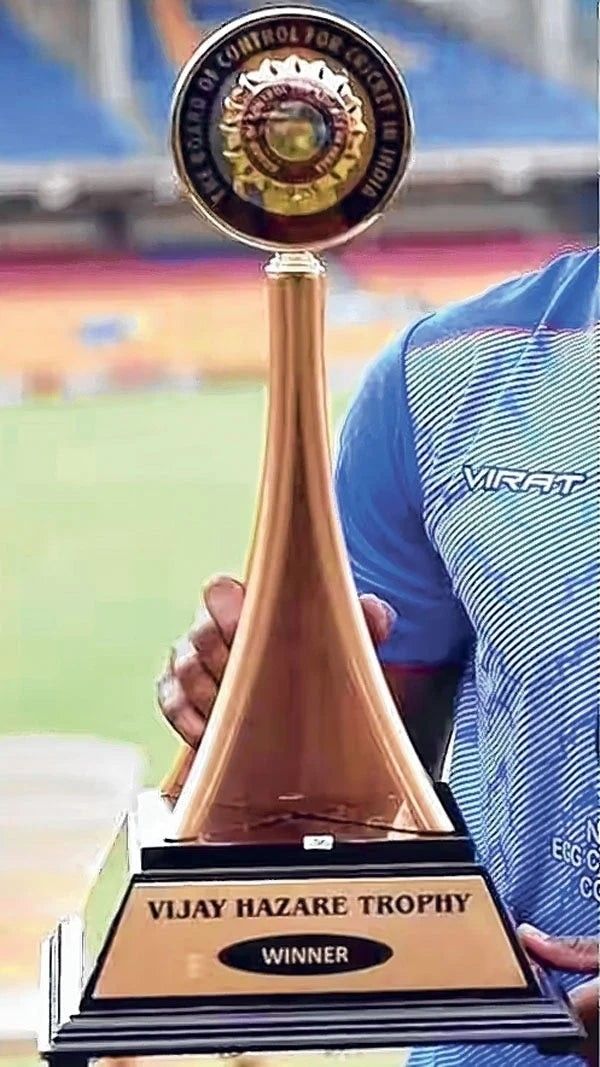 Image Source : The Sangai Express
The tournament started small in 1993/94 when the BCCI introduced Ranji One Day Trophy giving it the name of a well-known first-class Ranji Trophy. Initially, the competition featured a zonal format without crowning national champions—teams simply emerged victorious within their respective zones.
This structure persisted until 2001/02, when administrators introduced a round-robin stage among zonal toppers to determine overall winners for two seasons. This knockout stage came in 2004/05 which introduced dramatic finals which made overall decisions as to champions. There was also an under-22 trophy known as the Vijay Hazare Trophy and this ran parallel between 1983/84 and 2006/07.
In the decision to put more emphasis on the name of Vijay Hazare, the BCCI renamed the senior competition beginning with the 2007/08 season. This decision immortalized Hazare's contributions—his 2,192 Test runs, captaincy achievements, and particularly leading India to their maiden Test victory against England in 1952, ending a two-decade drought.
Also Read | Ranji Trophy Selection Process, Points System & History
Groups in the Vijay Hazare Trophy
The Vijay Hazare Trophy has a complex group-based system which makes the competition extensive, and was in a position to deal with the logistical issues involved in running a 38 team tournament. The teams are strategically split into five groups namely Elite Groups A, B and C, plus Plate and pre-quarter final groups. This hierarchical system represents the strengths of each region and past performances, and provides equal competitions within each cluster.
The Elite groups usually include classical powerhouses such as Mumbai, Karnataka, Tamil Nadu as well as Delhi- states with well developed cricketing infrastructure and talent pipelines. In the meantime, the Plate group is played by the emerging states in cricket, which struggle to get ahead and to be respected. Geographic proximity is also known to affect group formations in such a way that it minimizes the amount of travel required but keeps the competitive integrity.
This performance-based-cum-zonal grouping also allows each match to have a meaning, be it the teams fighting to get into the knock-out or group dominance. The format has made opportunity more democratic-even smaller states can topple giants on their day and every fixture is unpredictable to the cricket purist following the grassroots ecosystem of domestic cricket.
Participating Teams
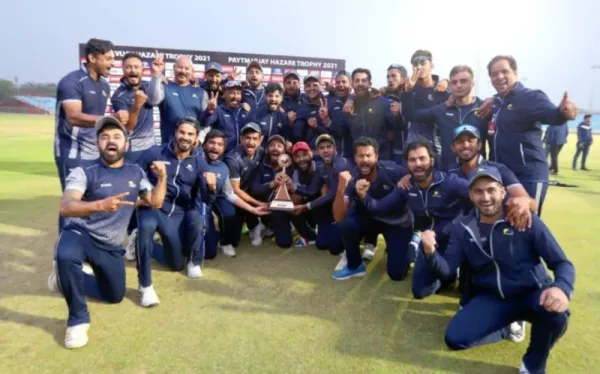 Image Source : HPCA
The Vijay Hazare Trophy involves thirty eight teams representing the diverse cricketing environment in India, in Kashmir to Kanyakumari, Gujarat to Assam. The tournament is organized by state associations, with Maharashtra, Karnataka, Tamil Nadu, Delhi, Bengal, Punjab, Uttar Pradesh and Rajasthan always being the strongest competitors.
Mumbai and Karnataka are traditional forces that come with the championship background and Tamil Nadu have five championships thus making them the most successful franchisee. Other than the big states, such teams as Jharkhand, Himachal Pradesh and Saurashtra have also become fierce contenders and in some cases dethroned the favourites. Railways, Services, other institutional teams provide different flavors of the same-they represent organizations and not geographical areas and attract players in the country.
Minor cricketing states such as Manipur, Mizoram, Nagaland and Meghalaya are eager to be part of the platform and they find development and exposure in it. Every team consists of domestic crickets best of the best, Ranji Trophy seasoned, fringe international players in need of form and fresh youth in need of showcasing themselves. This melting pot generates amazing competition rates, which guarantees scouts and selectors to find unnoticed gems right throughout the large cricketing ground in India every season.
Tournament Format
Vijay Hazare Trophy is conducted in a carefully planned format that is based on a balance between league games and a knockout drama. The 38 teams play in their different groups by playing round-robin matches collecting the points according to wins, losses and washouts. The best players in each group, or usually the table-toppers and some of the runners-up on total performance, make it through to knockout stages.
Quarter-finals reduce the number of participants to eight, then semi-finals make the final competitors. The final game, often hosted in a neutral place, decides the title holder of the season in a single game. Games are played according to conventional 50 over List A rules of cricket; each side faces no fewer than 50 overs, unless thrown out, and field restrictions are imposed when the team at the batting end is on powerplay or is taking a strategic break.
The structure promotes continuity in the group phases and momentum-builders to the knockouts. The interruptions in rain are calculated through Duckworth-Lewis-Stern calculations that are fair. Through this arrangement, the tournament has delivered dramatic endings, underdog victories, and overwhelming campaigns, ensuring that the spectators are engaged till the end of the tournament, until the last round of the preliminary rounds to the grand finale.
Most Runs in Vijay Hazare Trophy History
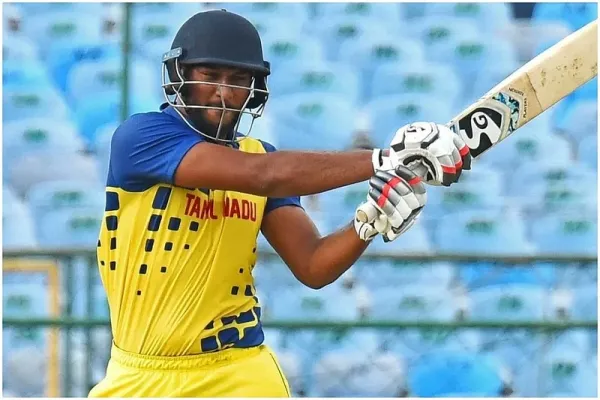 Image Source : Outlookindia
Vijay Hazare Trophy runscores bring about the generation-runscoring in batting. The mammoth 506/2 by Tamil Nadu over Arunachal Pradesh in Bengaluru on November 21, 2022, is the highest team total in the tournament, an extraordinary performance of batting supremacy with savage stroke-play and unremitting compounding at 10.12 runs per over.
The 457/4 against Puducherry and the 427/6 against Manipur by Mumbai and Maharashtra respectively are evidence that traditional powerhouses still have some high-scoring potential. Punjab has been ranked twice in the highest scoring list with 426/4 and 424/5 showing that they have depth in their batting. Single genius had created many a couple of centuries and colossal collaborations that reposition restricted overs batting.
The tournament has seen batsmen plunder champions off bowlers on flat pitches in sub continental conditions where boundaries are a frequent occurrence. These astronomical sums indicate the transformation of modern cricket, aggressive motive, new types of shots, and fearless techniques instead of conservative accumulation. Each season presents batting records where they are enhanced by the players who push the boundary literally and figuratively as every stroke-maker takes the bowler heaven and hell.
Top 5 Run-Scorers in Vijay Hazare Trophy:
Ankit Bawne (Maharashtra) - 4,010 runs from 94 matches (2009-2025) with 184 half-centuries, averaging 56.47
Krishnakumar Karthik (Tamil Nadu) - 3,433 runs from 79 matches (2008-2023) with 154 half-centuries, averaging 56.27
Manish Pandey (Karnataka) - 3,403 runs from 103 matches (2008-2023) with 142 half-centuries, averaging 44.77
Priyank Panchal (Gujarat) - 3,395 runs from 83 matches (2008-2023) with 136 centuries, averaging 42.97
Mayank Agarwal (Karnataka) - 3,336 runs from 71 matches (2012-2025) with 162 centuries, averaging 52.12
Most Wickets in Vijay Hazare Trophy History
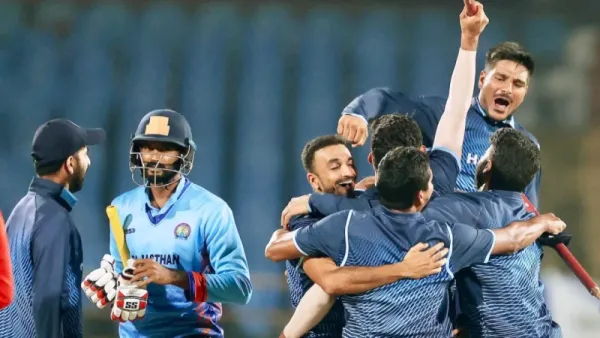 Image Source : ESPN
Batsmen take headlines with totaling monumental scores, but bowlers also have no minor struggle in the Vijay Hazare Trophy. Wicket taking in 50 over cricket always requires ability, endurance and tact tactical knacks; the top wicket takers of the tournament have all these in excess. Pace bowlers preying on the early morning sunlight, spinners choking middle-overs to score, and death-overs experts protecting totals all help to make the team successful.
The tournament has been home to many five-wicket hauls and match winning performances where bowlers destroyed batting lineups of their opponents by themselves. Variations, yorkers, bouncers and intelligent field placements become instruments in the arsenal of the bowlers. Physical stamina is a trial of domestic cricket- bowlers have to play through a number of matches in the tight schedule, staying fit and effective during the whole time.
The roll of honour of the wicket-takers, is commemorated of those who have served the game with years of faithful service, and whose names are known as match-winners. Young quick bowlers utilize this arena that displays the blunt speed, and experienced spinners expound skill gained over the years. Such bowling performances are usually conclusive as they keep the cricket fans in mind that the wicket is the ultimate currency in a limited-overs game.
Top 5 Wicket-Takers in Vijay Hazare Trophy:
Siddhart Kaul (Punjab) - 175 wickets from 75 matches (2009-2023), bowling 3,790 balls with 52 maidens
Piyush Chawla (Gujarat/UP) - 161 wickets from 81 matches (2009-2023), bowling 4,252 balls across 708.4 overs
Rishi Dhawan (Himachal Pradesh) - 151 wickets from 92 matches (2008-2025), bowling 4,142 balls with 34 maidens
Rahul Shukla (Jharkhand) - 142 wickets from 72 matches (2009-2022), bowling 3,520 balls with 30 maidens
Jaydev Unadkat (Saurashtra) - 132 wickets from 86 matches (2010-2025), bowling 4,648 balls with 68 maidens
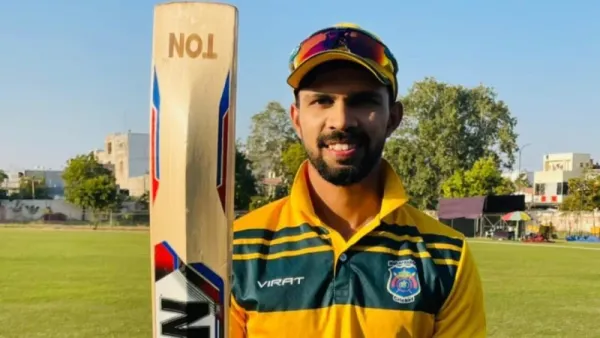 Image Source : ESPN
Century-makers take an exceptional niche in folklore of Vijay Hazare Trophy, their own brilliance usually deciding the fate of matches. Hitting centuries in 50 over cricket needs temperament, technique and being able to accelerate, an attribute that distinguishes between good batsmen and great ones. It has created many memorable hundreds involving classical stroke-play, new ways of shooting, and raw determination against good bowling attacks.
Batsmen converting starts into substantial scores demonstrate concentration levels essential for success.Double centuries occasionally grace the competition—extraordinary feats requiring physical stamina and mental fortitude across extended periods at the crease. Batsmen laying down foundations, middle-men picking up after failures, finishers mounting late attacks all add a variety of centuries.
Every hundred is a story in itself-situations of pressure to be beaten, bowling attacks to be beaten, team victories to be obtained. Century-makers in the tournament are future international players declaring their arrival, established players keeping the standards and domestic stalwarts demonstrating the consistency of excellence. Aspiring cricketers use these innings as benchmarks and see that it is possible to attain that with the proper skills, hard work, and pure concentration under the stressing scrutiny of competition domestic cricket.
Also Read | Ranji Trophy Winners: Champions List and Historical Records
Ankit Bawne (Maharashtra) - 15 centuries from 94 matches (2009-2025), including 16 fifties, 4 ducks, scoring 4,010 runs at 56.47 average
Ruturaj Gaikwad (Maharashtra) - 13 centuries from 52 matches (2017-2025), including 8 fifties, achieving remarkable 63.54 average with 2,923 runs
Mayank Agarwal (Karnataka) - 11 centuries from 71 matches (2012-2025), including 16 fifties, 6 ducks, amassing 3,336 runs at 52.12 average
Robin Uthappa - 11 centuries from 80 matches (2008-2021), including 14 fifties, 4 ducks, scoring 3,115 runs at 40.45 average
Yashpal Singh - 10 centuries from 72 matches (2008-2019), including 21 fifties, 7 ducks, accumulating 3,193 runs at 60.24 average
Vijay Hazare Trophy Winners
| Season |
Winner |
Runner-up |
| 2002/03 |
Tamil Nadu |
Punjab |
| 2003/04 |
Mumbai |
Bengal |
| 2004/05 |
Tamil Nadu and Uttar Pradesh (shared) |
– |
| 2005/06 |
Railways |
Uttar Pradesh |
| 2006/07 |
Mumbai |
Rajasthan |
| 2007/08 |
Saurashtra |
Bengal |
| 2008/09 |
Tamil Nadu |
Bengal |
| 2009/10 |
Tamil Nadu |
Bengal |
| 2010/11 |
Jharkhand |
Gujarat |
| 2011/12 |
Bengal |
Mumbai |
| 2012/13 |
Delhi |
Assam |
| 2013/14 |
Karnataka |
Railways |
| 2014/15 |
Karnataka |
Punjab |
| 2015/16 |
Gujarat |
Delhi |
| 2016/17 |
Tamil Nadu |
Bengal |
| 2017/18 |
Karnataka |
Saurashtra |
| 2018/19 |
Mumbai |
Delhi |
| 2019/20 |
Karnataka |
Tamil Nadu |
| 2020/21 |
Mumbai |
Uttar Pradesh |
| 2021/22 |
Himachal Pradesh |
Tamil Nadu |
| 2022/23 |
Saurashtra |
Maharashtra |
| 2023/24 |
Haryana |
Rajasthan |
| 2024/25 |
Karnataka |
Vidarbha |
Conclusion
Vijay Hazare Trophy is more than just an Indian cricket tournament; it is the heart of Indian cricket where dreams are made real. This has been almost 30 years of competition that has created talents that have transitioned to global prosperity and has given the seasoned players essential match training.
The unpredictability of the tournament, the depth of the tournament is shown on Tamil Nadu's and Karnataka's dominance of five titles each, four championships by Mumbai and the unexpected victories of Jharkhand, Himachal Pradesh and Haryana.
The trophy is named after a legend that embodied commitment and perfection, and inspires the participants to exhibit the same. The significance of the Vijay Hazare Trophy will only increase as the pool of Indian talent continues to grow in the cricketing field and it is here that India will find its future cricketing talent, one match at a time, making sure that the pipeline of the country is always loaded with world-class talent.