Yearender: For the Uttar Pradesh Health Department, 2025—which started with the Mahakumbh—was a year of accomplishments, reforms, and rigorous discipline, but it also brought to light a number of significant issues. The state government made an effort to make healthcare services more accessible to the general public by improving emergency medical services and expanding infrastructure.
The reform process is still ongoing, nevertheless, as seen by a lack of physicians, certain broken pledges, and current flaws.
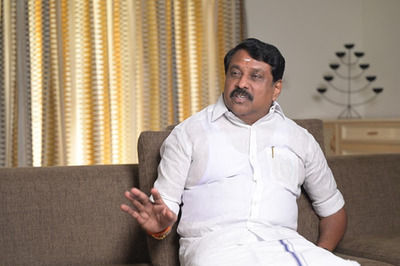
In 2025, the Health Department prioritized discipline and accountability under the direction of Medical Health Minister and Deputy Chief Minister Brajesh Pathak. Unauthorized absences, carelessness, corruption, and unlawful private practices were all dealt with rigorously.
Throughout the year, over 50 physicians were suspended or fired. According to the department, the goal of this strictness is to safeguard patients’ interests rather than to make staff members fearful.
The state administration gave bolstering basic healthcare services particular attention in 2025. Ayushman Arogya Mandirs were extended in both rural and urban regions as part of this effort. By the year’s conclusion, 22,775 Ayushman Arogya Mandirs had opened across the state, offering 13 different kinds of diagnostic services in addition to 58 different kinds of necessary medications. Women and children may now obtain primary level examinations and treatments thanks to the presence of Community Health Officers (CHOs) and ANMs at these facilities. The growing strain on district hospitals and medical schools for minor illnesses has been slightly lessened as a result.
The establishment of the Heart Attack (STEMI) Care Network and the Hub and Spoke concept for treating brain strokes were two of 2025’s greatest successes. Major state medical facilities including KGMU, SGPGI, and Lohia Institute were identified as hubs in this concept, and district hospitals and CHCs were linked to them as spokes. Patients were given primary care, CT scans, thrombolytic therapy (a drug that dissolves clots), and timely referrals within the “golden hour” under this strategy. To far, this network has saved the lives of over 150 individuals, according to the health department.
More than 2,500 additional ambulances have been added to the fleet, and the government said that the 108 and 102 ambulance services now have the fastest response times in the nation. In distant locations, this has improved access to emergency services.
However, concerns were voiced over how these services would operate in 2025. Several districts complained about maintenance problems, personnel shortages, and delayed ambulance arrivals. This made it clear that in addition to expanding the number of ambulances, quality control and monitoring systems needed to be strengthened.
In terms of Pradhan Mantri Jan Arogya Yojana implementation, Ayushman Bharat became the nation’s top state in 2025. Over 57 lakh people benefited from free care, and the state issued up to 5.21 crore Ayushman cards.
This year, UP became the first state to provide subsidized OPD counseling services in private hospitals to Ayushman beneficiaries. At the same time, the recovery of crores of rupees demonstrated that financial discipline would not be compromised by the stringent measures used in fraud cases.
The largest issue in 2025 was still the lack of physicians and specialists, even with the growth of such a massive organization. Thousands of positions remain unfilled compared to those that have been approved, particularly in rural and isolated locations. The government raised the retirement age from 62 to 65, hired specialists under NHM, and continued the process of introducing DNB courses at government hospitals in order to address the issue.
Although experts predict that these actions will provide favorable outcomes in the medium and long term, the gap at the local level is now evident.
One of the largest occurrences of 2025 was the catastrophic fire at Lucknow’s Lokbandhu Hospital, from which 200 patients were successfully evacuated. The event brought into doubt the hospitals’ fire safety procedures. Following this, the government mandated that all government hospitals have safe evacuation plans, alarm systems, and fire drills.
Although the Health Minister had said that all district hospitals will get MRI equipment by 2025, this goal was not met by the end of the year. Patients are forced to rely on costly private solutions since district hospitals still do not provide MRI testing. This is thought to be the most important topic for 2026. In terms of medical education, 2025 was likewise a momentous year.
The state has around 81 medical schools, and the number of MBBS and PG seats increased to an all-time high. Modern facilities including robotic surgery, gamma knives, and bone marrow transplants were introduced, which changed the course of medical education and care. However, several institutions also had trouble reaching the criteria because of the instructor shortage. A instance of 64 students in 10 districts admitting freedom fighters by presenting a phony certificate of freedom fighter also surfaced during the Uttar Pradesh MBBS admissions process under NEET UG 2025. It also resulted in the cancellation of their entrance. This event suggested that the entrance should be strengthened to prevent the fraudulent logo from entering.
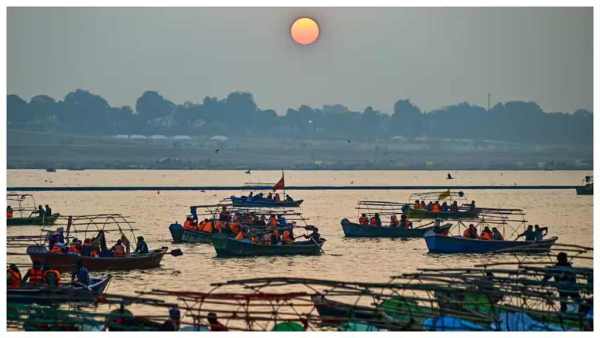
For the health department, Mahakumbh 2025 turned into an accomplishment year. In Mahakumbh 2025, over 7 lakh devotees received medical care, including more than 2 lakh OPDs and specialists from AIIMS, BHU, and other countries (Canada, Germany, Russia) who offered a wide range of medical services, from major surgeries to simple treatments.
In order to ensure the safety and well-being of millions of devotees, more than 2.5 lakh pathology tests and patients were performed. All things considered, 2025 presented both opportunities and difficulties for Uttar Pradesh’s health services.
The government’s key accomplishments were the success of the Ayushman Yojana, the expansion of infrastructure, and the enhancement of emergency treatment. However, there are still issues with the quality of certain services, such as a lack of physicians and testing facilities like MRIs. The effectiveness of the government’s programs and will to address these issues will be put to the true test in 2026.