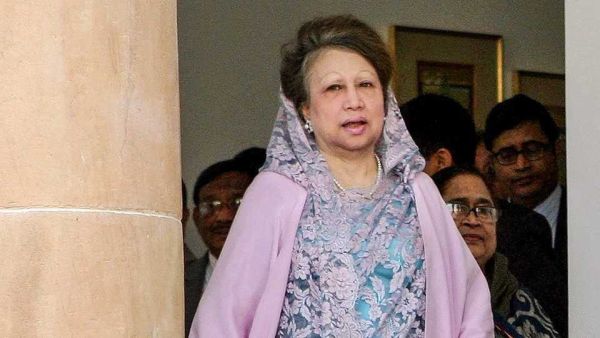
Khaleda Zia: a towering figure in Bangladesh’s political history, remained one of the most influential and debated leaders in South Asia for more than three decades. Her political journey, ideological positions, and evolving relationship with India shaped not only domestic politics in Bangladesh but also the broader regional balance. From strong nationalist rhetoric to later diplomatic recalibration, her approach toward India reflected both confrontation and cautious pragmatism.
Khaleda Zia’s Political Rise and Legacy
Khaleda Zia was the first woman to serve as Prime Minister of Bangladesh and held the office twice, first from 1991 to 1996 and later from 2001 to 2006. As Chairperson of the Bangladesh Nationalist Party, she played a decisive role in reshaping the country’s governance structure. Under her leadership, Bangladesh transitioned from a presidential system to a parliamentary democracy through a 1991 referendum, consolidating executive authority in the prime minister’s office. Alongside Sheikh Hasina, she dominated national politics for nearly thirty years, defining an era marked by intense rivalry and contrasting visions for the country.
Early Skepticism Toward India
In her early years as Prime Minister and later as Leader of the Opposition, Khaleda Zia adopted a cautious and often adversarial posture toward India. Her stance was rooted in a strong emphasis on national sovereignty and the belief that Bangladesh needed to guard itself against excessive external influence. She opposed overland transit and connectivity projects that would allow India access to its northeastern states through Bangladeshi territory, arguing such arrangements could compromise national security. Her rhetoric during this period resonated with nationalist sentiments and positioned her party as a defender of Bangladesh’s independence and strategic autonomy.
Transit, Treaties, and National Interest
One of the most contentious aspects of Khaleda Zia’s India policy was her resistance to granting transit rights without reciprocal benefits. She rejected toll-free access for Indian vehicles and criticized earlier bilateral agreements, including the 1972 friendship treaty, claiming they constrained Bangladesh’s freedom of action. For her, regional cooperation was not rejected outright but needed to be negotiated on terms that delivered tangible gains. This approach framed economic and infrastructure cooperation as leverage rather than concessions, reinforcing her image as a tough negotiator on the international stage.
Water Disputes and Strategic Concerns
Water sharing emerged as another sensitive issue defining her position. Khaleda Zia frequently criticized India’s Farakka Barrage, which diverts water from the Ganges River. She argued that the structure harmed Bangladesh’s agriculture and ecology by reducing water flow downstream. At times, she accused India of aggravating flood situations through deliberate water management decisions. These claims, while controversial, reflected widespread public concerns and strengthened her nationalist appeal during periods of political tension.
Defense Policy and the China Factor
Beyond infrastructure and water disputes, Khaleda Zia’s foreign policy extended into defense and security. During her tenure in the early 2000s, Bangladesh expanded military cooperation with China, making Beijing a key supplier of defense equipment. This move was widely interpreted as a counterbalance to Indian regional influence. India, in response, grew increasingly wary, expressing concerns over security threats and alleging that insurgent groups hostile to Indian interests were operating from Bangladeshi territory. Her earlier remarks sympathizing with certain separatist movements further deepened mistrust between the two neighbors.
Pragmatism Amid Confrontation
Despite her strong rhetoric, Khaleda Zia demonstrated pragmatic flexibility when national interests required it. The leasing of the Tin Bigha Corridor in 1992 ensured permanent access for Bangladesh to the Dahagram-Angarpota enclave, highlighting her willingness to pursue practical solutions. Similarly, during her 2006 visit to India, she signed revised trade agreements and cooperated on anti-smuggling measures, signaling that dialogue remained possible even amid strained relations.
Strategic Recalibration After 2012
A noticeable shift occurred after 2012, when Khaleda Zia visited New Delhi and met then Prime Minister Manmohan Singh. During this engagement, she pledged that any future BNP-led government would act firmly against militant groups targeting India from Bangladeshi soil. This commitment was widely viewed as a strategic recalibration aimed at restoring credibility and easing bilateral tensions ahead of national elections. Subsequent interactions with Narendra Modi, including a meeting in Dhaka in 2015, further underscored this evolving approach.
Final Years and Diplomatic Tone
Although political tensions never fully disappeared, particularly during periods of domestic unrest in Bangladesh, Khaleda Zia’s later years were marked by a more measured diplomatic tone. After political upheaval in 2024 and the fall of Sheikh Hasina’s government, the BNP signaled interest in maintaining balanced and respectful relations with India. Expressions of concern and condolence from Indian leadership during her illness and after her death reflected mutual recognition of her historical role in shaping bilateral ties.